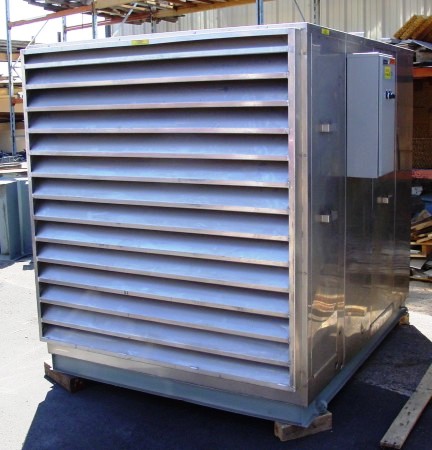
Choosing the right industrial swamp cooler can make a major difference in workplace comfort, energy efficiency, and overall productivity. Large facilities often struggle with heat buildup, especially in warehouses, manufacturing plants, distribution centers, auto shops, agricultural buildings, and open production areas. Traditional air conditioning can be expensive or impractical in these environments because of the size of the space, frequent door openings, and high ventilation needs. An industrial swamp cooler offers a practical alternative by using evaporative cooling to lower temperatures while moving large volumes of fresh air. Before investing in one, it is important to understand how these systems work, where they perform best, and what features matter most.
What Is an Industrial Swamp Cooler?
An industrial swamp cooler is a large-scale evaporative cooling system designed to cool commercial and industrial spaces. It works by pulling warm outside air through water-saturated cooling pads. As the air passes through the pads, water evaporates and absorbs heat, producing cooler air that is then pushed into the building by a powerful fan. Unlike traditional air conditioning, this process does not rely on refrigerant or a closed indoor air cycle. Instead, it continuously introduces fresh, cooled air, which can improve ventilation and indoor air quality.
Industrial swamp coolers are especially useful in facilities where air conditioning would be difficult or costly to install. They are often used in spaces with large doors, high ceilings, open layouts, or equipment that generates heat. Because they use water and airflow rather than compressors, they typically consume less electricity than conventional cooling systems. However, their effectiveness depends heavily on climate, airflow design, and proper sizing. Understanding these factors is the first step toward choosing the right unit.
How an Industrial Swamp Cooler Works
The basic science behind an industrial swamp cooler is simple, but the performance depends on the system design. Evaporative cooling occurs when water changes from liquid to vapor, pulling heat from the surrounding air. In a swamp cooler, this process happens inside the cooling pads as warm air moves across the wet surface. The cooled air is then distributed throughout the facility using high-capacity fans. This makes the system ideal for large areas that need constant air movement.
Unlike refrigerated air conditioning, an industrial swamp cooler requires a steady supply of outside air and a place for indoor air to exit. This means the building should have proper ventilation, such as open doors, exhaust fans, roof vents, or wall openings. Without enough exhaust, humidity can build up and reduce cooling performance. The system also needs a reliable water source to keep the pads saturated. When installed correctly, it can provide consistent cooling while helping replace stale indoor air with fresh outdoor air.
Best Environments for Evaporative Cooling
An industrial swamp cooler works best in hot, dry climates where humidity levels are relatively low. Areas in the Southwest, Mountain West, and other arid regions are often well-suited for evaporative cooling. In these climates, dry air can absorb more moisture, which allows the cooler to reduce air temperature more effectively. The lower the outdoor humidity, the better the cooling potential. This is why many industrial facilities in desert and semi-arid regions rely on swamp coolers as a cost-effective cooling solution.
In humid climates, evaporative cooling may still provide airflow benefits, but the temperature drop will usually be less noticeable. When the air already contains a lot of moisture, it cannot absorb much additional water from the cooling pads. This limits the cooling effect and may make the space feel damp or uncomfortable. Before choosing a system, facility managers should evaluate local climate conditions, average humidity levels, and seasonal temperature patterns. A professional assessment can help determine whether an industrial swamp cooler is the right fit.
Key Factors to Consider Before Buying
The right industrial swamp cooler should match the size, layout, and operating conditions of your facility. One of the most important factors is airflow capacity, usually measured in cubic feet per minute, or CFM. A larger building requires more airflow to achieve effective cooling and air circulation. Ceiling height, heat-producing equipment, insulation, and door openings also affect the size of the cooler needed. Choosing a unit that is too small can lead to poor performance, while an oversized system may waste water and energy.
You should also consider the type of installation that works best for your space. Some units are mounted on the roof, while others are installed on exterior walls or used as portable cooling units. Permanent systems are better for whole-building cooling, while portable coolers are useful for spot cooling workstations, loading docks, or temporary work areas. Other important factors include water usage, maintenance access, fan speed options, pad quality, and control systems. Comparing these details can help you select a cooler that supports both comfort and operational efficiency.
Benefits of Using an Industrial Swamp Cooler
An industrial swamp cooler can offer several advantages for large facilities, especially when compared with traditional air conditioning. One of the biggest benefits is lower energy consumption. Because evaporative cooling does not use compressors, it can reduce electricity costs in facilities that need long hours of cooling. The system also brings in fresh outdoor air, which can help dilute fumes, dust, odors, and airborne contaminants. This is valuable in workplaces where ventilation is just as important as temperature control.
Other benefits may include:
- Lower operating costs compared with refrigerated air conditioning
- Improved airflow in large and open spaces
- Better ventilation through continuous fresh air exchange
- Reduced heat stress for workers
- Flexible options for spot cooling or full-facility cooling
- Simpler mechanical operation with fewer high-energy components
These benefits can make an industrial swamp cooler a smart investment for many operations. However, the system must be selected and installed correctly to deliver the expected results. Maintenance is also important because pads, pumps, water lines, and fans need regular attention. When properly maintained, the cooler can provide dependable performance during hot seasons. For many facilities, the combination of affordability, ventilation, and cooling power makes evaporative cooling a strong choice.
Sizing Your Industrial Swamp Cooler
Proper sizing is one of the most important parts of choosing an industrial swamp cooler. The unit must move enough air to cool the space and support healthy air exchange. A common starting point is calculating the building’s volume by multiplying length, width, and ceiling height. From there, the required CFM depends on how many air changes per hour the facility needs. Industrial environments with heavy equipment, high heat loads, or frequent door openings usually need more airflow.
It is also important to think beyond square footage. A warehouse with 30-foot ceilings will need a different cooling strategy than a production area with lower ceilings and many heat sources. Areas near ovens, machinery, forklifts, or loading bays may require targeted cooling in addition to general ventilation. Portable units can help address hot zones without overcooling the entire facility. For best results, sizing should be based on building layout, climate, heat load, and airflow paths rather than floor area alone.
Features to Look For
When comparing industrial swamp cooler options, look for features that improve durability, performance, and ease of use. Heavy-duty construction is important because industrial environments can be dusty, demanding, and exposed to tough conditions. Cooling pad quality also matters because thicker, high-efficiency pads usually provide better evaporation and longer service life. Fan performance should be strong enough to move air across the required distance without creating excessive noise or energy use. Adjustable speeds can help you fine-tune airflow based on weather and facility needs.
Useful features may include:
- High-efficiency cooling pads
- Corrosion-resistant housing
- Variable-speed fan controls
- Automatic water level management
- Easy-access maintenance panels
- Durable pumps and water distribution systems
- Smart controls or thermostat compatibility
- Portable or mounted configuration options
A good industrial swamp cooler should also be easy to inspect, clean, and service. Maintenance access can affect long-term costs, especially in facilities that operate daily during hot months. Units with simple controls and accessible parts can reduce downtime and make routine upkeep easier for maintenance teams. Choosing a model with durable components may cost more upfront, but it can improve reliability over time.
FAQ About Industrial Swamp Coolers
How much can an industrial swamp cooler lower the temperature?
The temperature drop depends on outdoor heat and humidity. In hot, dry conditions, an industrial swamp cooler can often make the air feel significantly cooler, but performance decreases as humidity rises.
Does an industrial swamp cooler work indoors?
Yes, but it needs proper ventilation. Because it brings in outside air and adds moisture, the building must allow air to exit through doors, vents, windows, or exhaust fans.
Is an industrial swamp cooler cheaper to run than air conditioning?
In many cases, yes. Evaporative coolers typically use less electricity because they do not rely on compressors, although water use and maintenance should also be considered.
How often does a swamp cooler need maintenance?
Maintenance frequency depends on usage, water quality, and environmental conditions. Pads, pumps, filters, and water lines should be checked regularly during the cooling season.
Can one unit cool an entire warehouse?
Sometimes, but it depends on the warehouse size, ceiling height, layout, heat load, and airflow needs. Large facilities may require multiple units or a combination of mounted and portable coolers.
What is the biggest limitation of an industrial swamp cooler?
Humidity is the biggest limitation. These systems perform best in dry climates and may not provide enough cooling in areas with consistently high humidity.
Making the Right Cooling Decision
Choosing the right industrial swamp cooler starts with understanding your facility’s cooling challenges. A system that works well for one warehouse may not be the best fit for another building with different airflow patterns, heat loads, or climate conditions. Before purchasing, evaluate the size of the space, the number of workers, the type of equipment in use, and how often doors or bays remain open. You should also consider whether your goal is full-building cooling, spot cooling, improved ventilation, or a combination of all three. These details will help narrow your options and prevent costly sizing mistakes.
An industrial swamp cooler can be an efficient and practical solution for many large spaces, especially in dry climates. It offers fresh air, lower energy use, and strong airflow in environments where traditional air conditioning may be too expensive or inefficient. The key is selecting a unit that matches your building’s needs and maintaining it properly throughout the cooling season. By focusing on climate suitability, airflow capacity, installation type, and long-term maintenance, you can choose a system that supports worker comfort and operational performance. With the right approach, evaporative cooling can become a dependable part of your facility’s heat management strategy.