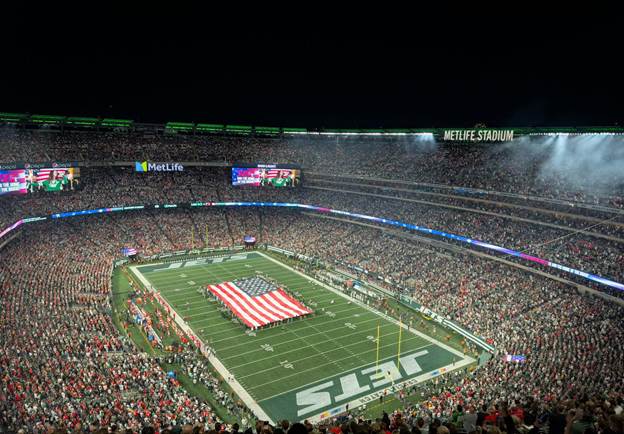
The New York Giants’ 2025 campaign arrives shadowed by skepticism and rare optimism. Last season’s three-win struggle leaves fans and analysts with pointed questions about whether new leadership on offense and subtle signs of regression to the mean can reshape the team’s narrative.
Oddsmakers set the Giants’ win total at 5.5, signaling little confidence in a dramatic turnaround, yet historical patterns and a handful of promising newcomers keep the conversation far from settled.
This article unpacks the core drivers shaping the Giants’ expectations, the daunting schedule, performance analytics, and what it might take for this team to defy the odds. From betting markets to roster changes, we’ll explore every angle with a neutral, evidence-first lens, guiding you through what matters most in forecasting New York’s fate this fall.
Giants’ Win Total: A Low Bar with Tough Odds
Bookmakers have set the New York Giants’ 2025 win total at 5.5, placing them firmly in the lower tier of the league. According to the latest New York Giants odds for the upcoming season, leading sportsbooks favor the under (fewer than 5.5 wins) at -130, while the over is listed at +110.
Within the NFC East, this is the lowest benchmark: Philadelphia (11.5 wins), Washington (9.5), and Dallas (7.5) all outpace New York by a wide margin.
The Giants’ record last year, three wins and a bottom-ranked offense, explains much of the market’s pessimism. Yet, as we’ll see, this number is not merely a judgment on past performance, but a projection factoring in schedule, personnel changes, and leaguewide trends.
The Schedule Factor: Why the Road Looks So Steep
New York faces what is projected to be the hardest schedule in the NFL, based on cumulative opponent win totals (155.5). No other team crosses the 151.5 mark.
The Giants play their usual division rivals, but must also contend with the NFC North, AFC West, and uniquely challenging matchups against the 49ers, Patriots, and Saints.
Last year, the Giants were favored in only one contest and lost it, underscoring the scale of their underdog status. This relentless slate places extraordinary pressure on a team already seeking identity.
The scheduling math helps explain why most projections, even after accounting for historical patterns of positive regression, hesitate to forecast major gains for New York this season.
Regression and the Case for Upside
Despite the gloomy baseline, a case for optimism can be found in New York’s sharp underperformance in close games. The Giants finished 1-7 in contests decided by a touchdown or less, and 0-6 within their division, often losing by the narrowest of margins.
History offers some hope: since the NFL’s move to a 17-game schedule, every team that underperformed its expected win total by at least 1.5 wins rebounded the following year by at least two wins.
For the Giants, this statistical quirk signals that, despite daunting odds, a six- or even seven-win season is not entirely out of reach if luck swings even modestly in their favor.
Offensive Reboot: Russell Wilson and New Assets
Quarterback Russell Wilson arrives to revitalize an offense that ranked 31st last year, averaging just 16.1 points per game. Wilson’s recent numbers, though not at his career peak, show efficiency: 7.4 yards per attempt, 225.6 passing yards per game, and a 63.7% completion rate across 11 games last season.
Supporting him is rookie receiver Malik Nabers, who finished with 109 catches (fifth in the league) for 1,204 yards and seven touchdowns in 2024.
On the ground, Tyrone Tracy Jr. adds versatility with 839 rushing yards and five touchdowns. Together, these additions signal a tangible upgrade in skill positions—though the true test will be integrating these talents within an offensive line that struggled under pressure throughout 2024.
For the Giants to beat their win total, the offense must not just improve, but do so against some of the league’s most unforgiving defenses.
Defensive Challenges: A Unit Under Pressure
New York’s defense has not cracked the league’s top 20 in DVOA since 2021, finishing 28th last season. They allowed 24.4 points per game, ranking 21st.
Even with new playmakers Brian Burns (8.5 sacks, 17 tackles for loss), Micah McFadden, and Bobby Okereke, defensive weaknesses persist. The team will face the 12th-hardest set of opposing offenses (based on 2024 DVOA ratings), compounding the pressure on both new arrivals and returning veterans.
With little margin for error, the defense will need significant improvement to give the offense opportunities to compete. This ongoing struggle against the pass and run underscores why sportsbooks and analysts remain cautious, even with incremental roster upgrades.
Betting Landscape: Playoff, Division, and Super Bowl Odds
In broader betting markets, the Giants are significant longshots. Their odds to win the NFC East stand at +2500, while their Super Bowl line sits at +20000, ranking 28th among NFL teams.
These odds imply a minuscule 0.5% chance at a championship. Last season, the Giants covered the spread just five times and failed to win any of the 16 games as underdogs more than 18.8% of the time.
This data aligns with their on-field results and further tempers expectations for a surprise playoff push. Still, betting odds are not destiny; they reflect a consensus built from current information, not the kind of sudden transformation the NFL occasionally delivers.
Looking Ahead: Opportunity Amid Uncertainty
Forecasting the Giants’ 2025 season means weighing probability against possibility. Odds and schedule say one thing, but the unpredictable nature of football leaves room for surprise.
The clearest path forward involves embracing incremental progress, winning a few more close games, building chemistry among new offensive weapons, and tightening a leaky defense.
For Giants supporters, tracking these signs of growth matters more than obsessing over a playoff berth. If New York can build momentum and show measurable improvement in key areas, the foundation for a brighter future will be set, even if the win total stays modest.
*Information is correct as of 2025/08/04, and is subject to change.