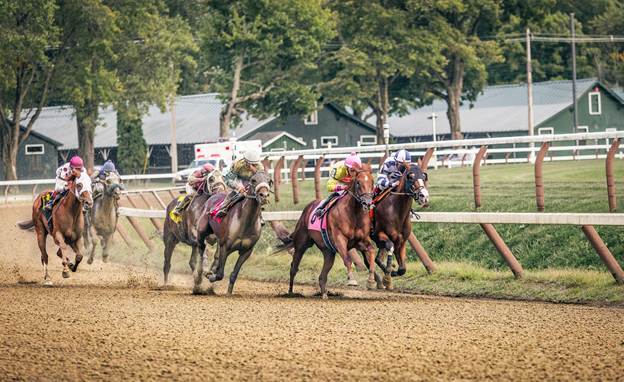
As spring gives way to summer, the 2025 Belmont Stakes—often called “The Test of the Champion”—marks the final jewel in horse racing’s Triple Crown. This year, the race breaks from tradition in both location and length. Instead of its usual home at Belmont Park, it will be held at Saratoga Race Course on June 8, and will be run at a shorter distance of 1 1/4 miles, down from the traditional 1 1/2.
These changes create fresh challenges for bettors, demanding more than a glance at the favorites. Strategy, endurance analysis, and deep data dives will be essential for those hoping to cash in on this historic shift.
Navigating the New Belmont Terrain
The change in venue and distance significantly impacts the nature of the race. While still demanding sustained stamina, running 10 furlongs (1 1/4 miles) tests horses differently than the traditional 12 furlongs. Saratoga’s distinct sweeping turns and deep stretch also introduce unique tactical considerations for jockeys and trainers.
This contrasts with the traditional Belmont Park, which requires different jockey experience. Understanding these track dynamics and the slightly shorter test of endurance is crucial for bettors analyzing past performances and breeding.
The shift from Belmont Park to Saratoga Race Course represents a significant environmental factor for participants and handicappers alike.
Decoding the Odds Landscape
Belmont Stakes odds are typically released after the Preakness Stakes concludes. Platforms like FanDuel quickly update these odds, reflecting the market’s reaction to Triple Crown contenders and new developments.
The presence of a Triple Crown contender, a horse having won both the Kentucky Derby and Preakness, drastically affects the betting landscape.
In years when a Triple Crown contender is present, wagering patterns typically concentrate on that individual horse, often resulting in more attractive odds for other entrants in the field. Conversely, when no Triple Crown bid is underway, as might be the case in some years, the odds become more dynamic and widely distributed.
This allows for a more competitive mix where horses with less public attention can still offer legitimate winning chances.
Key Factors That Influence Belmont Stakes Odds
Several important elements shape the odds for each horse:
- Recent Race Performance: Handicappers closely analyze how a horse fared in the Kentucky Derby and Preakness Stakes, if applicable.
- Breeding and Pedigree: Bloodlines that suggest stamina and endurance—particularly from sires and dams known for distance—are a major consideration.
- Morning Workouts: Observations from recent training sessions, especially a horse’s gallop-out strength, can indicate fitness and finishing power.
- Running Style & Tactical Speed: Horses with adaptable or pace-friendly styles may gain an edge, depending on the race setup.
- Jockey Experience: A rider’s familiarity with the unique demands of the current venue—like Saratoga in 2025—is crucial for strategic execution.
Identifying Endurance Indicators
Beyond standard past performance metrics, specific indicators reveal a horse’s capacity for the distance. A horse showing a strong gallop-out after a race or workout suggests it finished with plenty of energy remaining.
Reviewing a horse’s pedigree for sires or dams with proven stamina pedigrees, often found in European or turf bloodlines, can highlight genetic predisposition for handling classic distances. Horses that have previously excelled at distances near 1 1/4 miles or shown the ability to make a sustained run from off the pace are strong contenders.
Leveraging Exotic Wagers Strategically
The inherent volatility and potential for unexpected outcomes in the Belmont Stakes make it a fertile ground for strategic exotic wagers. While simply betting a horse to win can be profitable, many experienced bettors turn to exactas, trifectas, and even superfectas to maximize potential value.
These wagers involve predicting the top finishers in exact order or within a specific group. The dynamic nature of the field, especially in years without a dominant Triple Crown candidate, increases the chances of a higher payout when correctly predicting the top finishers.
Building Exotic Tickets
Specific strategies can be employed when constructing exotic tickets. For an Exacta Box, one might combine a horse known for a strong closing run with another horse expected to set or stay close to the pace.
A Trifecta Wheel could involve using a high-stamina favorite as the top horse and then boxing a selection of middle-priced contenders and longer shots underneath for the second and third positions.
In fields perceived as chaotic or wide-open, extending to a Superfecta Spread allows for including several lower-odds contenders in the top spots while adding a few longshots, sometimes referred to as “bombs,” to the fourth position for the chance at a very large return.
Assessing the Intangibles and External Factors
Winning the Belmont often involves more than just inherent talent and form. External factors like weather and track conditions play a significant role. A rain-soaked track, for instance, can favor horses that handle off-going well or can maintain focus despite mud being kicked back.
Trainer trends are also worth noting; some trainers, like Todd Pletcher or Bill Mott, have established reputations for preparing horses specifically for the unique demands of the Belmont. Subtle changes like new equipment, a different jockey, or an altered running strategy decided by the trainer can also influence a horse’s performance.
Furthermore, horses that skipped the Preakness after showing promise in the Kentucky Derby or key prep races often arrive fresh and well-prepared, potentially flying under the public radar.
Looking Towards Potential Contenders
For the 2025 running at Saratoga, the potential field includes notable names like Kentucky Derby winner Sovereignty and Preakness winner Journalism, who was second in the Derby. Other expected runners mentioned include Kentucky Derby third-place finisher Baeza, Wood Memorial Stakes winner Rodriguez, Peter Pan winner Hill Road, and Preakness also-ran Heart of Honor.
Fair odds estimates place Sovereignty around 2-1 and Journalism around 5-2. However, Baeza and Rodriguez could potentially offer double-digit mutuels, representing significant value if they outperform their odds. Public betting often gravitates towards the celebrity status of the Derby and Preakness winners.
This public focus might create an opportunity for bettors to find better prices on horses like Baeza or Rodriguez, especially if the classic winners are bet down to very short odds like even money or 8-5 or less.
Making Your Belmont Selection
Betting the Belmont Stakes takes more than gut instinct. With a new distance and venue at Saratoga, success this year hinges on smart analysis and sharp timing.
Weigh a horse’s stamina, recent prep, and trainer’s track record. Look for contenders built for the 1¼-mile challenge—and don’t ignore intangibles like grit, focus, and adaptability.
In 2025, “The Test of the Champion” isn’t just about speed. It’s about which horse—and which bettor—is most prepared to meet the moment.