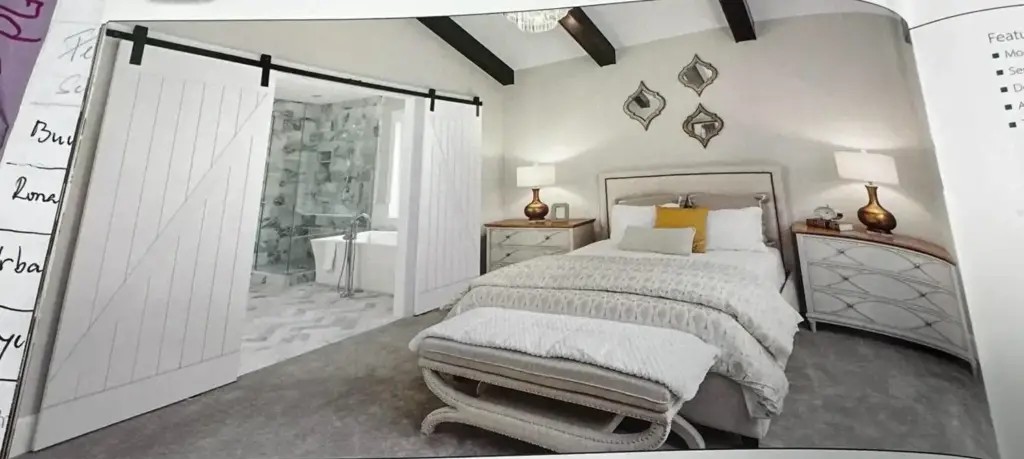
Across New Zealand, door selection now has practical significance. Renovators weigh circulation paths, acoustic separation, wall use, and daily comfort, not surface style alone. In small plans, swing clearance can restrict storage and furniture placement. In larger homes, visual character may matter just as much as function. That is why barn-style sliders and built-in cavity systems keep appearing in the same conversation, across villas, townhouses, family homes, and new infill projects.
Space First
Most door decisions begin with floor clearance, because movement patterns shape how a room actually works. A sliding barn door stays outside the wall, glides across an exposed track, and keeps its full width visible at all times. That presence can add texture while also saving swing space near beds, sofas, desks, or narrow hall junctions. A cavity slider, by contrast, disappears from view and leaves the opening visually quieter.
The Floor Area Factor
Housing size helps explain this debate. Many new builds offer decent overall area, yet circulation space within bedrooms, laundries, and hallways still feels tight. Older homes add another challenge, because chimney breasts, odd corners, and uneven walls reduce usable room around openings. In those conditions, a hinged leaf can claim space needed for storage, seating, or an easier route between one zone and the next.
Privacy Matters
Privacy changes the outcome quickly. Pocket doors usually sit closer to jambs and stops, which helps reduce sound transfer and visual gaps. Barn systems leave a margin between panel and wall, so noise, light, and air pass more easily. That may suit wardrobes, studies, or utility spaces. Bedrooms, bathrooms, and shared sleeping areas often need stronger separation, especially in homes where several routines overlap each day.
Retrofit Reality
Retrofitting often favours the surface-mounted option. A barn track is fixed to the wall face, which usually avoids opening linings or shifting structural framing. Pocket systems need space inside the partition, and that can mean moving wiring, altering switches, or rebuilding insulation details. In existing houses, these steps affect labour time, waste, and project sequencing. For many owners, construction disruption matters as much as the finished look.
Everyday Handling
Handling quality matters more than styling after the first week of use. A heavy panel with poor rollers soon feels awkward, even if the finish looks refined. Smooth travel, controlled stopping, and reliable guides shape the daily experience for children, older adults, guests, and anyone carrying washing or groceries. Sound matters too. A solid core can soften household noise better than a lighter, hollow door in busy family settings.
Warmth and Air
Thermal comfort deserves attention. Barn doors sit off the wall, which leaves slim gaps around the panel. Those gaps can help airflow, yet they also reduce separation between heated and cooler rooms. Pocket units create a neater edge at the opening, though detailing inside the wall still matters in older houses with draughts or inconsistent insulation. In winter, that difference becomes easier to feel than to see.
Style Signals
Appearance still matters, because doors are at eye level and shape first impressions. Exposed rails, visible rollers, and timber grain give a room a stronger visual accent. That can suit rustic interiors, coastal schemes, or spaces needing warmth. Pocket doors step back instead. Their hidden movement supports calmer rooms where joinery, glazing, artwork, or wall colour should hold attention without extra hardware competing nearby.
Maintenance Load
Maintenance is less glamorous, yet it often decides long-term satisfaction. Exposed tracks collect dust and need periodic checks on guides, fixings, and roller wear. Pocket hardware stays largely hidden, which keeps surfaces cleaner but can complicate access if alignment slips. In homes with steady traffic, inspection time has value. A system that is easy to clean and adjust may age better under constant, ordinary use.
Access and Use
Access needs a practical reading. Surface sliders remove swing conflicts near cots, baskets, wheelchairs, or crowded furniture layouts. Pocket systems clear the wall opening once the panel disappears, though the internal cavity can limit switch positions, shelving, or hooks. That trade-off matters in compact homes, where every wall surface has a job. Good planning asks how people move, carry, pause, and store things each day.
Buyer Readiness
Resale value rarely turns on one feature by itself. Buyers usually respond to fit, proportion, and whether a choice solves a planning issue cleanly. A barn door can add character in a renovation that already has visible timber and stronger texture. A pocket slider may read as more integrated in a pared-back build. The better option is usually the one that feels consistent with the rest of the house.
Conclusion
No single door type suits every New Zealand home. Barn sliders work well in quick retrofits, expressive interiors, and rooms where wall-mounted practicality outweighs acoustic control. Built-in cavity systems suit tighter hallways, quieter visual lines, and projects able to absorb wall work early. The useful question is not which style is popular. It is the system that supports privacy, circulation, warmth, maintenance, and daily ease in that specific home.