
A grimy chain eats your drivetrain. Here’s the exact routine for a clean, quiet chain that lasts, plus the mistakes that wear it out fast
I killed a $70 chain in four months. Not on a crash, not on a monster climb, just on ordinary road grime and a lazy habit of topping up lube without ever taking the old grit off first. That’s the whole story. Most drivetrain wear isn’t dramatic. It’s a slow grind of dirt paste working its way into every pin and roller while you ride.
Here’s the good news: a clean chain is the cheapest performance upgrade your bike will ever get. You don’t need a shop, you don’t need a parts budget, and you don’t need a mechanical background. You need about 25 minutes, three rags, and a routine you’ll actually repeat. And you need the right products, which is a quieter variable than most riders admit. Companies like Weldtite USA have been making bike care fluids since the 1940s, and that kind of history tends to show in small details like how a degreaser rinses and how a lube sits on the rollers.
By the end of this, you’ll know the three-rag method, why solvent dumps are hurting your chain, and the one weekly habit that separates a 5,000-mile drivetrain from a 1,500-mile one.
Why a dirty chain wears out so fast
Picture two pieces of steel sliding against each other under load, with a thin film of oil between them. Now imagine sand in that film. That’s a dirty chain in one image. Steel doesn’t wear out from miles. It wears out from abrasive particles grinding between the pins and rollers every time you turn the crank.
A worn chain doesn’t stop at the chain, either. A chain that has stretched past its limit starts chewing the teeth of your cassette and chainrings. So a $20 chain problem turns into a $200 drivetrain job, and it happens quietly, over hundreds of rides where everything felt fine.
Here’s the part most riders get backwards: you don’t clean a chain less often if you lube it more. You lube it less because you clean it properly. Excess lube is a magnet for dust, and dust is the whole problem.
The three-rag method (my whole routine)
I’ve tried the solvent baths and the complicated squirt bottles, and honestly, the simple version wins because you actually do it. My routine, in order, and I do it after roughly every 10 to 15 dry rides or after any mud-heavy day:
- Dry rag pass. Pedal the chain backward while holding a rag against it. You’re knocking off loose grit before it ever meets water or solvent. The first rag will go black. That’s normal.
- Degreaser on a rag, not on the chain. Spray a bike degreaser onto a second rag and pinch it around the chain as you backpedal. You’re cleaning the outside, where most of the grime lives. A dedicated brush helps on the cassette, which traps the worst of it.
- Wipe and dry fully. Third rag, clean and dry, until the chain feels dry to the touch. Sounds fussy. Skip it and your lube will never bond, because oil and water don’t mix and your new lube will sit on top of an invisible wet film and slide off.
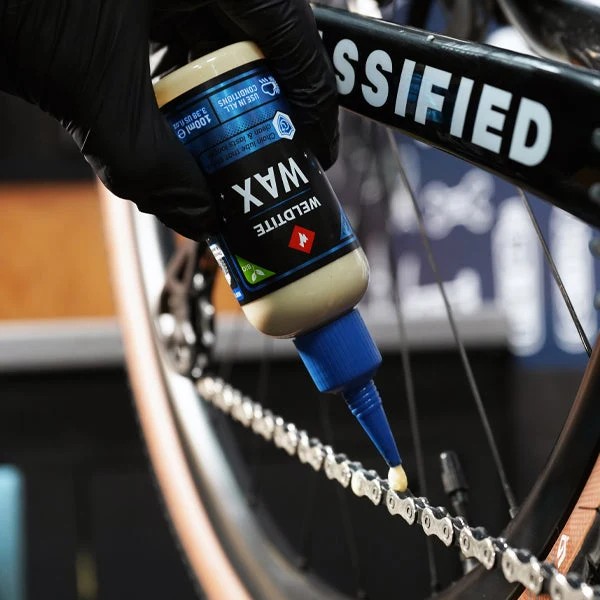
- One drop of lube per roller. Count the rollers with your eyes, not your squeeze hand. Two passes around is plenty. Then wait 10 minutes and wipe off the excess with a fourth rag. Yes, you’re wiping off lube you just applied. That’s the point.
Whole thing takes me 22 minutes on a Saturday morning. The 15 minutes of wiping is the part that divides people who replace parts constantly from people who don’t.
Is solvent soaking actually worth it?
Maybe once a year, if you’re obsessive or you ride in conditions that would make a marine blush. Degreasing a chain off the bike and soaking it in solvent strips the factory lube from inside the rollers, and if you don’t re-lube thoroughly into the pins, you’ve just created dry internal friction that wears things faster than road dust would. I’d rather do the rag method weekly than strip and rebuild the chain twice a year. The math usually works out the same and the rag method takes less nerve.
The one time I’d reach for the solvent and brush is after a week of wet-weather riding, where the chain is coated in that gritty paste that rags just smear around. Even then, dry it fully and re-lube deliberately.
Choosing lube for the conditions you actually ride
The right lube depends less on brand loyalty than on your local weather. A dry, dusty climate and a wet, gritty coast want different products, and using one where the other belongs is why some chains feel gritty after a single ride. Roughly:
- Dry, dusty, and sunny. A dry or wax lube keeps the chain cleaner and quieter. It does wear off faster, which is why you reapply more often.
- Wet, gritty, and coastal. A wet lube stays put when water hits. It holds dirt better too, so clean more often.
- Mixed seasons and lots of commuting. An all-weather formula is the honest compromise, and most riders are in this camp whether they’ll admit it or not.
Whichever you pick, stick with it for a few months before judging. A lube’s real test is how the chain feels after 200 miles, not after five.
The mistakes that eat your chain alive
I’ve made all of these, so learn from my scar tissue.
Pressure washing the chain. A high-pressure jet pushes water past the seals and into the internal pin area, where it rusts quietly from the inside. Use a bucket and a brush instead. According to Britannica, common steel like a bike chain can corrode readily when exposed to moisture and oxygen, which is exactly the combo a pressure washer delivers deep into the rollers.
Lubing a dirty chain. You’re basically polishing the grit into the pins. Clean, then lube, every time. No shortcuts on this one.
Using the wrong chain for the job. Chain wear is real, and it’s worth checking with a gauge rather than eyeballing stretch. The Bureau of Labor Statistics tracks how much of the bicycle industry runs through repair and maintenance work, which tells you one thing clearly: a huge share of shop visits are preventable maintenance jobs. A chain that gets cleaned and checked on schedule is one of them.
The schedule that actually holds
Here’s my honest recommendation, based on eight years of trial and error: check chain wear every month, clean after every 10 to 15 dry rides, re-lube after any wet ride, and pull the chain for a full degrease once a year if you’re the thorough type. Write the check dates on your phone calendar. That single habit has saved me more money than any single component upgrade.
To start, grab a degreaser, a clean dry lube, and two rags you don’t mind destroying. Your hands will be grimy, your chain will be quieter, and your cassette will thank you in two seasons. If you want one starting point, the Weldtite USA product range covers the whole routine in a single order, which beats juggling three different bottles. So: when did you last actually check your chain, and not just glance at it?