
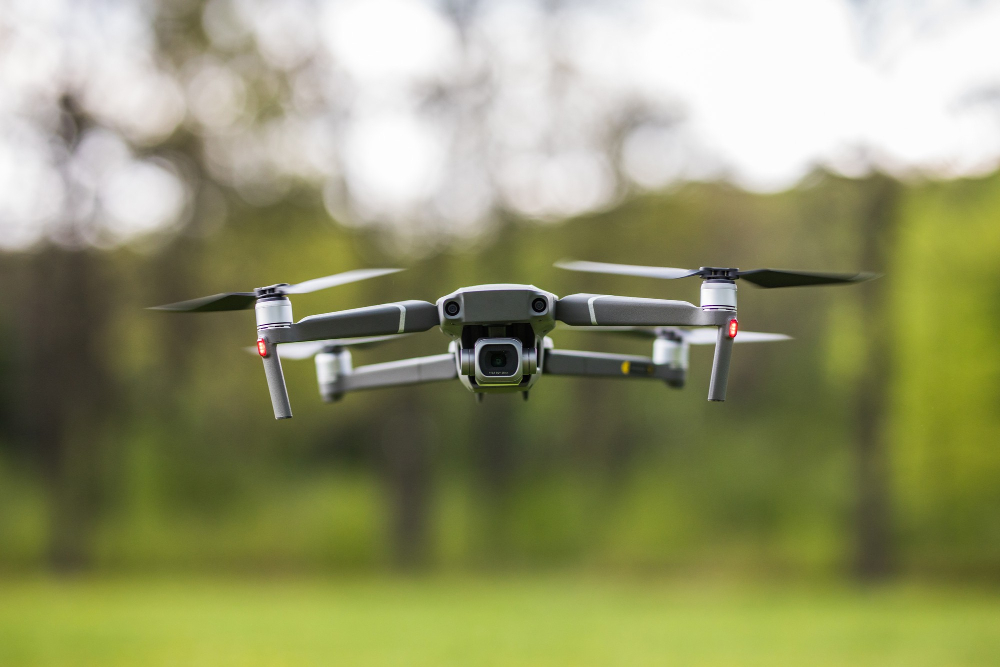
Image by diana.grytsku on Magnific
Three summers ago a quadcopter hovered over my neighbor’s hedge for eleven minutes while a crowd of us stood in a driveway arguing about whether to call the cops. Half the block wanted to. The other half said it was legal and we’d look ridiculous. Nobody had any idea what actually happens next, and that lack of understanding is the real story behind every drone scare in every small town.
Here’s the short version: a drone over your roof runs through a chain of decisions most people never see, from the pilot’s preflight check to the local response protocol to a federal rulebook that mostly ties local hands. Understanding that chain changes how you react. It also explains why the serious work on this problem, including the current thinking around us drone defense, starts with detection and identification long before anyone talks about taking a drone down.
The rest of this piece walks the chain in order. Pilot, airspace, neighbors, local officials, federal floor. By the end you’ll know exactly who to call and, more usefully, who not to.
Who’s flying that thing, really?
Most sightings trace back to somebody boring. A real estate photographer getting a listing shot. A kid who got a drone for a birthday and is testing range over the cul-de-sac. A utility crew inspecting power lines. That last one is worth sitting with, because line inspection flights are a real and growing use of small aircraft over residential blocks, and they look exactly like a snooping drone from your kitchen window.
My stance: assume boredom or business before you assume malice. The odds favor it, and a calm assumption keeps you from making a fool of yourself in front of the whole street. That said, if the thing is hovering directly over your yard for a long stretch and drifting with you as you walk around, that’s a different animal and worth documenting.
The airspace above your fence isn’t yours
This is the part that surprises people. The space a few hundred feet up belongs to the federal government, and the agency runs it as a single national system. According to the Federal Aviation Administration, anyone flying a small drone for fun or work operates inside rules the agency sets, not rules your village board writes. That means a pilot following altitude and registration requirements can be perfectly legal while still annoying you.
Local governments can control where a drone launches from, and they can restrict takeoff on town property. They can’t generally ban flight through the air above your street. A lot of shouting matches at council meetings would end faster if more people knew that line.
What a pilot is supposed to do before takeoff
Registered recreational pilots in the United States have a required knowledge test and a certificate. Commercial pilots carry a different credential. Both groups are taught to check airspace restrictions, keep the aircraft in visual line of sight, and stay clear of emergency scenes. When a drone shows up over a house fire and the crew can’t work, that’s the rule being broken that actually matters, not the annoyance factor.
The local response, step by step
Here’s how a well run town handles a drone complaint, based on what I’ve watched and read from departments that have built actual protocols. Treat this as your decision guide.
- Note the time and location. A specific address and a rough window is worth more than a general complaint about “drones everywhere.”
- Look for the operator. Most are within a few hundred yards and visible, holding a controller and watching the sky. A polite conversation resolves a surprising number of these.
- Call the non-emergency line, not 911, unless the drone is interfering with firefighting, medical response, or a police scene. Those are the cases departments treat as urgent.
- Expect a limited response. Most local police have no dedicated counter-drone unit and no authority to jam or shoot anything down. They’ll document it.
- Escalate if it repeats. A pattern at the same address gets attention. A single sighting usually doesn’t.
That fourth step is where public expectation and local capability split hardest. People assume a police department can just knock a drone out of the sky. The agencies that actually do counter-drone work treat it as a technical discipline with strict legal bounds, and a patrol officer with a sidearm is not part of that picture.
Why “just shoot it down” lands you in court
Firing at an aircraft is a federal crime, and small drones count as aircraft. The National Aeronautics and Space Administration has done extensive work on how drones integrate into the airspace system, and that body of work treats every one of them as a real aircraft with a real flight path. Discharging a firearm inside most town limits is separately illegal. So the guy on the internet who says he blasted a drone off his lawn is either lying or in the middle of a criminal case.
Jamming is no better for a civilian. Broadcasting interference on aviation and navigation frequencies is prohibited, and the equipment to do it isn’t legal to own for this purpose. The serious counter-drone market exists because this is genuinely hard, and because the legal authority to interfere sits with a small set of federal agencies and the military.
Where towns actually have leverage
Every municipality I’ve looked at that solved this problem stopped chasing the sky and started controlling the ground. The playbook has a few reliable moves.
- Written protocols telling dispatchers exactly what to ask and log when a drone call comes in.
- Clear communication with residents about what the department can and can’t do, which cuts down on angry follow-ups.
- Rules about launch and landing on municipal property, including parks and fields.
- Coordination with event organizers so that pilots get a clear no-fly zone over festivals and parades.
- Working relationships with local commercial operators so the fire department knows who’s legitimately in the air during an incident.
None of that is glamorous. All of it works better than a ban that can’t be enforced. The National Institute of Standards and Technology has published standards work on drone system performance that agencies lean on when they evaluate detection equipment, which tells you how technical this discipline has gotten. A town buying a sensor package without a protocol to act on it is buying a very expensive camera.
My pick, if a town asked me: spend the first year on the protocol and the public education, then think about gear. The gear without the process is theater.
The question to ask at the next council meeting
The chain runs from a pilot’s preflight check, through federal airspace rules, past a neighbor’s fence, into a dispatch log, and finally to a decision about whether your town has any real tool to respond. Most of the confusion around drone sightings comes from expectations jumping straight to the last link without understanding the first four.
So here’s what I’d bring to a village board: not “ban the drones,” but “what does our dispatcher do when someone calls about one?” That’s a question with a real answer. Push for it, and see what comes back. If the answer is a shrug, you’ve just found the actual gap, and it has nothing to do with the sky.