
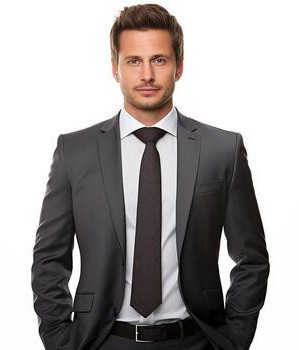
The Bay Area has built a unique professional culture, one where hoodies and sneakers can sit across the table from venture capitalists, and where dress codes are often treated as relics of an older corporate world. But that casual reputation has created a blind spot. Many executives, especially those moving between startup culture and more traditional business settings, make business suit mistakes that quietly undercut their credibility. Clothing still communicates authority, preparation, and judgment, even in a region known for its informality.
This piece breaks down the most common missteps Bay Area executives make when dressing for the boardroom, and what to do instead.
The Myth That Casual Culture Means No Rules
San Francisco and Silicon Valley have spent two decades normalizing jeans-and-a-blazer as the ceiling for professional dress. That norm works fine for day-to-day office life, but it falls apart the moment the stakes rise: a board meeting, an investor pitch, a merger negotiation, or a high-profile client dinner.
The mistake is assuming that because casual dress is accepted broadly, it is appropriate everywhere. Executives who default to their everyday startup wardrobe in boardroom settings often read as underprepared rather than relaxed. A boardroom is still a room where decisions about capital, leadership, and risk are made. Dressing with intention signals that the executive understands the weight of the room, even if the surrounding culture is laid-back.
The fix is not abandoning the region’s relaxed identity. It is knowing when to shift gears. A well-tailored suit does not contradict Bay Area values; it simply shows the executive can read a room.
Fit Is Still the Number One Business Suit Mistake Executives Make
Of all the business suit mistakes executives make, poor fit is the most common and the most damaging. A suit that is too big makes a leader look swallowed by their clothing, unsure and unpolished. A suit that is too tight restricts movement and reads as careless, as though the wearer either bought it years ago or never tried it on.
Fit problems usually show up in predictable places: shoulders that pull or sag, sleeves that are too long or too short, jackets that balloon at the waist, and trousers that pool around the shoes. None of these are minor. The human eye is remarkably good at detecting when clothing does not sit correctly on a body, even if the observer cannot articulate exactly why something looks off.
The solution is almost always tailoring, not buying a new suit. A mid-range suit altered correctly will outperform an expensive suit that has never seen a tailor. Executives in the Bay Area, where many professionals come from engineering or product backgrounds rather than finance or law, often underestimate how much a twenty-dollar alteration can change the way they are perceived in a room full of investors or board members.
Confusing Expensive with Appropriate
Another frequent error is equating cost with correctness. An executive might spend a significant amount on a designer suit, only to wear it in a way that does not suit the context. A boardroom does not require the flashiest suit in the room; it requires the most appropriate one.
This matters in San Francisco and the surrounding tech corridor, where there is sometimes pressure to signal status through visible branding or trend-driven cuts. A suit with an unusual pattern, an overly fashion-forward silhouette, or conspicuous logos can distract from the substance of what an executive is saying. Boardrooms reward quiet confidence over visual noise.
The safer approach is choosing classic, well-constructed pieces in versatile colors like navy, charcoal, and mid-gray. These colors photograph well, pair easily with different shirts and accessories, and do not pull attention away from the conversation. Executives who want to incorporate personality can do so through subtle details, a tie, a pocket square, or quality shoes, rather than through loud suiting choices.
Ignoring Climate and Travel Realities
The Bay Area’s microclimates create a genuine styling challenge. San Francisco can be fifty-eight degrees and foggy while San Jose is seventy-five and sunny, and an executive might travel between both in a single day. This leads to a specific set of business suit mistakes executives make: wearing fabrics too heavy for the day’s actual conditions, or packing travel outfits that wrinkle badly after a flight or a long drive.
A heavier wool suit might feel appropriate for a morning meeting in a cooler part of the city, but becomes uncomfortable and visibly damp by the time an executive reaches a warmer location for a client lunch. On the reverse side, a lightweight suit that works well in Palo Alto in July can look thin and out of place in a chillier San Francisco boardroom.
Smart executives build a wardrobe around mid-weight wool or wool-blend fabrics that transition reasonably well across the region’s temperature swings. Breathable, wrinkle-resistant materials also matter for those who travel frequently between the South Bay, the Peninsula, and the city itself. A suit that looks sharp after a car ride or short flight says more about an executive’s preparation than almost any other detail.
Overlooking the Supporting Cast: Shirts, Ties, and Accessories
A suit is rarely judged in isolation. Shirts, ties, belts, and shoes either reinforce a polished look or quietly undermine it. One of the more overlooked business suit mistakes executives make is treating these elements as afterthoughts rather than as part of a coordinated outfit.
Common issues include shirts with collars that do not sit properly against the neck, ties that are either too short or too long, and belts that do not match the shoe leather in color or finish. Shoes themselves are a frequent weak point. Scuffed leather, mismatched laces, or sneakers worn with a suit in a formal boardroom setting can all undercut an otherwise strong look.
For Bay Area executives who want a dependable system, keeping two or three high-quality white and light-blue dress shirts on hand, along with a small rotation of solid or subtly patterned ties, removes decision fatigue while ensuring consistency. Shoes should be leather, well-maintained, and color-matched to the belt. These details are small individually, but together they create the impression of someone who pays attention, a quality boardrooms specifically value in leadership.
The Over-Correction Problem: Trying Too Hard
Not every mistake comes from being too casual. Some Bay Area executives, aware of the region’s relaxed reputation, overcorrect by dressing in ways that feel stiff, outdated, or disconnected from how they normally present themselves. A three-piece suit with a pocket watch in a modern tech boardroom can look like a costume rather than an outfit, drawing attention for the wrong reasons.
Authenticity still matters, even in formal settings. The goal is not to dress like a different person for the boardroom; it is to present a slightly elevated, more intentional version of one’s everyday professional self. Executives who normally favor minimalist, modern style can carry that sensibility into a suit through clean lines and simple tailoring rather than forcing themselves into a traditional, old-guard look that feels unnatural.
Boardrooms respond well to confidence, and confidence is easier to project in clothing that still feels like the executive wearing it, even when that clothing is more formal than usual.
Underestimating the Message Sent to Investors and Boards
For founders and executives raising capital or reporting to a board, clothing becomes part of the broader narrative about whether the business is being run responsibly. A pitch deck can be flawless, financials can be strong, but a sloppy or careless appearance can plant a small seed of doubt about attention to detail elsewhere in the business.
This does not mean every investor meeting requires a full suit. Context matters, and some investors genuinely prefer a more relaxed presentation style. But when a boardroom setting is formal, whether at a bank, a law firm, or a more traditional company headquarters, showing up underdressed can be read as a lack of respect for the process or the people in the room.
Executives who take the time to understand the expected dress code for a specific boardroom, rather than assuming their usual Bay Area casual approach will transfer everywhere, avoid an entirely preventable misstep.
Building a Simple, Repeatable Boardroom Wardrobe
Many of the business suit mistakes executives make stem from decision fatigue rather than a lack of taste. Busy leaders juggling fundraising, product decisions, and team management often do not want to think hard about wardrobe choices, so they default to whatever is easiest, which is frequently too casual for high-stakes settings.
The solution is building a small, reliable boardroom wardrobe in advance rather than improvising. Two or three well-fitted suits in versatile colors, a handful of coordinating shirts, a few ties, and one excellent pair of leather shoes can cover nearly every formal scenario an executive will face. Having these pieces ready, cleaned, and properly tailored removes the need for last-minute decisions before a high-pressure meeting.
This approach also protects against the climate and travel issues discussed earlier. A consistent wardrobe built around mid-weight, breathable fabrics means an executive does not have to rethink their entire outfit every time they move between San Francisco, Oakland, San Jose, or Palo Alto for meetings.
FAQ: Common Questions About Executive Boardroom Dressing
What is the most common business suit mistake executives make?
Poor fit. Shoulders, sleeves, and trouser length are the areas most likely to be off, and they are also the most noticeable to others in the room.
Do Bay Area executives really need to wear suits given the region’s casual culture?
Not always, but formal boardroom settings, investor meetings with traditional firms, and high-stakes negotiations still call for a suit. Reading the specific context matters more than following a blanket rule.
What colors are safest for a boardroom suit?
Navy, charcoal, and mid-gray are the most dependable choices. They pair easily with different shirts and ties and do not distract from the conversation.
How should executives handle the Bay Area’s unpredictable weather when choosing a suit?
Mid-weight wool or wool-blend fabrics generally perform best across the region’s temperature swings between coastal fog and inland warmth.
A few additional quick-reference points worth keeping in mind:
- Tailoring is almost always more effective than buying a more expensive suit.
- Shoes and belts should match in color and finish.
- Avoid logos or trend-driven cuts in formal boardroom settings.
- Build a small, repeatable wardrobe rather than improvising before each meeting.
Is it possible to dress too formally for a Bay Area boardroom?
Yes. Overly traditional or outdated formalwear can look disconnected from a modern tech environment. The goal is a slightly elevated version of an executive’s normal style, not a costume.
Final Thoughts on Executive Dressing in the Bay Area
The Bay Area’s relaxed professional culture does not eliminate the need for boardroom-appropriate dressing; it simply makes the distinction between everyday casual and high-stakes formal more important to recognize. Executives who understand fit, choose appropriate fabrics for the region’s climate, coordinate their accessories, and avoid both under-dressing and over-correcting put themselves in a stronger position every time they walk into a room where real decisions are being made. Avoiding these common business suit mistakes executives make is not about vanity. It is about ensuring that appearance supports, rather than undermines, the credibility an executive has worked hard to build.