
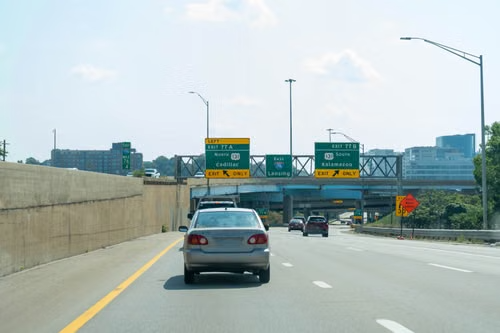
Driving in Michigan means preparing for a variety of road conditions throughout the year. Winter snow, freezing rain, icy intersections, heavy traffic, and wet summer roads can all affect vehicle control and visibility. When choosing a car, evaluating its safety features is just as important as comparing its price, fuel economy, and comfort. Drivers exploring cars for sale Muskegon can benefit from understanding which safety technologies offer practical advantages and how to determine whether a vehicle is equipped for their everyday driving needs.
Understand the Difference Between Active and Passive Safety
Vehicle safety features generally fall into two categories: active safety systems and passive safety equipment. Both contribute to occupant protection, but they serve different purposes.
Active safety systems help drivers avoid collisions or maintain control before an accident occurs. Examples include electronic stability control, automatic emergency braking, lane departure warnings, and blind-spot monitoring.
Passive safety features help reduce injuries if a collision happens. These include seat belts, airbags, reinforced passenger compartments, and properly designed head restraints.
For Michigan drivers, a combination of both categories is valuable. Advanced technology may help prevent certain crashes, while strong crash protection can reduce the consequences when an accident cannot be avoided. No individual feature guarantees safety, so it is important to evaluate the vehicle as a complete package.
Check Electronic Stability Control and Antilock Brakes
Electronic stability control (ESC) is particularly useful when a vehicle begins to lose directional control. The system can apply braking to individual wheels and adjust engine power to help the driver maintain the intended path.
On slippery Michigan roads, ESC may help reduce the risk of skidding during sudden maneuvers or when negotiating a curve. However, it cannot overcome the physical limits of tire grip, so drivers still need to reduce speed when roads are icy or covered in snow.
Antilock braking systems (ABS) help prevent the wheels from locking during hard braking, allowing drivers to retain greater steering control. If ABS activates, the brake pedal may pulse. Drivers should generally apply firm, continuous pressure rather than pumping the pedal, following the vehicle manufacturer’s instructions.
When evaluating a vehicle, confirm that these systems are included and functioning correctly. For a used car, check the dashboard for warning lights and have any unresolved braking or stability-control issues inspected by a qualified mechanic.
Evaluate Automatic Emergency Braking and Forward Collision Warning
Automatic emergency braking (AEB) and forward collision warning systems can provide valuable assistance in busy traffic. Forward collision warning alerts the driver when the vehicle detects a potential frontal collision. AEB may automatically apply the brakes when the system determines that a crash is imminent.
These features can be useful on congested highways, near intersections, and in stop-and-go traffic. Some systems can also detect pedestrians or cyclists, depending on the vehicle’s equipment and technology.
However, performance varies by manufacturer and model. Snow, ice, heavy rain, dirt, or road salt may interfere with cameras and sensors. Drivers should understand the system’s limitations and keep sensors clean according to the owner’s manual.
During a vehicle comparison, check whether AEB is standard or optional and determine which situations the system is designed to recognize. The National Highway Traffic Safety Administration (NHTSA) provides safety ratings and information about recommended driver-assistance technologies that can help shoppers make informed decisions.
Look for Blind-Spot Monitoring and Rear Cross-Traffic Alerts
Changing lanes and reversing can be challenging when visibility is limited. Blind-spot monitoring uses sensors to detect vehicles in adjacent lanes and typically provides a visual warning in the side mirror or another display.
Rear cross-traffic alert can warn drivers about approaching vehicles when backing out of parking spaces or driveways. This feature can be particularly helpful in crowded parking lots where parked vehicles obstruct the driver’s view.
Some vehicles also offer rearview cameras, parking sensors, and surround-view camera systems. These tools can help drivers judge distances and identify nearby obstacles.
When testing these features, check whether alerts are easy to notice without being distracting. Remember that cameras and sensors have limitations, especially in poor weather. Always check mirrors, look around the vehicle, and verify that the path is clear before changing lanes or reversing.
Assess Lane Assistance and Adaptive Cruise Control
Lane departure warning alerts drivers when the vehicle begins drifting out of its lane without an apparent turn signal. Lane-keeping assistance may provide steering input or other intervention to help the vehicle remain within lane markings.
Adaptive cruise control can adjust the vehicle’s speed to maintain a selected following distance from traffic ahead. This may reduce the effort required during longer highway journeys.
These systems can be useful on Michigan’s interstate highways, particularly during extended trips. Nevertheless, lane markings may become difficult to recognize when covered by snow, standing water, or road debris. Adaptive cruise control also does not eliminate the need to monitor traffic and respond to changing conditions.
When comparing vehicles, distinguish between warning systems and systems that actively intervene. Learn how to activate, adjust, and disable each feature, and remember that the driver remains responsible for steering, braking, and maintaining a safe following distance.
Consider All-Wheel Drive and Winter Tire Compatibility
All-wheel drive (AWD) can help a vehicle accelerate on slippery surfaces by distributing power to more than two wheels. For drivers who regularly encounter snow-covered roads, AWD may offer useful traction advantages.
However, AWD does not automatically improve braking or cornering on ice. A vehicle with AWD can still slide or require a long distance to stop when the road is slippery. Tire quality and tread condition remain essential.
Before choosing a vehicle, consider whether its tires are appropriate for Michigan’s seasonal conditions. Dedicated winter tires can provide better cold-weather traction than many all-season tires, depending on the conditions and tire design. Check the owner’s manual for approved tire sizes and specifications.
Also inspect tire tread depth, tire age, and inflation pressure. If purchasing a used vehicle, examine all four tires for uneven wear, which may indicate alignment or suspension problems.
Review Crash-Test Ratings and Airbag Protection
Crash-test ratings offer another useful way to compare vehicles. NHTSA’s five-star safety ratings provide information about crash protection and rollover risk. The Insurance Institute for Highway Safety (IIHS) also evaluates vehicles through crashworthiness tests and assessments of crash-prevention technology.
Compare ratings for the exact model year whenever possible, because safety equipment and vehicle designs can change over time. Review frontal and side-impact protection, rollover evaluations, and available crash-prevention systems rather than relying on a single overall score.
Airbags are another important consideration. Depending on the model, a vehicle may include front, side-impact, and curtain airbags designed to protect occupants in different types of collisions. Seat belts remain essential because airbags are supplemental restraints, not replacements for proper belt use.
Families should also check child-seat compatibility, rear-seat space, and the availability of appropriate anchor points.
Inspect Used-Vehicle Safety Before Buying
A vehicle’s advertised features matter only if its equipment is in good working condition. Before purchasing a used car, request its maintenance records and check for outstanding recalls using the vehicle identification number (VIN) through NHTSA’s recall lookup service.
During an inspection, look for dashboard warning lights, damaged seat belts, cracked windshield glass, worn tires, and signs of previous collision repairs. Have a trusted mechanic examine the brakes, suspension, steering, and electronic safety systems when possible.
Test the vehicle in safe conditions and ask the seller to demonstrate the available driver-assistance features. Confirm which technologies are included in the specific trim rather than assuming every vehicle in the model range has the same equipment.
Conclusion
Evaluating vehicle safety features for Michigan roads requires more than checking a list of technology options. Electronic stability control, ABS, automatic emergency braking, blind-spot monitoring, strong crash protection, and suitable tires can all contribute to safer driving. The most appropriate combination depends on your daily routes, seasonal driving conditions, passenger needs, and budget. By reviewing crash-test ratings, inspecting used vehicles carefully, and learning how safety systems work, Michigan drivers can make more informed decisions and prepare for the challenges of year-round travel.