
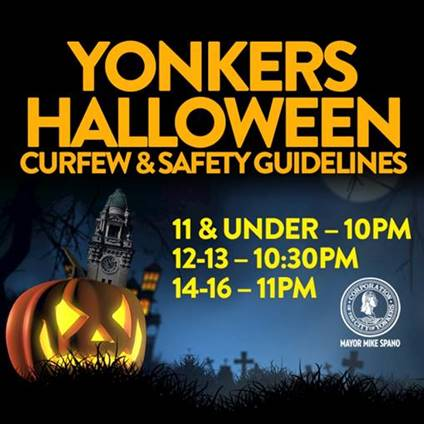
Yonkers has a clear rule for Halloween night. The city announced a citywide curfew this week, with police ready to enforce it. Residents know the rule, who enforces it, and what happens if it’s broken. Online gambling offers adults almost none of that. A license, a regulator and someone who checks your ID are what make a site accountable, and many sites that take US players have none of them.
I have spent years testing how gambling platforms treat the adults who use them. My view is blunt: most players assume a site is accountable because it looks professional. Looks cost nothing. Accountability costs a license.
Rules only work when someone enforces them
A curfew works because it has a visible enforcer. Everyone knows who to call, who shows up, and what the consequence is. The rule is public, the penalty is clear, and nobody has to take the city’s word for it.
Now think about an unlicensed gambling site. It can publish any terms it likes. It can change them overnight. When something goes wrong, there is no state gaming board to call and no officer to knock on a door. The site answers to nobody in New York, so the rules on its own pages are only as good as its own goodwill.
That is the real divide between a regulated product and an unregulated one. It has little to do with how polished the website looks. A rule that no one enforces is a suggestion, and unlicensed sites run on suggestions.
What a licensed operator has to do
Here is where the contrast gets uncomfortable. A licensed US operator cannot simply take your deposit and hope for the best. It verifies who you are against government ID and database records, matches your name and date of birth, and holds the account until that clears. I have sat through that process on regulated apps. It is slow, a bit annoying, and it works in your favor.
Those checks are what make your payout traceable to you and only you. They also open the door to a complaint path if a withdrawal stalls, since a licensed operator answers to a state board that can step in. Once your account is live, the protections keep going. Deposit limits let you cap what you spend. Self-exclusion tools let you shut yourself out when you need to. Geolocation checks keep the operator inside the law, which keeps your account on solid ground too.
Now compare that with sites that operate outside US licensing. Unlicensed platforms answer to no state gaming board, so nobody forces them to offer any of this. Plenty ask for an email address and a crypto wallet and not much else. A new player can be depositing within minutes, with no real identity step and no enforced limit. The clearest example is offshore casinos, tracked at https://betanews.com/us/offshore-casinos/, a page that lists which of these unlicensed sites accept US players and how little they ask of a new account.
That sentence should bother an adult player more than any flashy welcome bonus should excite them.
What you lose on an unlicensed site
It is easy to treat all gambling sites as the same product with different logos. They are not. The difference shows up the moment something goes wrong.
Start with complaints. On a licensed app, you can take a dispute to the state board. On an unlicensed site, there is no board, so you are left with the support inbox and whatever answer it decides to give. Sometimes that answer is silence.
Then there are withdrawals. Nothing guarantees a payout path on a site that answers to no US regulator. A balance on the screen is a promise from the operator, and a promise from an operator with no oversight is worth exactly what the operator chooses.
Finally, the safeguards you may be counting on often do not exist. Deposit limits are optional at best. Self-exclusion is not enforced, so closing your account on your own does not stop you from reopening one, or from receiving marketing. Licensed apps build these controls in because the law makes them. Unlicensed sites skip them because nothing makes them stay.
None of this is hidden. It simply goes unnoticed until a withdrawal fails to arrive.
So who protects you online?
I would pick the answer players dislike: mostly, you do.
Licensing helps, but it only covers licensed businesses. Everything outside that net depends on the choices you make before you deposit. That means a few unglamorous habits:
- Check whether a site holds a US state license before you sign up. A real license can be verified with the state gaming board, not just a badge in the footer.
- Never deposit on a site you cannot verify. If you cannot confirm who runs it and who regulates it, treat it as a no.
- Use the limit tools on licensed apps. Set a deposit cap early, while you are calm, not after a bad night.
None of that is as tidy as a curfew. There is no police order to announce at a press conference. But the principle carries over: a rule only protects you when someone is actually enforcing it.
Yonkers has the street covered this Halloween. Online, the enforcement that matters most is the check you make before you hit deposit.
Frequently asked questions
Does the Yonkers Halloween curfew apply to online gambling? No. The curfew is a local public-safety order enforced by Yonkers police for Halloween night. It says nothing about apps or websites, so online gambling follows state and federal rules, and sites without a US license follow none of them.
Do licensed US casino apps verify who I am? Yes. Regulated operators verify identity against government ID and database records before an account can deposit. That includes name, date of birth and often a Social Security number. It is slow, but it protects your payouts and ties your account to you.
Why do offshore casinos skip identity checks? Because no US state gaming board regulates them, nothing compels the checks. Many accept an email and a crypto wallet. Without a licensing body demanding verification, identity steps stay weak or missing altogether.
Can I complain if an unlicensed site won’t pay out? There is rarely anywhere to take it. A licensed operator answers to a state board that can step in. An unlicensed site answers to nobody in the US, so your options often end at the site’s own support team.
What should a player check before signing up? Confirm the site holds a US state license and verify it with the state gaming board. Look for built-in deposit limits and self-exclusion tools. If you cannot find out who runs the site and who regulates it, do not deposit.
Final thought
Know the rule, know who enforces it, and check before you pay. Gambling involves risk. Please play responsibly and only wager what you can afford to lose. If you feel gambling is becoming a problem, visit BeGambleAware.org or call 1-800-GAMBLER. Anyone under 21 should not be gambling at all.