
Procurement has evolved from a humble business of merely transactional buying and manual signatures and actions. The business demands of many organisations are looking for an increasing amount of connected workflow, or integration, to increase visibility, streamline workflows, reduce errors and provide strong control of business spending.
With the procurement process done correctly, just one procedure for purchase requests, approvals, ordering, receipt, processing of invoices, and payments can be set up. The best procure-to-pay software can help enhance spend control and give buyers and finance decision-makers the info they really need.
Automated Workflows Improve the Procurement Management Process
Automation can help create a well-defined procurement approach by eliminating any ‘unnecessary’ manual steps in the purchasing process. Furthermore, it facilitates greater uniformity in departments as well as other relevant stakeholders.
1. Standardised Purchase Requests
Having a single intake helps ensure that each employee uses a consistent way when submitting purchase requests. This does not cause the request to be lost in the shuffle, which makes it easier to track, route, review and approve the request.
2. Faster Requisition-to-Order Processing
Writing fewer purchase requisitions and purchase orders, saving processing time and preventing data-entry errors that are typically caused by data duplication in multiple systems, are some of the benefits you can enjoy by automating purchase requisitions and purchase orders.
3. Controlled Approval Workflows
Custom rules in approval can be used to route requests for approval to the right person or group in your organisation, depending on your organisation’s needs. This will lead to more buying monitoring than they might need, but it won’t prevent or interfere with buying.
4. Accurate Invoice Matching
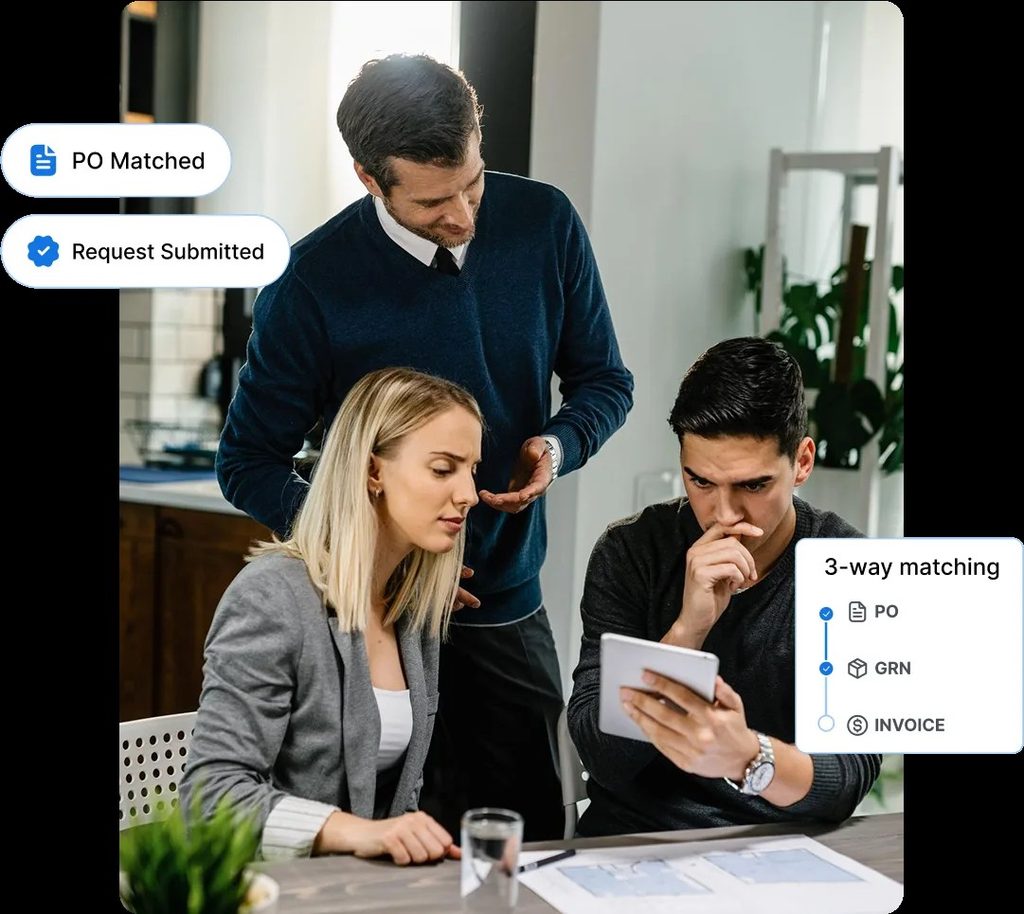
Three-way matching is when a Purchase Order, Receipts and Invoices are compared prior to payment. This is to alert to mismatches and, secondly, as a safeguard against fraudulent transactions.
5. Streamlined Accounts Payable
There are many benefits that can come with the way that you process invoices, especially when you turn towards automation. Automating the processing of invoices can help with optimising your finance administration, consistent and timely payments to suppliers, and, generally, better administration. This will enable drivers to dedicate more time and effort towards increasing income through financial assistance.
Centralised Purchasing Creates Greater Spend Visibility
Requests, authorisations, procurement information, payment and much more are integrated into one overall process—a centralised procurement process. This helps hone the talking points and provides visibility on where teams are spending finance for the organisation. During the procure-to-pay process, the best procure-to-pay software will give those involved in the process the chance to be “in the loop” in real time with every purchase, so they can track their budget and budget obligations. Automated requisition and purchase order minimise repetitive data input and enhance the level of consistency. Employees can enjoy a routing path to avoid ‘confusing’ emails, spreadsheets and manual files for any purchase request and to get it through the centralised intake process.
Direct and Indirect Procurement Shape Spend Differently
The procurement needs are different for products purchased to go into final products vs the needs for products used to carry out daily business operations. This awareness can help an organisation put in place its buying controls accordingly. The difference between direct vs indirect procurement is whether there is a use for the goods or services. In general, materials or products that enter the product in whole or in part (such as raw materials) are direct, while supplies that do not ever enter the product outright are indirect (such as software, office supplies, travel and services). They need to make sure that they can be seen and observed by suppliers and need to have a budget and rules for purchasing and selling.
Spend Analysis Supports More Informed Purchasing Decisions
The value that procurement visibility can bring is when data is bought and used to identify problems, monitor suppliers and their movements, and plan appropriate budgets. Best procure-to-pay software. Simply having all the data centralised will enable the company to analyse the purchase numbers without having to rely on records on a single basis. Visibility can help make people aware of different purchase schedules, purchase lines, suppliers, and approvals when working in companies where unique purchase schedules and purchase lines are available, separate from other companies’ approvals. Material availability and continuity of supply might need to be taken into consideration in direct procurement, while controls on recurring purchases and decentralised procurement between departments might be useful in indirect procurement.
Supplier Collaboration Improves End-to-End Procurement Visibility
Should the environment be set up in a P2P fashion, however, a central part of the process is the communication between suppliers, which should not be overlooked should delays occur or to improve the transparency of transactions. An order management system can include support and invoices; it can also be a tool that allows buyers to connect with suppliers, including spend related to that order. This can assist teams even more when they have several suppliers and purchasing categories. Direct vs indirect procurement-The automated alerts and workflows can also help in controlling su
Conclusion
This transformation aims to further improve visibility, compliance and efficiency and to automate spend management processes to achieve connected P2P workflows. A solution needs to assist the entire purchasing process and not just workflows in making transactions easier.
With both knowledge and understanding of direct vs indirect procurement and modern P2P capabilities, an organisation can create a purchasing process that best fits its spending requirements without sacrificing the ability to control the purchasing process. Procol’s end-to-end P2P platform has all the necessary tools, from requisition to PO automation, approval to invoice processing and payment to spend analysis, and even supplier engagement. They also have artificial intelligence capabilities with insights and automation features that enhance the visibility and control of procurement and ensure that purchases are aligned with formalised procurement and financial management processes.