
Discover aging in place home modifications that help older adults stay safe, prevent falls, improve accessibility, and maintain independence at home.
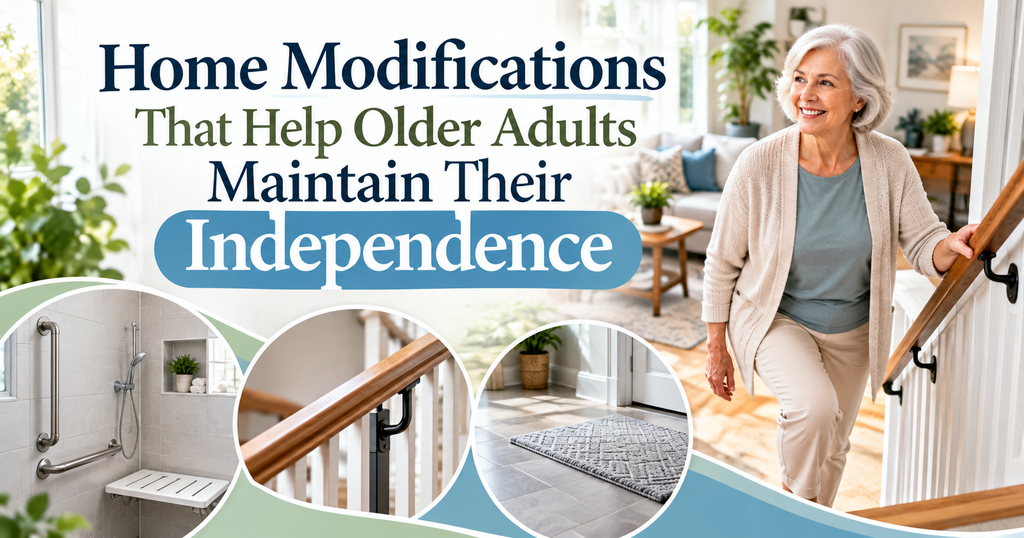
A person’s age is not a reason to compromise on comfort and freedom of home living. A lot of older people prefer the comfort of their own homes, the routines of their everyday life, and life without having to rely on others to complete all the tasks. Narrow doorways, slippery bathrooms and stairs can make common tasks tricky.
However ,changes can be made in the proper manner that can make a difference. Larger changes, such as ramps and stair lifts, or smaller changes, like grab bars and better lighting, are all ways to help with safer movement inside the house. The purpose of this guide is to assist you to understand some of the changes you can make within your home to help your older adults to access your home, reduce common hazards and live independently.
What Are Aging in Place Home Modifications, and Why Do They Matter?
Home modifications that can be made to improve a home for older persons’ daily life as their needs change over time are referred to as aging in place home modifications. These enhancements can be in the form of flooring, bathrooms, stairs, entrances, lighting, or common household elements.
There are changes that can be made that are simple and inexpensive. Other people must be professionally installed or remodeled. The aim for the activities to be as easy as possible to do, without any difficulty.
How Home Accessibility Supports Everyday Independence
The smartly designed house makes it easier for people to walk around, cook, bathe and live in it. Preparation and home modifications to make the home safer are important aspects to aging in place, according to the National Institute on Aging.
In a well-thought-out plan for an “aging-in-place” scenario, older people can:
- Be more confident in their movement around their homes.
- Minimize common fall hazards and trips.
- Avoid using the body in a straining manner for daily activities.
- Perform familiar routines independently.
These changes can help seniors to live on their own, and to render homes more usable as their mobility requirements change.
Bathroom Modifications That Reduce Fall Risks
Ramps, Handrails, and Safer Entryways
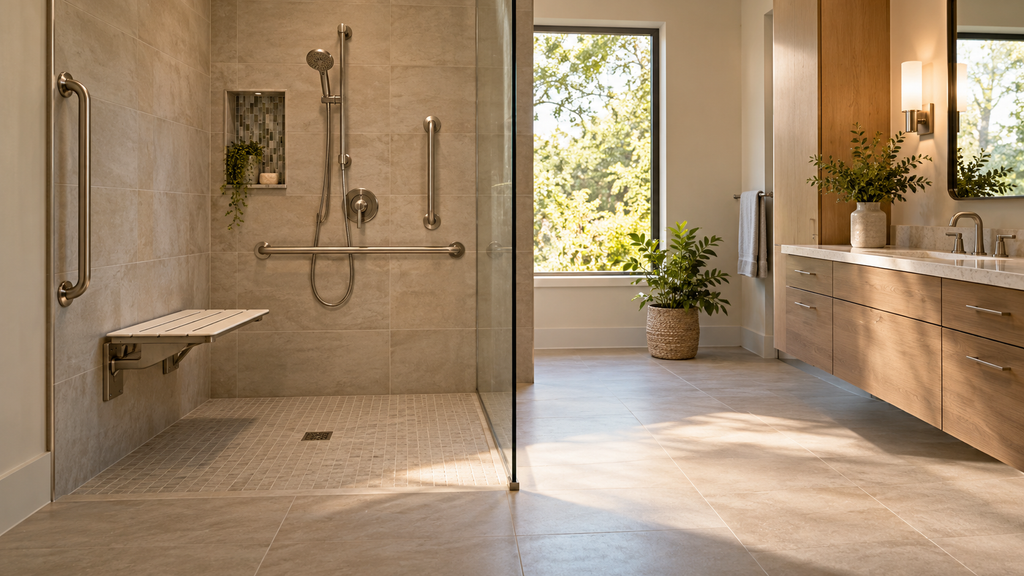
The bathroom needs to be taken into special consideration, as wet floors, slippery surfaces and high bathtub edges can make it hard to move around and be navigated.
Bathing and using the toilet will be less difficult and safer for older people living in the home, thanks to some targeted home safety modifications.
Install Grab Bars Near Toilets and Showers
Grab bars offer security for hands to hold on to while sitting, standing or stepping into a shower. By the side of the toilet, by the entrance to the shower and around the walls of the bathtub are ideal locations.
Select grab bars that can hold a person’s weight. They should be securely installed into suitable structural supports or with an approved mounting system. Towel racks are useless with regular towel hangers. The Centers for Disease Control and Prevention recommend using bathroom grab bars to prevent falls in the bathroom for older adults.
Choose Non-Slip Flooring and Easier Shower Access
To reduce the chances of falls in bathrooms where water can get on the floor, use non-slip flooring.
Additional improvements include:
- Walk-in or curbless shower – make it easier to step over a bathtub wall.
- Fit shower seats on showers for disabled persons.
- Share a handheld showerhead to help with bathing when sitting.
- Anti-slip shower surfaces and slippers.
If you’re looking for a shower, but not a shower with a shower tray, there are a few things you will need to do to modify the drainage and waterproofing, so it is important to have a professional do this for you.
Make Entrances and Doorways Easier to Navigate
Steps leading up to a house, small doorways, or raised thresholds can be a challenge for a walker or a wheelchair user to access a house. Making accessing elderly homes easy is the first step and consists of making sure that the access ways and exits are clear and navigable.
Add Ramps, Handrails, and Safer Entryways
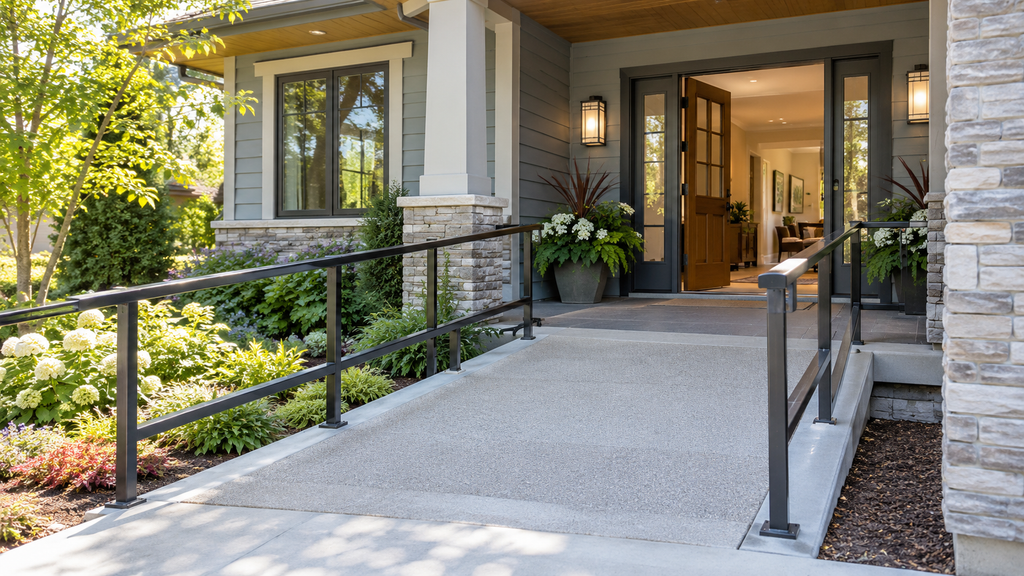
An easy step-free access to the home can facilitate going out for appointments, shopping, and socializing. Stable handrails and well-designed ramps can aid in the transition.
Other improvements made that will be helpful include enhanced porch lighting, slip-resistant outdoor surfaces, and fixing leveling issues to pathways. The AARP HomeFit Guide provides an explanation of how entry accessibility can be a factor in making homes accessible for those whose mobility needs are changing.
Consider Widened Doorways and Lower Thresholds
Breathing room can make it easier to navigate with mobility equipment from room to room by having wider doorways. Eliminating unnecessary raised thresholds can also minimize the tripping hazard.
Find out the clearance requirements of person and equipment before making structural changes. When attempting to widen a doorway, the professional may be able to ascertain whether or not there are any plumbing, electrical or framing problems.
Safer Ways to Move Between Floors
Stairs may be more difficult due to alterations in balance, strength and/or joint movement. The selection of the mobility device will depend on whether a person can walk, be safe moving to and from the wheelchair, or is a wheelchair user.
When Stair Lifts May Be Helpful
Stair lifts are powered chairs which move along a rail mounted next to a staircase. These can be used for elderly persons who are having trouble standing up and down the stairs but are safe to sit and transfer on to the chair.
When assessing the stairs, the width of the stairs, the landing area, safe transfers and access in case of emergency should be considered.
When a Wheelchair Lift or Main-Floor Living Makes More Sense
A platform style wheelchair lift might be able to leave the person in the wheelchair when moving between a couple of levels. This might be more appropriate if it is unsafe or hard to transfer to a stair lift.
One of the most feasible choices is to relocate the bedroom and necessary bathroom space to the primary floor. This can minimize the need to be using stairs.
Kitchen Changes That Make Daily Tasks Easier
Food preparation is related to reaching, bending, lifting, and standing. Some very straightforward, relatively easy home improvement projects can help make these activities easier.
Improve Cabinet, Countertop, and Appliance Access
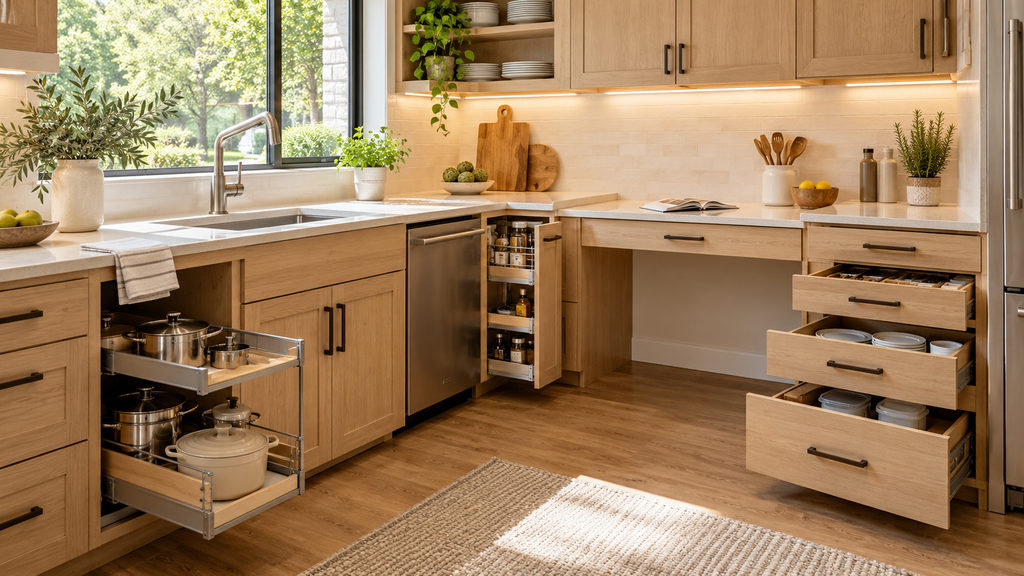
Easily accessible, but not too high or low, for those that are frequently used in the kitchen. Might be more convenient for a person with a disability who uses a wheelchair to have adequate knee space under certain working locations.
Reduce Strain With Better Lighting and Easy-Grip Fixtures
Task Lighting increases the level of light in the task areas for food preparation, sinks and counter tops. Levers, cabinet handles and faucets with less hand strength are better options for individuals with reduced hand strength.
Check for appliances having simple controls and automatic shut-off (if applicable).This information could help in designing the house to be comfortable for seniors, but not necessarily an all-out kitchen remodel.
Bedroom and Living Room Changes That Support Independent Living
Bedrooms and living rooms should not be cluttered and/or have unstable furniture in the way of older adults.
Create Clear Walking Paths and Safer Flooring
Avoid walking on electrical cords or out of the way rugs and furniture. Secure carpet and repair problems with the floor. Light between bedroom/bathroom.
There are guidelines developed by the National Institute on Aging to keep pathways clear and to provide adequate lighting to help prevent falls, at home.
Make Beds, Seating, and Everyday Items Easier to Reach
Chairs and beds chests should be easy to sit on and easy to stand on. It will be helpful to have stable chairs with arm rests. Keep things, phone and light switches within easy reach.
Never put things on the shelves or shelves that are reaching up.
Affordable Aging in Place Improvements to Start With
Remodelling is not always necessary to achieve accessibility improvements. There are a few simple home changes that older adults can make that will solve common problems.
| Home modification | Main benefit |
| Motion-sensor nightlights | Improves nighttime visibility |
| Lever-style door handles | Easier to operate with limited grip |
| Remove or secure loose rugs | Reduces common trip hazards |
| Accessible storage | Limits reaching and bending |
| Professionally installed grab bars | Provides stable hand support |
| Brighter stairway lighting | Improves visibility on steps |
However, if there are significant accessibility concerns, changes which are not cost-effective should not be considered as a replacement for structural changes. Homeowners can request assistance from the local aging services agencies for the financial assistance needed to make the improvements to the home that are qualifying.
How to Choose the Right Home Modifications for an Older Adult
Home adaptations will be very different depending on different handicaps, different activities, different home and financial resources. People with walking sticks can require other modifications than those who use wheelchairs.
Start With a Room-by-Room Home Safety Assessment
Wander around the house and make a list of the areas around the house where walking is difficult . Bathroom access, stairs, lighting, walking paths, walkway entrances and often used storage. Practical approach to hazards prior to more in-depth remodelling.
Know When to Consult an Occupational Therapist or Qualified Contractor
An occupational therapist can observe how well a person performs the tasks they handle in everyday life and suggest modifications to make them safer. The National Institute on Aging offers a helpful room-by-room guide to preventing falls at home, and you can learn more about it on their site. Some situations call for expert advice, such as installing a ramp or a lift, remodeling a bathroom, or making other significant changes to the home. In those cases, a qualified contractor or an occupational therapist can recommend the safest approach.
FAQs
What are the most important modifications in the house for an elderly person?
Important modifications include grab bars, slip resistant bathroom surfaces, improved lighting, secure handrails and convenient access to the entrances. The priorities will differ from individual to individual depending on their mobility, hazards and activities.
How can older adults make their homes safer on a budget?
Remove loose rugs, move lighting, remove dust from walkways, put out-of-the-way items within easy reach and anchor furniture that is likely to tip over . If you can do a little legwork, these can be accomplished in the home with a minimum of costs.
Which is better, a stair lift or wheelchair lift for aging in place?
Stair lifts might be an option for those who are able to transfer safely into a chair in a seated position. For wheelchair dependent individuals who don’t want to get in and out of the chair, a wheelchair lift may be preferable. Professional suitability assessment is used to identify suitability.
Can home modifications help older adults avoid moving to assisted living?
For some older adults, modifications to the home can support their retention in their home, and improve the usability and safety of the home environment. However, needs for medical care, cognitive changes and/or the need for regular personal assistance can not be met by housing changes alone.
Conclusion
Most activities which can be performed, to help a person to remain independent at home, begin with something simple – making something safer and easier at home.
Some of the right modifications to a home can help to encourage comfort, confidence and independence for a person as they age in place, such as installing grab bars, adding nonslip flooring and mobility lifts and making accessible entrances.
Do an assessment of your home and act on any critical areas in your home, and if needed, call a professional. Now, small changes can help make your home a better place to live in future.