
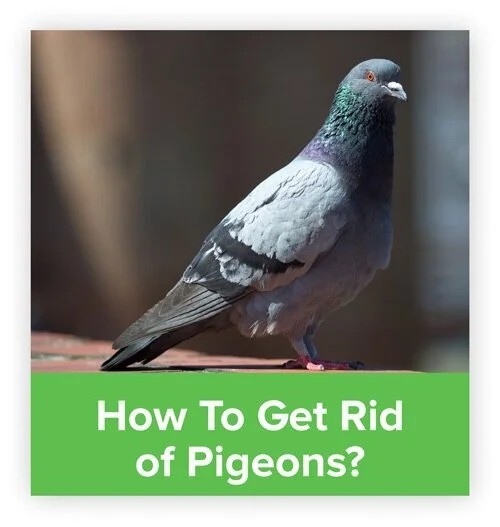
Pigeons aren’t just a nuisance; they cost American property owners millions of dollars annually in cleanup, repairs, and health-related damage. Their droppings are acidic enough to corrode both metal and stone, and they carry pathogens that pose genuine health risks to anyone in the vicinity. Knowing how to keep pigeons away before a flock settles is far easier than evicting dozens of birds that have already claimed your roofline or ledge as permanent residence.
You don’t need to hurt a single bird to reclaim your property. What actually works is a layered approach, physical deterrents combined with habitat changes and ongoing management. Below are seven proven methods that’ll make your space far less appealing to pigeons.
Remove Food and Water Sources First
Pigeons stay wherever food is reliable, and no deterrent holds up long if the food supply doesn’t disappear first. This is also discussed in resources such as OvoControl‘s guide on effective ways to get rid of pigeons, which highlights food availability as a factor homeowners often overlook. Cut off that supply, and they’ll relocate faster than any spike or net will push them.
Start with the obvious culprits. Outdoor pet food left on a porch, open garbage bins, and spilled birdseed from feeders all pull pigeons in consistently. Secure trash lids, clean up food scraps after outdoor meals, and consider relocating bird feeders if pigeons dominate them.
Standing water matters too. Pigeons need a regular water source, and a clogged gutter or a puddle-prone corner of your yard can anchor a flock to your property. Fix drainage problems, empty saucers under planters, and keep gutters clear year-round.
Install Anti-Roosting Spikes on Ledges
Bird spikes are one of the simplest and most cost-effective tools available. They don’t injure birds – they make flat ledges, window sills, and roof edges too uncomfortable to land on.
Spikes come in polycarbonate plastic and stainless steel. Plastic versions hold up fine in lower-traffic spots; stainless steel performs better under direct sun and rough weather. Install them along every flat surface where pigeons land with any regularity, and cover the full length of each ledge, birds will find and exploit any gap you leave behind.
The adhesive or screws included in most kits work well for masonry and wood. For metal surfaces or high-wind exposure, mechanical fastening works better than adhesive alone.
Use Bird Netting to Seal Large Areas
Netting is the right tool when you need to block pigeons from an enclosed or semi-enclosed space – a courtyard, an open garage, the underside of a roof overhang, or a loading dock area.
Choose polyethylene netting rated for UV resistance; it’ll last several years outdoors without becoming brittle. A 50mm mesh works well for pigeons. The net needs proper tension and anchoring at every edge, because a loose or sagging net can trap birds rather than exclude them, which creates a bigger problem than the one you started with.
Installation takes more effort than spikes, but netting is often the only option that fully excludes birds from large open areas. It’s worth doing right the first time.
Apply Visual and Auditory Deterrents Strategically
Reflective tape, predator decoys, and ultrasonic devices all fall into this category. They can work, but only if you use them correctly and rotate them regularly.
Pigeons adapt fast. A plastic owl that sits in the same spot for two weeks gets ignored. Move decoys every two to three days and combine them with reflective material to increase disorientation. Mylar tape or holographic flash tape along rooflines catches and scatters light in ways that unsettle birds without much ongoing effort.
Ultrasonic devices produce frequencies pigeons find disruptive. They’re most effective in enclosed spaces – garages, attics, under bridges – where sound accumulates rather than dispersing. In open outdoor areas, the effect fades too quickly to do much on its own.
Block Access to Nesting Sites
Pigeons return to the same nesting spots year after year. Seal those spots off and you break the cycle.
Inspect your building for gaps around HVAC units, broken vents, open eave spaces, and any structural cavity large enough for a bird to squeeze into. Hardware cloth with openings no larger than one inch blocks access to almost any gap without cutting off airflow. It’s cheap, it’s durable, and it’s far more permanent than spray foam.
Do this before nesting season. In most of the US, pigeons breed from early spring through summer. So if you find an active nest with eggs, check local regulations before you touch anything – disturbing active nests without a permit can violate federal or state wildlife law.
Try a Contraceptive Baiting Program
For larger properties with persistent flocks, fertility control is an approach worth knowing about. It doesn’t require trapping or lethal removal; instead, registered contraceptive bait reduces the reproductive rate of the flock over time, gradually shrinking its size.
This method works slowly. Expect a meaningful reduction over one to two years, not days or weeks. It’s most practical for facilities like manufacturing plants, warehouses, or large commercial properties where flock sizes are large and traditional deterrents don’t work well on their own.
The EPA has registered contraceptive products for pigeons. Look for programs that use a controlled-delivery baiting station, which limits access to non-target bird species on your property.
Maintain Your Deterrents Over Time
A one-time installation rarely solves a pigeon problem permanently. Pigeons probe for weaknesses, and deterrents that go unmaintained stop working.
Plan a walkthrough every two to three months. Look for spikes that’ve shifted or been knocked loose by weather, netting that’s torn or sagged, and any new gaps that’ve opened in your building’s exterior. Swap out reflective tape on a regular rotation and keep repositioning decoys so birds don’t grow accustomed to them.
And stay consistent about food and water removal – that’s the foundation everything else depends on. A building with perfect spike installation but open garbage cans will still attract pigeons without fail.
Conclusion
Keeping pigeons away from your property is less about any single product and more about removing what attracts them while making every surface too uncomfortable to use. Start by cutting off food and water, then layer physical deterrents on ledges and access points. Stay consistent with maintenance checks. If a flock is already established and growing, a contraceptive program can reduce numbers humanely over time. None of these methods require harming birds – and that’s what makes this approach to keeping pigeons away both practical and sustainable long term.