
Most falls that older adults have at home do not happen during an ambitious activity. They happen on a short, familiar trip in the dark, usually between the bed and the bathroom, in a room the person has crossed thousands of times. That is what makes the bedroom worth attention: the distances are short, the changes are cheap, and almost none of them require a contractor.
Why the Bedroom Punches Above Its Weight
The hours between midnight and dawn combine several risk factors at once. Vision adapts slowly. Blood pressure can drop on standing. Medication taken in the evening may still be working. Balance is at its worst in the first few seconds after sitting up, which is exactly when most people commit to standing and walking. Nothing about that is unusual or a sign of decline. It is the ordinary physiology of waking up, and it explains why a room that is perfectly safe at two in the afternoon can be a hazard at two in the morning.
Getting In and Out of Bed
The transfer in and out of bed is the moment worth engineering first. Bed height matters more than people expect: feet should reach the floor flat when sitting on the edge, with knees at roughly a right angle. A bed that is too high means dropping down onto it. A bed that is too low means hauling upward from a deep crouch, which is hard on the knees and often ends with a hand grabbing a bedside table that was never designed to take body weight.
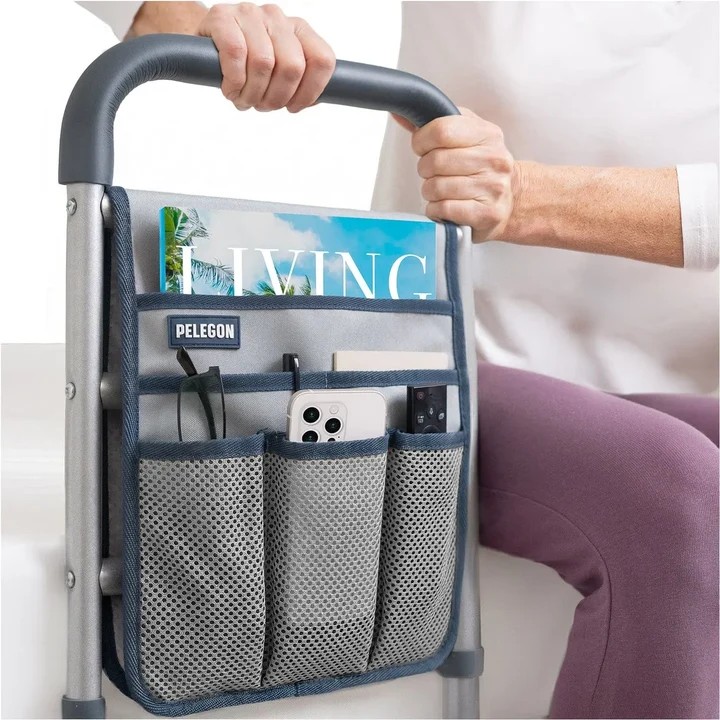
Where a person needs something solid to push against, bed rails for seniors can provide a fixed point that a nightstand cannot, turning an unsupported lift into a controlled one. They are not right for everyone, and the fit between rail, mattress and frame is the part that determines whether they help.
That fit deserves a careful look rather than a glance. The Food and Drug Administration advises checking that the rail, mattress and bed frame are compatible, since most are bought separately, and inspecting regularly for gaps, because a soft or compressing mattress can open a space that was not there on the day of installation. It also notes that rails are not appropriate for everyone, particularly people with confusion, restlessness or reduced muscle control, and that a rail should never stand in for proper monitoring. Anyone in that position should talk to a clinician before adding one.
Light the Route, Not the Room
The single highest-value change in most bedrooms costs under twenty dollars. Plug-in motion lights at ankle height, one near the bed and one near the bedroom door, turn a black corridor into a visible one without anybody reaching for a switch.
Avoid the temptation to solve this with a brighter ceiling light. Full overhead light at three in the morning causes a moment of glare that is worse than the dark, and it wakes the household. Low, warm, floor-level light is what the eye can use immediately.
A lamp within arm’s reach of the pillow completes the set. If someone has to sit up, swing their legs out, and cross the room before there is any light at all, the lighting plan has failed at the exact moment it was needed.
Clear the Floor Before Buying Anything
Rugs, cords, laundry baskets and the corner of a duvet that reaches the carpet cause more trouble than any missing piece of equipment. Bedspreads and linens long enough to touch the floor are a genuine tripping risk and one of the easiest to remove.
None of this is local folk wisdom. When the World Health Organization set out which fall-prevention measures for older people survive real scrutiny, home assessment and modification appeared on the list alongside balance training and medication review. Its fact sheet also records that death rates from falls are highest among adults over 60 in every region of the world.
Cords are the stubborn one. A phone charger, a lamp and a heating pad create three separate lines across the floor. Group them, run them behind furniture, and secure them with clips rather than leaving them looped where a slipper can catch.
The wider case for adapting the home rather than accepting the risk has been argued close to home as well, alongside the other supports that make staying put realistic. Better lighting and bathroom grab bars sit at the cheap end of that list and deliver the most per dollar.
Give the Night a Shape
Equipment solves part of the problem. Routine solves another part, and it costs nothing.
Keep water on the nightstand so a trip to the kitchen never happens at four in the morning. Put a phone or an alert device where it can be reached from the floor, not just from the pillow, because the scenario that matters is the one where someone cannot stand up. Encourage a slow transition: sit on the edge of the bed for a slow count of ten before standing, which gives blood pressure time to catch up.
If evening medication makes someone drowsy or unsteady, that is worth raising with a pharmacist or doctor rather than working around. Timing changes are sometimes possible and cost nothing to ask about.
What Confidence Actually Does
There is a second reason to make these changes, and it is not about the fall itself. People who are worried about falling start doing less. They skip the evening walk, decline the invitation, stop going downstairs after dinner. That narrowing brings its own losses in strength, balance and mood, and it makes the next fall more likely rather than less.
A bedroom that someone can cross confidently at night has an effect out of proportion to its size. It restores one ordinary act, taken for granted for decades, to the list of things a person can do without thinking about it. Start with the light and the floor, look hard at the bed height, and take advice before adding anything that attaches to the bed itself. The cheapest changes are usually the ones that work.