
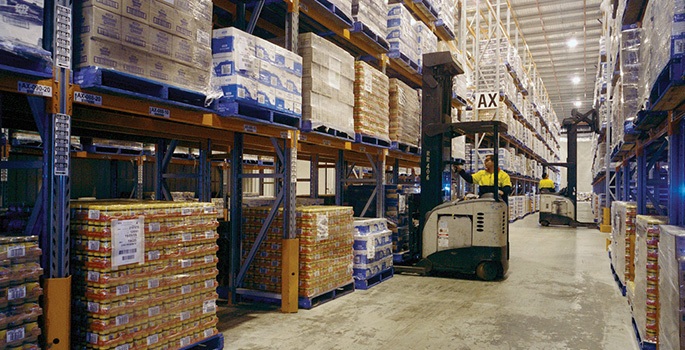
Racking gets installed once and lives with the warehouse for a long time. Getting the configuration wrong doesn’t just create a minor inconvenience. It locks in inefficiency that staff would have to endure every single day. In the worst situations, the struggle lasts for years. This is the case until someone finally decides the cost of reconfiguring is worth the disruption.
Here are five decisions made before installation that matter more than most businesses realise at the time.
Aisle Width Versus Forklift Type
Aisle width needs to match the equipment being used. Narrower aisles fit more racking into the same floor space. This sounds like an obvious win until the forklift being used needs more turning clearance than the aisle provides.
A mismatch here shows up daily as slower picking, forklift operators repeatedly repositioning to get into a bay properly, and increased risk of contact damage to racking or product. Pallet racking Melbourne warehouses installed without confirming this against their fleet, including any equipment upgrades planned in the next few years, end up with an aisle width that constrains efficiency for the racking’s entire working life.
Beam Height and Where Products Sit
Beam levels get set at installation. Adjusting them later means unloading a bay, moving hardware, and reloading. Most warehouses avoid doing so, and the reason is pretty obvious. Thus, everyone aims to get it right the first time or else.
Setting beam heights based only on current stock locks in a configuration that works for today’s inventory and nothing else. It’s a wiser practice to consider seasonal variation or how pallet heights might change over time.
A warehouse storing consistently sized products has less to worry about here. One handling varied pallet heights, or expecting product range changes within a few years, benefits from building in some flexibility at the lower and mid levels specifically, since these get adjusted as stock changes.
Load Capacity Matched to Weight
Racking load capacity gets specified based on what’s being stored at the time of installation, and this becomes a problem the moment heavier product lines get introduced without anyone checking whether the existing racking can handle the increased weight safely.
This isn’t something that shows immediate visible failure in most cases. Racking under sustained overload can deform gradually, weakening over months or years before an obvious problem appears. Specifying capacity with some margin above current requirements protects against this as product ranges inevitably shift over the racking’s working life.
Bay Depth and Whether It Suits Pick Patterns
Standard bay depth works fine for single-pallet-deep storage. However, for businesses storing multiple pallets deep per bay, they need this decided correctly from the start, as we pointed out earlier. Retrofitting deeper bays later means major structural changes.
Deeper bays suit high-volume, low-SKU-variety operations well, since less frequent access to each pallet position matters less when there’s plenty of the same product behind it. Operations with high SKU variety and frequent individual pallet picks generally need shallower configurations that keep every position individually accessible, and choosing deep storage for this kind of operation creates ongoing picking inefficiency that compounds daily.
Future Expansion Space Built Into the Original Layout
Racking installed to exactly fill current available floor space leaves no room for expansion without a full reconfiguration later. This becomes a real problem the moment a business needs additional storage capacity and discovers the existing layout has no logical extension point without disrupting racking that’s already fully stocked and operational.
Leaving deliberate expansion space, even if it means slightly underutilising floor space in the short term, avoids the far more disruptive and expensive process of reconfiguring an entire operational warehouse later. This matters most for growing businesses, where the question isn’t whether more storage will eventually be needed, but when.