

Most people researching options assume the first real decision is which clinic to book, whereas the more useful starting point is understanding what is causing the hair loss in the first place. Anyone comparing options for the best hair transplant in Toronto is better served by a broad understanding of the landscape before narrowing down to a specific provider, because hair loss has several distinct underlying causes and not all of them point toward surgery as the right next step.
The Many Possible Causes Behind Hair Loss
Androgenetic alopecia, commonly known as pattern hair loss, is the most familiar cause and affects both men and women, though the pattern typically looks different between the two. Alopecia areata is a separate, autoimmune condition that causes patchy hair loss and requires an entirely different treatment approach from the one pattern baldness calls for. Traction alopecia develops from sustained pulling on the hair over years, often from tight hairstyles, and can permanently damage follicles in the affected area. Telogen effluvium is a temporary, diffuse shedding pattern usually triggered by stress, illness, or a change in medication, and it tends to resolve on its own once the underlying trigger is addressed. Scarring alopecia, whether from injury, a prior procedure, or an inflammatory skin condition, damages the follicles directly and requires a closer look at the affected tissue before any treatment plan can be considered.
Thyroid conditions and other hormonal factors can also drive noticeable hair thinning, and correcting the underlying imbalance sometimes improves the pattern substantially without any surgical intervention. Several of these causes can look much alike under casual observation, which is exactly why an accurate diagnosis matters more than jumping straight to researching procedures.
A family history of hair loss is worth raising early in this conversation too, because it helps a provider anticipate how a pattern is likely to progress rather than react only to what is visible today. Genetic predisposition can come from either side of a person’s family, not only the mother’s side as is commonly assumed, which is why a broader family history tends to be more informative than focusing on one relative’s experience alone.
Why a Diagnosis Has to Come Before Any Treatment Recommendation
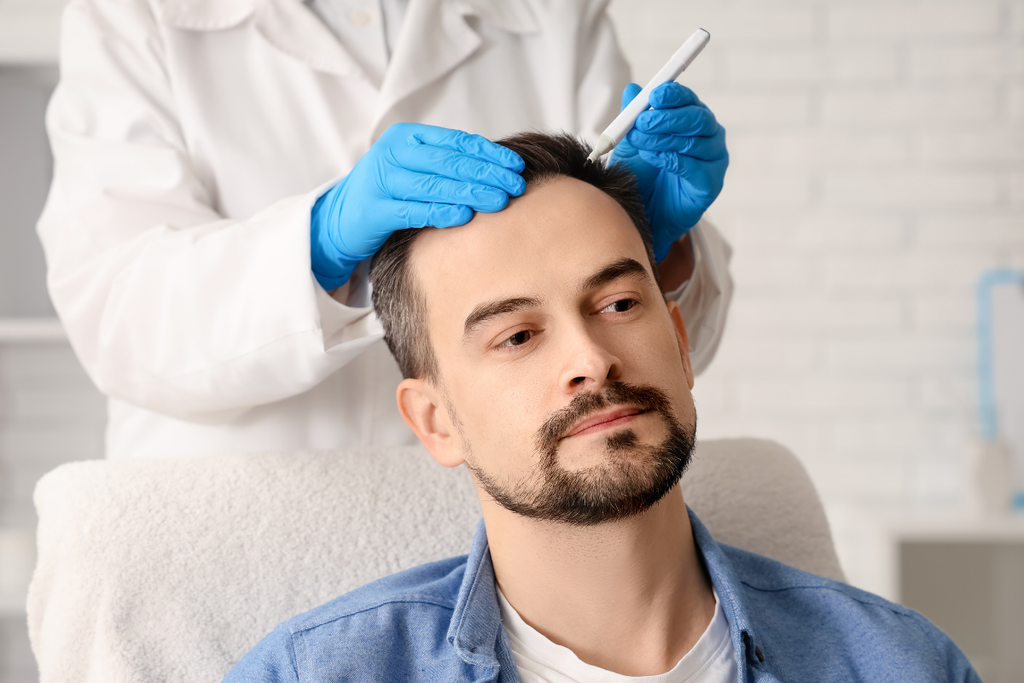
A responsible evaluation starts with identifying which of these causes is driving the hair loss in a specific case, generally through a detailed scalp examination, a review of family and medical history, and sometimes blood work to rule out a hormonal or nutritional contributor. Treating every case of thinning as though it were straightforward pattern baldness, without ruling out an autoimmune cause, a temporary shedding pattern, or a hormonal trigger first, risks recommending a surgical solution to a problem surgery cannot fix.
This distinction is not a minor technicality. A transplant performed on hair that is still actively shedding due to an unaddressed underlying condition tends to produce an unpredictable, uneven result, since the untreated cause keeps affecting the surrounding hair regardless of how well the surgery itself goes. Anyone weighing up the best hair transplant in Toronto should expect this kind of screening to happen before any graft count is discussed, not after.
Who Tends to Be a Good Surgical Candidate
Stability of the loss pattern matters more than almost any other factor, since operating while hair loss is still actively progressing risks a result that looks less complete a few years later than it did immediately after surgery. Donor hair availability sets a hard limit on what is achievable, since grafts can only be moved from areas of the scalp that remain genetically resistant to further loss. Age plays a role too, particularly for younger patients whose pattern has not yet fully established itself, since planning conservatively around an uncertain future trajectory tends to produce more durable results than an aggressive plan based on the current pattern alone.
General health also factors into candidacy, since certain medications and health conditions affect healing and graft survival. A thorough intake covering all of this is what allows a provider to give an honest answer about whether surgery makes sense right now, later, or possibly not at all.
None of these factors operate in isolation. A patient with a stable pattern but limited donor hair faces a different conversation from one with abundant donor hair but a pattern that is still progressing, which is why candidacy for the best hair transplant in Toronto is always assessed as a combination of factors rather than any single one on its own.
What a Complete Approach Looks Like Beyond Just Surgery
For many people, especially those with early or actively progressing hair loss, medical management such as topical or oral medication is a reasonable first step before any conversation about surgery takes place. Supportive, non-surgical options, including low-level laser therapy and platelet-rich plasma treatment, are sometimes used alongside medical management or as a bridge for patients who are not yet ready for or good candidates for a transplant. A clinic that offers this fuller range of care, rather than treating surgery as the only tool available, is better positioned to match the actual cause of a patient’s hair loss with an appropriate response. Clinics such as Hair Transplant Centre Toronto typically structure their intake process around this broader view, rather than assuming every consultation is really a surgical consultation in disguise.
Surgery generally becomes the right option once the pattern has stabilized, whether naturally or through medical management, and once there is enough healthy donor hair to achieve a meaningful result. At that point, the same clinic that guided the earlier evaluation is well placed to plan a procedure informed by a detailed understanding of how the pattern has behaved over time. This kind of continuity, tracking a patient’s pattern over time rather than treating a single visit as the whole relationship, is a meaningful part of what defines the best hair transplant in Toronto.
What the Overall Process Looks Like
Regardless of the specific cause, the general path toward the best hair transplant in Toronto tends to follow a similar arc: a thorough consultation and diagnosis, a period of monitoring or medical management if the pattern has not yet stabilized, a detailed surgical plan once candidacy is confirmed, and a structured recovery period afterwards. Recovery from the surgical portion typically involves some redness and swelling in the first week, shedding of the transplanted hair within two to four weeks, and new growth beginning around the third or fourth month, with a fuller picture of the result visible closer to the one-year mark.
Understanding this full arc before narrowing down to a specific clinic helps set realistic expectations for the whole process of getting the best hair transplant in Toronto, rather than focusing narrowly on the surgical day itself.
Making an Informed Decision
Anyone researching the best hair transplant in Toronto is better equipped for that search once they understand the range of causes behind hair loss, the factors that determine surgical candidacy, and the fact that surgery is only one part of a broader approach to treatment. A provider who takes the time to explain where a specific case fits into that larger picture, rather than moving straight to a graft count, is offering the kind of grounded starting point this decision calls for.