
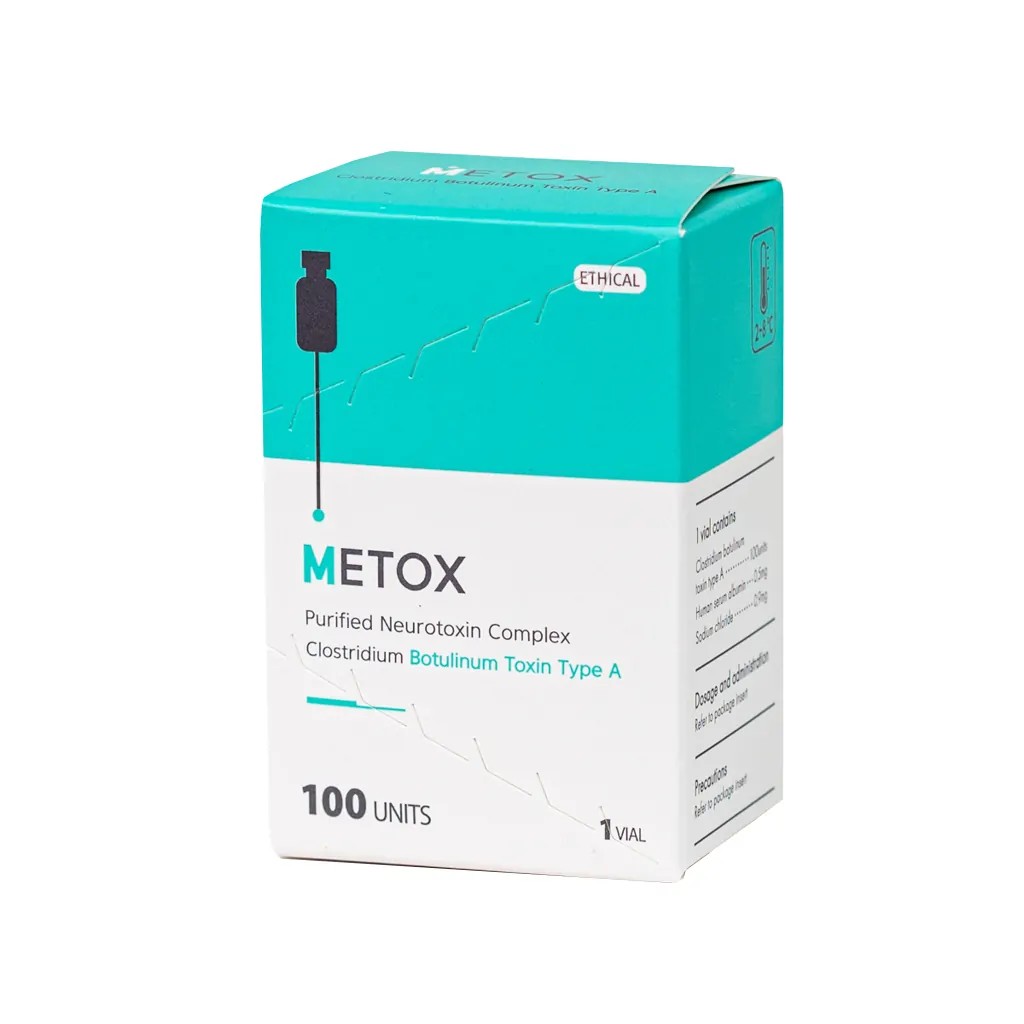
Metox is a type A botulinum product in a 100-unit vial. It is a dry form made for use by trained medical staff. The main aim is to ease excess facial motion that can mark the skin. The effect is local and has a set term. Good use starts with a full exam, a clear plan, safe prep, and a later review. This is an aesthetic procedure, so each step must be set by a trained pro. The aim is safe care and a soft result that fits the face.
What Metox Is Used For
Metox is used to help ease dynamic wrinkles that show with facial use. These marks can fade at rest when they are new, yet may stay as the skin ages. The main site is often the frown zone, where brow pull can form deep lines. The forehead may also need care, but its lift and drop must be judged as one system. The neurotoxin acts at the nerve end and cuts the cue that makes a set muscle move.
This leads to brief, planned relaxation in the chosen site. The aim is a calm look, not a fixed face. The brow, lids, smile, and head pose must still look in tune. This kind of treatment can aid an antiaging plan or facial rejuvenation when the main cause is motion. It does not add bulk, fill a fold, or mend dry skin. Deep marks that stay at rest may need skin care or other forms of help. The plan must fit the cause, not just the spot that the patient can see.
Exam, Consent, and Dose Choice
A sound plan starts with a health check and a face exam. Ask about past toxin use, drugs, allergy, weak nerve or muscle states, skin flare, and any new illness. Also check if the patient is with child or may breastfeed. Look at the face at rest, then ask for a frown, lift, smile, and firm eye close. This shows which part moves, how hard it pulls, and where the skin will fold. Note brow height, lid tone, eye shape, and any side-to-side gap.
The dose must be set by a skilled prescriber for that one face. Age, sex, bulk, prior effect, site, and the wish for more or less motion can all guide the choice. Do not swap unit plans from one brand to the next. Each vial has its own test, label, and use guide. Talk through the goal, the time to onset, the short term of the result, and the need for review. Consent must also cover bruise, pain, head pain, a low brow or lid, uneven pull, and rare spread of effect.
Safe Prep and Injection Method
Before prep, check the box and vial for the right name, lot, date, seal, and cold chain. Metox is a dry, single-dose vial and must be mixed as the current maker guide states. Use clean hands, a clean field, and an aseptic method. Add the stated fluid with care, and do not shake or foam the mix.
Mark sites while the face is in use, then clean the skin. Pick a fine, fit needle and draw up only the amount in the plan. Each injection must have a known aim, depth, path, and gap from key parts. A low or broad spread near the eye or brow can cause a poor look or loss of fit use. Use a calm pace and small, exact shots. Do not add more just to use the vial. Stop if the site, dose, or plan is not clear. Safe care is more key than speed, a full vial, or a fixed map.
Aftercare, Review, and Stock Control
Staff who wish to source metox botox should first check that the item, vial size, and use fit their legal scope and case load. Keep all stock in the cold range on the pack. Log the lot, date, place, and time of use. Once mixed, store and use the vial only as the current guide and local rule allow. For each case, note the total units, each site, the prep lot, and the name of the person who gave the care.
Give the patient a short aftercare sheet. It should state what mild signs may occur, what acts to avoid, and how to reach the clinic. It should also list red flags such as hard breath, poor grip, weak voice, or a hard swallow. The clinic should keep a written plan for urgent review, medical escalation, and adverse event reporting. Staff should know how to assess new eyelid droop, marked facial imbalance, infection, vision change, or signs of systemic weakness, and they should document each call and action.
Set a review at a time that lets the full effect be seen. At that visit, check rest, motion, brow and lid level, smile, side match, and the patient view. Do not rush to add more before the first result is clear. Use the notes to tune the next plan and keep a soft, natural look.