
The global peptide therapeutics market moved from an estimated $140.9 billion in 2025 to $164.0 billion in 2026, and Grand View Research projects it will reach $294.6 billion by 2033, a compound annual growth rate of 8.7 percent. Within that expansion sits a narrower and more specialized field: growth hormone-releasing hormone (GHRH) analogs, a peptide class that includes tesamorelin. Unlike most compounds in its category, tesamorelin has completed the full arc of FDA regulatory review, which has left it with an unusually deep base of published pharmacokinetic, structural, and analytical data for researchers to draw on. That regulatory history, combined with renewed academic interest in the growth hormone axis, has made tesamorelin one of the more heavily referenced GHRH analogs in current peptide research literature.
Everything that follows is written for a research and laboratory audience. Tesamorelin and the other compounds discussed here are research chemicals, not medicines, supplements, or consumer products. Nothing in this article describes or implies human or animal use, dosing, or administration, and none of it should be read as health, treatment, or outcome advice.
A Peptide Market Expanding Faster Than Its Analytical Infrastructure
The growth in peptide therapeutics overall is being outpaced, in percentage terms, by the infrastructure that supports peptide research itself. The global peptide synthesis market, which covers the custom manufacturing, purification, and characterization services that laboratories rely on, is projected to grow from roughly $800.16 million in 2026 to $1,640.52 million by 2034, a CAGR of about 9.39 percent. North America held close to 48.59 percent share of that synthesis market in 2025, making it the largest single region for peptide production and analytical services, with Asia identified as the fastest-growing region as biotechnology infrastructure investment accelerates there.
The research-grade segment specifically, separate from clinical-stage manufacturing, has shown even sharper regional growth in some markets. Peptide research suppliers in France, for example, have reported the domestic research peptide market expanding at more than 40 percent annually since 2023, a pace driven in large part by demand for GHRH-axis and healing-peptide compounds entering laboratory catalogs. That growth curve mirrors what several US-based research suppliers have described anecdotally: rising order volume from university labs, contract research organizations, and independent researchers working with growth hormone secretagogues.
What Tesamorelin Is, Structurally and Mechanistically
Tesamorelin is a synthetic, stabilized analog of human growth hormone-releasing hormone, built on the 44-amino acid GHRH(1-44) backbone with an added trans-3-hexenoic acid group at the N-terminus. That modification is the key structural difference from native GHRH: it slows enzymatic degradation by dipeptidyl peptidase-4 (DPP-4), the enzyme primarily responsible for GHRH’s very short native half-life, extending the peptide’s window of receptor activity in research models.
Mechanistically, tesamorelin is studied for its action at the GHRH receptor, a G-protein-coupled receptor expressed on somatotroph cells in the anterior pituitary. Receptor binding triggers a cyclic AMP-mediated signaling cascade that stimulates pulsatile secretion of endogenous growth hormone, which in turn drives hepatic production of insulin-like growth factor 1 (IGF-1). This GHRH-GH-IGF-1 axis is the primary framework researchers use when characterizing tesamorelin’s pharmacodynamics, and it is the same axis referenced across the broader GHRH analog literature, including a 2024 Nature Reviews Endocrinology overview of GHRH and its analogs that noted continued academic interest in the pathway.
Where Tesamorelin Sits Among Other GHRH-Axis Compounds
Tesamorelin is one of several GHRH-axis peptides referenced in current research literature. Sermorelin, corresponding to the shorter GHRH(1-29) fragment, is studied as a less stable but still receptor-active analog. Other compounds in adjacent classes, such as growth hormone-releasing peptides and ghrelin-receptor agonists, work through a separate receptor pathway (the growth hormone secretagogue receptor) rather than the GHRH receptor itself, and researchers typically distinguish between the two mechanisms when designing comparative studies. Tesamorelin’s distinguishing characteristic within this group remains its regulatory history: it is the only member of the class to have completed FDA review, which is why so much of the published structural and stability data available to researchers originates from tesamorelin specifically rather than from its unapproved analogs.
Why Purity, Sequence Confirmation, and Storage Data Matter in Research Settings
Peptide stability is a persistent variable in laboratory work, and it is one of the more scrutinized aspects of sourcing research-grade tesamorelin. As a lyophilized (freeze-dried) powder, tesamorelin is comparatively stable, but it remains sensitive to heat, light, and moisture, and standard laboratory guidance calls for storage at approximately -4 degrees Fahrenheit (-20 degrees Celsius) once reconstituted or exposed to ambient conditions. Reputable suppliers document expected shelf stability, typically citing a 12 to 24 month window for lyophilized peptides stored as directed.
Because peptide degradation and synthesis byproducts are not always visible, third-party analytical verification has become a standard expectation in the research-peptide supply chain rather than an optional add-on. Certificates of analysis (COAs) generated by independent testing laboratories typically report four categories of data: purity percentage (commonly via HPLC), peptide sequence confirmation (via mass spectrometry), date of analysis, and endotoxin levels, the last of which is particularly relevant for peptides intended for in vitro or in vivo laboratory work where bacterial contamination could confound results. Researchers evaluating a supplier’s catalog generally cross-reference batch-specific COAs against the product listing rather than relying on general purity claims alone.
How This Works in Practice
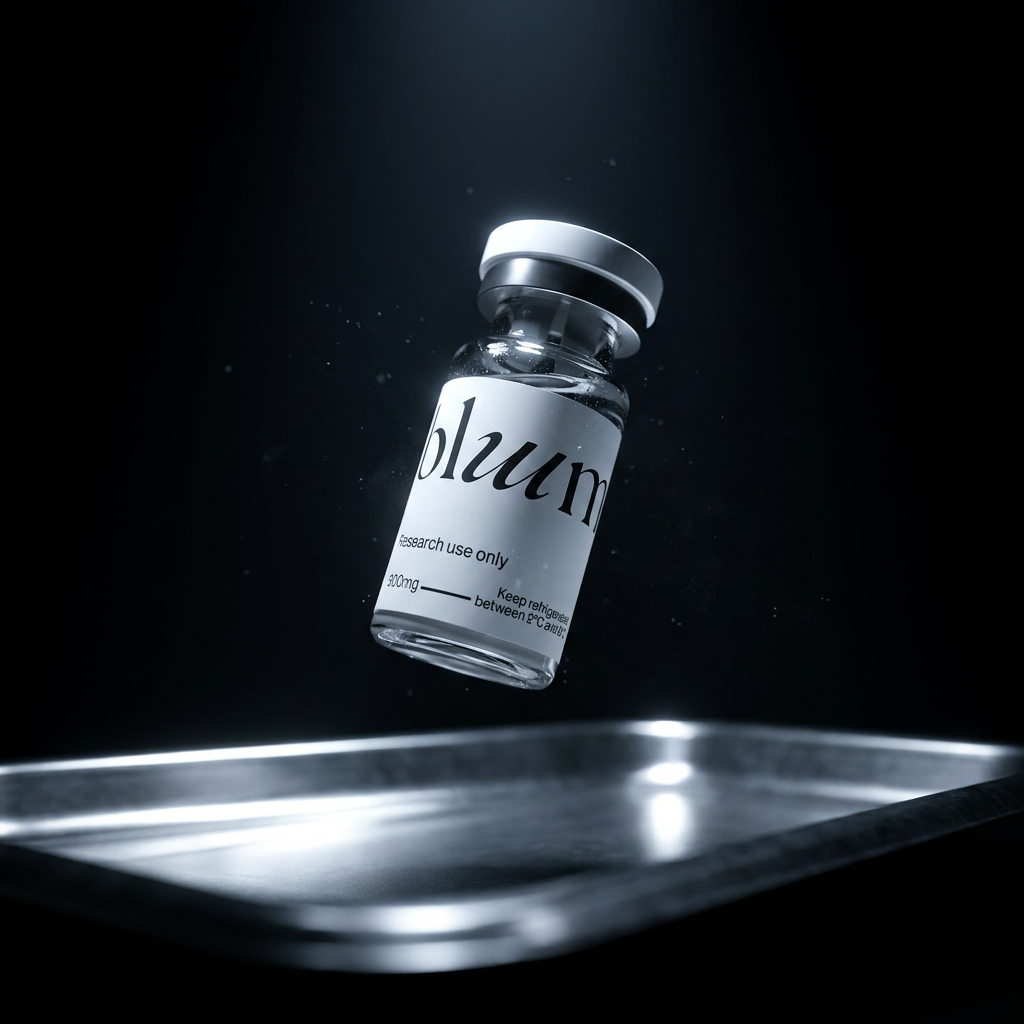
Individual suppliers illustrate how this documentation chain functions in practice. Bluum Peptides offers tesamorelin research peptides shipped as a lyophilized powder from a US-based facility in Sheridan, Wyoming, with batches tested by independent laboratories including Janoshik Analytical, BioRegen, and Freedom Diagnostics. Each certificate of analysis covers purity, peptide sequence confirmation, and an endotoxin report, and listed products carry a stated purity threshold of 98 percent or higher, with individual lot results published alongside the product listing. Product pages carry research-use-only labeling, stating that the material is not intended for human or animal consumption.
That structure, a lyophilized product, a published lot-specific COA from a named third-party lab, and explicit research-use-only labeling, reflects the documentation pattern that has become common among US research-peptide suppliers as buyers, payment processors, and researchers themselves have pushed for more verifiable sourcing. It is not unique to any one supplier, but it is the baseline researchers increasingly expect to see before treating a listed purity figure as reliable.
Friction Points and Where the Category Is Headed
The research-peptide market’s growth has not been frictionless. Payment processing has become one of the more consistent operational pressures on suppliers in this category: because GHRH-axis and other growth-hormone-adjacent peptides sit in a regulatory gray zone relative to approved pharmaceuticals, several major payment processors have tightened underwriting requirements for merchants selling them, pushing suppliers toward stricter research-use-only labeling, age verification, and documented compliance programs as a condition of maintaining processing relationships. That pressure has, if anything, accelerated the industry’s move toward third-party COA publication as a form of self-regulation ahead of clearer federal guidance.
On the research side, publication activity around the GHRH axis has remained steady rather than explosive, with systematic reviews and meta-analyses continuing to appear in the peer-reviewed literature as recently as 2026, drawing on the comparatively large data set tesamorelin’s regulatory history has generated. Analysts covering the peptide synthesis market expect Asia-based production capacity to keep growing fastest through the early 2030s, which is likely to affect sourcing costs and lead times for US-based research suppliers even as North America retains the largest current share of synthesis and analytical services. Meanwhile, the broader peptide therapeutics market’s climb toward Grand View Research’s projected $294.6 billion by 2033 suggests sustained institutional investment in the underlying chemistry, which tends to correlate with more, not fewer, published characterization studies on well-established analogs like tesamorelin.
Conclusion
Tesamorelin’s position in the GHRH analog field is defined less by novelty than by data depth. Its stabilized GHRH(1-44) structure, its regulatory history relative to unapproved analogs in the same class, and the resulting volume of published pharmacokinetic and structural literature give researchers a reference point that fewer other GHRH-axis peptides can match. As the broader peptide therapeutics and peptide synthesis markets continue to expand through the end of the decade, and as third-party analytical verification becomes the baseline expectation rather than the exception, tesamorelin is likely to remain one of the more closely documented compounds in growth hormone axis research. All of the above is intended strictly for laboratory and research contexts; tesamorelin and related GHRH-axis peptides are not approved for human or animal use outside of the specific regulatory pathways described, and none of this article constitutes guidance for administration of any kind.