
Introduction
Retail businesses are continually adapting to meet changing customer expectations. Today’s shoppers value convenience, speed, and greater control over their purchasing journey, expecting in-store experiences to match the ease of digital interactions they enjoy elsewhere. As retailers respond to these evolving behaviours, self-service kiosks have become an increasingly important part of creating efficient and engaging customer experiences.
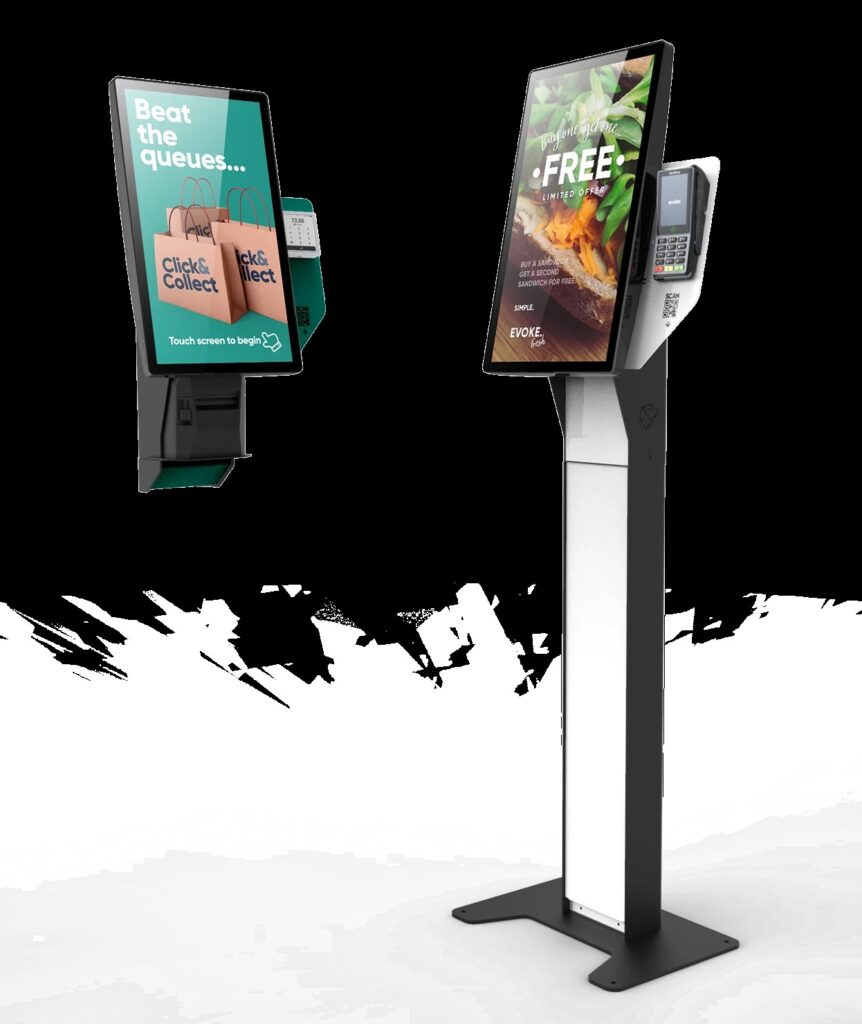
Rather than replacing in-store service, self-service kiosks complement traditional retail environments by providing customers with more flexible ways to browse products, access information, place orders, and complete purchases. Through innovative customer experience design and digital technology, companies such as Evoke Creative help retailers implement kiosk solutions that improve operational efficiency while delivering smoother shopping journeys.
Retail Experiences Are Becoming More Customer-Led
The way customers interact with retail brands continues to change.
Many shoppers now prefer to explore products independently before speaking with staff. They want quick access to product information and the freedom to complete purchases without unnecessary delays.
Retailers are responding by creating shopping environments that support greater customer independence while maintaining high service standards.
Self-service kiosks help retailers achieve this by providing customers with immediate access to key information and services throughout the store.
This approach creates a more flexible shopping environment that supports a wide range of customer preferences.
Delivering Faster In-Store Experiences
Speed plays an increasingly important role in retail satisfaction.
Customers often expect to move efficiently through every stage of their shopping journey, particularly during busy trading periods.
Self-service kiosks help improve transaction speed by providing additional service points throughout retail locations.
These systems support:
- Faster product searches
- Quicker ordering processes
- Reduced waiting times
- Simplified payment options
- Improved customer flow
Reducing delays helps create more enjoyable shopping experiences while supporting higher customer satisfaction.
Providing Better Access to Product Information
Modern consumers frequently research products before entering a store.
When shopping in person, they expect immediate access to additional information that helps them make confident purchasing decisions.
Interactive kiosk systems allow retailers to present:
- Product specifications
- Availability updates
- Pricing information
- Product recommendations
- Alternative purchasing options
Providing accurate information at the point of purchase helps customers make decisions more efficiently while improving confidence in the buying process.
Supporting Omnichannel Retail
Today’s customer journey often moves between online and physical shopping environments.
Customers may browse products online, visit a store to view items, and complete purchases using whichever channel offers the greatest convenience.
Self-service kiosks help connect these experiences by integrating digital functionality into physical retail environments.
Retailers can support:
- Click-and-collect services
- Digital product catalogues
- Online ordering
- Loyalty programme access
- Flexible fulfilment options
Creating connected experiences strengthens customer engagement while supporting more consistent brand interactions.
Improving Store Operations
Self-service kiosks benefit retailers as well as customers.
By allowing shoppers to complete routine transactions independently, store employees can dedicate more time to assisting customers with complex enquiries and personalised service.
Operational improvements may include:
- Better staff allocation
- Reduced checkout congestion
- Improved service efficiency
- Higher transaction capacity
- Better customer flow management
This balanced approach improves both operational performance and customer satisfaction.
Preparing Retail for the Future
Retail technology continues evolving alongside changing consumer behaviour.
Businesses that invest in flexible digital solutions are often better positioned to respond to future customer expectations while maintaining efficient store operations.
Self-service kiosks provide retailers with scalable technology that adapts to new products, services, and shopping trends without fundamentally changing the in-store experience.
As customer expectations continue evolving, digital retail technology will remain an important part of creating convenient, efficient, and engaging shopping environments.
Conclusion
Retail customers increasingly expect shopping experiences that combine speed, flexibility, and convenience. Self-service kiosks help businesses meet these expectations by providing intuitive digital experiences that improve customer journeys while supporting more efficient retail operations.
Through innovative retail technology and user-focused design, Evoke Creative continues helping retailers implement self-service kiosks that strengthen customer engagement, improve operational efficiency, and support the future of modern retail.