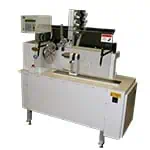
Coil winding machines are essential for producing consistent, accurate, and repeatable coils used in motors, transformers, sensors, inductors, solenoids, relays, medical devices, aerospace components, and many other electrical products. While standard machines can handle common winding jobs, many manufacturers need equipment built around their exact product requirements. That is where custom ordering becomes valuable. By customizing the machine’s mechanical design, controls, tooling, wire handling, automation level, and inspection features, companies can improve quality, reduce labor, and increase throughput. For businesses producing specialized coils, custom coil winding machines can make the difference between a workable process and a highly efficient production system.
Machine Size and Winding Capacity
One of the first things you can custom-order is the size and capacity of the machine. Coil dimensions vary widely depending on the application, so the winding system must be built to handle the required part size, wire gauge, bobbin style, and finished coil geometry. A small machine may be ideal for delicate sensor coils or miniature medical components, while a larger system may be necessary for motor stators, transformers, or industrial electromagnets. Custom capacity options can include spindle length, winding diameter, traverse travel, payload rating, and torque output. These specifications help ensure the machine can run smoothly without overloading motors, bearings, or tooling.
Manufacturers can also request machines designed for single-part production, batch production, or continuous high-volume output. Some companies need compact benchtop units for research and development, while others need fully integrated production cells with automated loading and unloading. The right size depends on both the current product and future production plans. A custom-built system can leave room for growth by supporting a wider range of coil sizes or tooling setups. This flexibility can help protect the investment as product lines change.
Wire Type, Gauge, and Tension Control
Wire handling is another major area where customization matters. Different coils require different wire materials, insulation types, and diameters, including copper, aluminum, litz wire, magnet wire, rectangular wire, and specialty conductors. Each material behaves differently during winding, so the machine may need custom guides, feeders, tensioners, dereelers, and wire straighteners. Thin wire may require highly sensitive tension control to prevent stretching or breakage, while heavier wire may need stronger drive systems and reinforced guides. Proper wire management helps maintain coil shape, electrical performance, and production consistency.
Tension control can often be customized with mechanical, magnetic, pneumatic, or servo-controlled systems. For precision applications, programmable tension profiles may be used throughout the winding cycle. This allows the machine to adjust tension during starts, stops, layer changes, and speed changes. Consistent tension is especially important for coils that must meet strict resistance, inductance, or dimensional requirements. When tension is properly controlled, scrap rates decrease, and repeatability improves.
Winding Patterns and Programmable Motion
Custom coil winding machines can also be configured for specific winding patterns. Some products require simple layer winding, while others need wave winding, orthocyclic winding, random winding, sectional winding, tapered winding, or complex multi-step patterns. The machine’s traverse system, spindle control, and software must be matched to the required pattern. Programmable motion control allows operators to define turns, pitch, speed, direction, dwell points, and layer transitions. This is especially useful when the same machine needs to produce several coil designs.
Advanced motion control can include servo-driven spindles, servo traverses, synchronized axes, and recipe-based programming. Operators may be able to store and recall programs for different part numbers, reducing setup time and minimizing operator error. Some machines also support multi-axis winding for irregular shapes or complex bobbins. These capabilities are valuable for industries where coil geometry has a direct impact on electrical performance. With the right controls, the machine can produce consistent coils even when the winding path is complex.
Tooling, Fixtures, and Mandrels
Tooling is one of the most commonly customized parts of a coil winding system. The machine may need special mandrels, bobbin holders, clamps, tailstocks, chucks, collets, or support fixtures to hold the part securely during winding. Good tooling prevents slippage, vibration, misalignment, and deformation. It also helps operators load and unload parts quickly and safely. For delicate parts, custom fixtures can reduce handling damage and improve yield.
Custom tooling is especially important when winding directly onto unusual forms or nonstandard components. Examples include rectangular cores, toroidal cores, curved forms, multi-section bobbins, and customer-specific housings. In some cases, quick-change tooling can be added so operators can switch between products with minimal downtime. Color coding, keyed fixtures, and tool recognition features may also be included to reduce setup mistakes. Well-designed tooling improves both quality and productivity.
Automation and Production Flow
Automation level is another important custom-order option. Some businesses only need a semi-automatic machine where an operator loads the part, starts the cycle, and removes the finished coil. Others need fully automatic systems that handle feeding, winding, taping, cutting, stripping, soldering, testing, marking, and unloading. The best option depends on production volume, labor availability, quality requirements, and budget. Automation can improve consistency by reducing manual variation between operators.
Custom automation may include several production features, such as:
- Automatic wire cutting and clamping
- Automatic lead positioning
- Integrated taping or insulation wrapping
- Bobbin or core loading systems
- Robotic part handling
- Conveyor integration
- Barcode scanning and recipe selection
- Automated reject sorting
These features can be added individually or combined into a complete production cell. For high-volume manufacturing, automation can significantly reduce cycle time and improve traceability. For lower-volume production, selective automation may be more cost-effective. A custom approach allows the machine to match the real needs of the process instead of adding unnecessary complexity.
Controls, Software, and Operator Interface
The control system can also be customized to fit the way your team works. Basic machines may use simple controls for speed, turn count, and direction. More advanced machines may include touchscreen interfaces, programmable logic controllers, servo drives, data logging, password protection, and network connectivity. A clear operator interface helps reduce training time and prevents mistakes during setup and production. Custom screens can be designed around specific part numbers, process steps, or quality checks.
Software customization may include recipe storage, production counters, alarms, maintenance reminders, access levels, and process history. Some manufacturers also request integration with manufacturing execution systems or enterprise resource planning systems. This allows production data to be tracked by job, operator, batch, or serial number. For regulated or high-reliability industries, data collection can support documentation and compliance requirements. A well-designed control system makes the machine easier to use, monitor, and maintain.
Inspection, Testing, and Quality Features
Quality control features are often added to custom coil winding machines. These can help detect problems during the winding process instead of after the part is complete. Common options include turn counting verification, wire break detection, tension monitoring, diameter checks, vision inspection, resistance testing, continuity testing, and inductance testing. Some machines can stop automatically when a fault is detected, preventing additional scrap. Others can record test results for each finished coil.
Inspection features are especially useful when coils are expensive, difficult to rework, or used in critical applications. By integrating quality checks into the winding process, manufacturers can reduce downstream inspection time and improve confidence in every part. Automated testing can also help identify trends before they become major production issues. For example, rising tension variation may indicate a spool problem or a worn guide. Built-in monitoring gives teams the information they need to act quickly.
FAQ: Custom Coil Winding Machines
What information is needed to custom-order a coil winding machine? You usually need coil drawings, wire specifications, bobbin or core details, target production volume, winding pattern requirements, tension requirements, and any testing or automation needs.
Can one machine wind multiple coil designs? Yes. Many custom machines can be built with programmable recipes and changeable tooling so they can run several part numbers.
Is a fully automatic machine always the best option? Not always. Fully automatic systems are useful for high-volume production, but semi-automatic machines may be better for lower volumes, frequent product changes, or specialized work.
Can custom machines handle delicate wire? Yes. Machines can be equipped with sensitive tension control, smooth wire guides, low-friction components, and break detection for fine or fragile wire.
How does customization affect cost? Customization usually increases upfront cost, but it can reduce labor, scrap, downtime, and quality problems over time.
Can testing be built into the winding process? Yes. Resistance, continuity, inductance, tension, and visual inspection systems can often be integrated into the machine.
Safety, Maintenance, and Long-Term Support
Safety features can also be customized based on the machine’s size, speed, automation level, and operator involvement. Options may include guarding, interlocked doors, emergency stops, light curtains, safety-rated controls, torque limits, and enclosed wire handling areas. These features help protect operators while keeping production efficient. Maintenance access should also be considered during the design stage. A machine that is easy to clean, inspect, and service will usually have less downtime.
Long-term support is another important part of a custom machine purchase. Buyers should ask about spare parts, documentation, training, software backup, remote support, and future upgrade options. A well-documented system is easier for maintenance teams to troubleshoot and keep running. Training can help operators understand setup procedures, fault recovery, and basic machine care. When support is planned from the beginning, the machine can remain productive for many years.
Choosing the Right Custom Options
The best custom features depend on what the coil must do, how many parts must be produced, and how much variation the process can tolerate. A simple product may only require custom tooling and basic programmable controls. A complex or high-volume product may need advanced motion control, automation, inspection, and data tracking. Before ordering, it is helpful to define the required coil specifications, current production challenges, desired cycle time, and acceptable quality limits. This makes it easier to separate essential features from nice-to-have options.
Custom coil winding machines are valuable because they are designed around the product instead of forcing the product to fit a generic machine. You can custom-order machine size, wire handling, tension control, winding patterns, tooling, automation, software, inspection systems, and safety features. Each option should support better repeatability, higher quality, safer operation, or lower production cost. When the machine is properly specified, it can improve both the winding process and the finished product. For manufacturers that depend on reliable coils, customization is often one of the smartest investments they can make.