
Sports fandom has changed. A generation ago, following your team meant gathering around a television set, arguing with your neighbors about last night’s game, or driving to the venue yourself.
Today, fans carry the entire experience in their pocket. A few taps on a smartphone and you have live scores, player stats, injury reports, and real-time odds, all before the first quarter ends. The shift has been dramatic, and it has reached every corner of the country.
Even sports betting has changed. Thanks to reliable platforms where fans can learn more about betting sites, their offers, bonuses, and promotions, placing a wager is no longer limited to a physical venue.
But none of these advancements erase what cities like Yonkers have built over generations. The technology has evolved. The passion behind it never left!
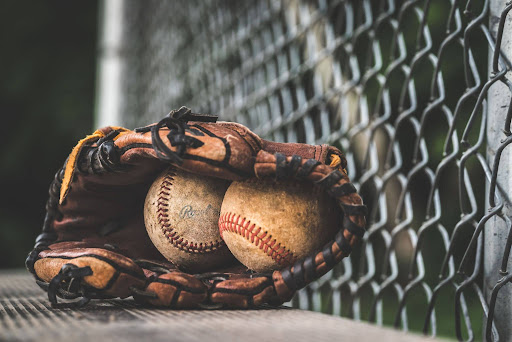
Photo from Pexels.com
A City Built on Competition: Yonkers’ Sporting Roots
Yonkers has competition in its foundation. The most visible symbol of that is Yonkers Raceway, one of the oldest harness racing tracks in the United States. Since the late 1800s, the track has drawn crowds who came not just for the spectacle of horses rounding the oval but for the community experience surrounding it.
Families made an evening of it. Regulars had their favorite drivers and their preferred spots along the rail. The raceway was never just a gambling venue; it was a gathering place, a shared ritual that gave local identity a physical address.
Beyond the raceway, Yonkers developed a genuine amateur boxing tradition. Local gyms produced fighters who competed at regional and national levels, and the sport earned a serious following among blue-collar residents who respected the discipline and grit it demanded. High school athletics added another layer. The rivalries between Yonkers public schools (played out on football fields, basketball courts, and baseball diamonds) were fierce, personal, and deeply felt. These were not just games. They were neighborhood events where entire communities showed up to support their own.
From the Grandstands to the Living Room
For most of the twentieth century, sports fandom in Yonkers was passed down through proximity. A father took his son to the raceway. An uncle explained the Yankees lineup during a Sunday afternoon radio broadcast.
You learned to love sports the way you learned most things in a working-class city, from the people around you, through experience and repetition. The emotional connection came first. The statistics, if anyone bothered with them at all, came later.
Television deepened that connection without replacing the communal element. Local sports bars became extensions of the living room, packed on game nights with fans who wanted to watch together.
This was especially true for big events: playoff runs, championship fights, the Kentucky Derby. Yonkers residents followed the New York teams with a loyalty that borders on personal identity. Being a Yankees fan or a Giants fan was not a casual preference. It was a statement about who you were and where you came from. That culture was reinforced every time a group of people gathered to watch a game and talked about it afterward.
The New Playbook: Stats, Streaming, and Smarter Fandom
The modern Yonkers fan is not just emotionally invested; they are informed. Advanced statistics have moved out of baseball analytics departments and into everyday conversation. Fans now debate win probability, player efficiency ratings, and expected goals with the same confidence their parents used to argue about batting averages. The information is freely available, and fans have embraced it.
Streaming platforms removed the last geographic barrier. You no longer need a cable package or even a television to follow a game. Phones, tablets, and laptops deliver live coverage anywhere.
Fantasy sports accelerated this analytical shift further, turning casual viewers into active participants who track individual player performance across multiple teams simultaneously. The result is a fan who is more engaged, more knowledgeable, and more connected to the broader sports landscape than any previous generation. The gut-instinct fandom that defined Yonkers for decades has not disappeared; it has simply added a new layer of information on top of it.
The Rise of the Data-Driven Fan in New York
What legal betting brought with it was access to data. Reputable platforms provide odds comparisons, injury news, team trends, and line movement tracking.
For the analytically minded fan, these tools are genuinely useful for understanding a matchup, regardless of whether they place a bet. The line between sports analysis and betting analysis has blurred, and many fans engage with both without being primarily motivated by gambling. The data is useful on its own terms.
This broader change, from instinct to information, is happening in Yonkers the same way it is happening across New York. The local fan who once called a game based purely on feel now has access to the same data tools used by professional analysts. That does not make the experience less emotional. It makes it richer.
What Hasn’t Changed: Yonkers’ Loyalty and Local Pride
Through all this evolution, the core of Yonkers’ sports culture has remained intact. Multi-generational fandom is still very much alive. The grandparent who watched Mickey Mantle at the Stadium has grandchildren who now follow Aaron Judge on their phones in real time. The loyalty to local teams, to the city itself, and to the shared experience of watching sports together has not eroded.
High school sports still draw crowds. Local boxing gyms still produce fighters and mentors. Community leagues fill up every season.
Yonkers remains a city where sports are woven into daily life, not as an entertainment product, but as something closer to culture. That distinction matters. It is what separates genuine sporting cities from places where fans simply consume games.
Looking Ahead
The next chapter in Yonkers sports fandom will be written by fans who hold both in mind: the deep local loyalty passed down to them and the now-standard analytical tools. These two things are not in conflict. A fan who checks advanced metrics before a game does not love the sport less. They engage with it differently and, in many cases, more deeply.
Local institutions will continue to anchor the culture. The raceway, the high school rivalries, the neighborhood gyms; these are not relics. They are living parts of the city’s identity. What surrounds them will keep changing. Apps will improve. Data will become more granular. Legal betting will grow as a mainstream activity for casual fans. But the emotional core (the pride, the loyalty, the generational bond) stays.