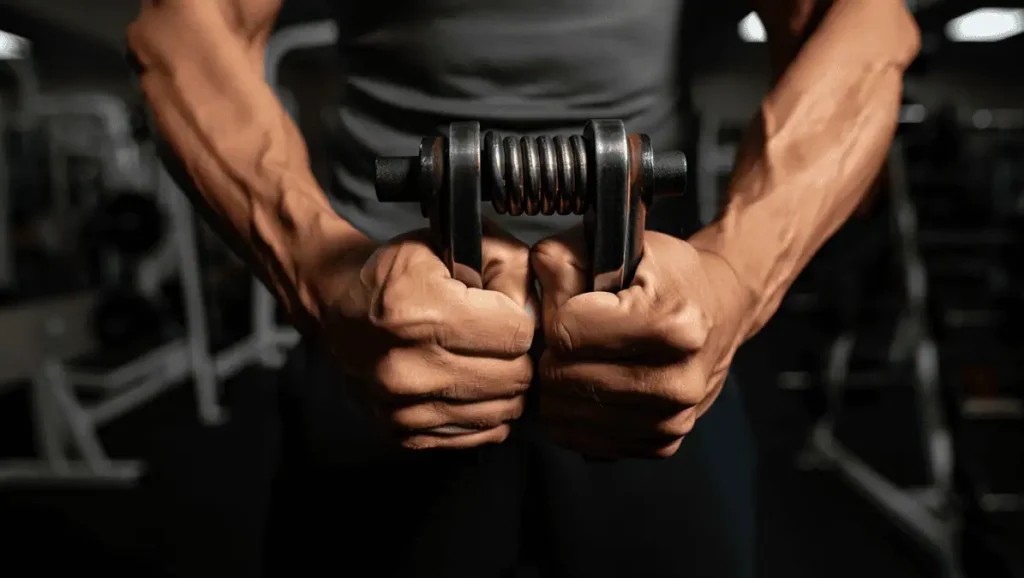
Grip strength is one of the most underrated parts of athletic performance, general fitness, and everyday strength. A stronger grip helps you lift heavier weights, control objects better, and perform more confidently in sports, work, and daily tasks. It matters for deadlifts, pull-ups, rows, carries, climbing, wrestling, baseball, tennis, golf, and many other activities. When your hands, wrists, and forearms are weak, they often become the limiting factor before larger muscle groups are fully challenged. Building serious grip strength takes more than squeezing a hand gripper once in a while, because the hands need progressive, balanced, and consistent training.
Grip strength also supports injury prevention when developed properly. Stronger hands and forearms can improve joint control, wrist stability, and overall upper-body connection. However, grip training should be approached with the same care as any other strength program. Too much volume too quickly can irritate the elbows, wrists, or tendons. The goal is to build strength gradually while giving the small tissues of the hands and forearms enough time to adapt.
Why Grip Strength Matters
Grip strength is important because almost every upper-body movement begins with the hands. Whether you are holding a barbell, gripping a dumbbell, carrying groceries, or grabbing an opponent in competition, your hands create the connection between your body and the object. If that connection is weak, your power output can suffer. Many athletes have strong backs, legs, and shoulders, but their grip gives out first. Improving grip can help unlock strength that is already there.
Grip strength also reflects coordination between the fingers, wrists, forearms, and nervous system. A powerful grip is not only about squeezing harder. It includes endurance, stability, control, and the ability to maintain tension under fatigue. This is why serious grip work should include different angles, holds, and movement patterns. A complete plan trains crushing strength, supporting strength, pinching strength, and wrist control.
Understand the Main Types of Grip Strength
Before choosing exercises, it helps to understand the different types of grip strength. Crushing grip is the ability to close the hand forcefully, such as when squeezing a gripper or shaking someone’s hand. Supporting grip is the ability to hold onto something for time, such as during farmer’s carries, deadlifts, or pull-up hangs. Pinch grip is the ability to hold an object between the fingers and thumb, which is useful for plates, rocks, tools, and sport-specific control. Wrist and forearm strength help stabilize the hand so force can transfer properly.
Training only one type of grip leaves gaps. For example, someone may be good with hand grippers but still struggle to hold heavy deadlifts. Another person may have strong farmer’s carries but weak pinch strength. A balanced grip routine builds strength in several ways. The best grip strength training exercises challenge the hand from multiple positions instead of repeating the same squeeze every day.
Start With Heavy Carries
Heavy carries are one of the most effective ways to build real-world grip strength. Farmer’s carries, suitcase carries, trap bar carries, and kettlebell carries train the hands, forearms, core, shoulders, and posture at the same time. They teach you to maintain grip while walking, breathing, and controlling your body. This makes them more practical than many isolated grip drills. They also scale well because you can adjust weight, distance, speed, and time.
To perform farmer’s carries, hold a heavy dumbbell or kettlebell in each hand and walk with tall posture. Keep your shoulders down, ribs stacked, and steps controlled. Start with shorter distances and focus on quality before increasing the load. A good beginner target is 3 to 4 sets of 20 to 40 seconds. As you improve, increase the weight gradually or extend the distance.
Useful carry variations include:
- Farmer’s carries with dumbbells or kettlebells
- Suitcase carries with one weight
- Trap bar carries
- Bottoms-up kettlebell carries
- Towel-grip carries
- Sandbag or odd-object carries
Use Dead Hangs and Pull-Up Bar Work
Dead hangs are simple, but they are extremely effective for grip endurance and shoulder control. Hanging from a pull-up bar forces your hands to support your body weight while your shoulders and upper back stabilize. This can improve grip stamina for pull-ups, climbing, obstacle racing, and general training. If a full bodyweight hang is too difficult, use your feet for light assistance or start with shorter holds. Over time, aim to build longer and stronger hangs.
You can progress dead hangs in several ways. Add time, use a thicker bar, hang from towels, or try one-arm assisted hangs. Towel hangs are especially challenging because the hands must squeeze harder to prevent slipping. Avoid jumping into advanced variations too soon, because the fingers and elbows need time to adapt. Two or three focused hanging sessions per week is usually enough for steady progress.
Train Pinch Strength
Pinch strength often gets ignored, but it plays a major role in complete hand strength. The thumb is a powerful part of the grip system, and weak thumb strength can limit control. Plate pinches are one of the easiest ways to train this area. Hold two smooth weight plates together with the fingers on one side and the thumb on the other. Keep the plates from slipping while standing tall.
Start light and use clean technique. Pinch training can stress the thumb and fingers quickly, so short sets are usually best. Try 3 to 5 sets of 10 to 30 seconds. You can also use block weights, hex dumbbells, books, or grip blocks. The key is to squeeze evenly and avoid twisting your wrist into an awkward position.
Build Crushing Strength Carefully
Crushing strength is the type of grip most people think about first. Hand grippers, tennis balls, rubber rings, and grip trainers can all help develop this quality. However, gripper training is often overdone because it feels easy to add throughout the day. The muscles may tolerate frequent squeezing, but the tendons and joints may not recover as quickly. Treat crushing work like real strength training, not a random habit.
Use controlled sets instead of endless repetitions. Choose a resistance that allows strong, clean closes without pain. For strength, perform 3 to 5 sets of 3 to 8 reps. For endurance, use lighter resistance and sets of 15 to 25 reps. Balance crushing exercises with finger extension work so the hands stay healthy.
Strengthen the Wrists and Forearms
Grip strength depends heavily on wrist position. If your wrist collapses, your grip usually weakens. Wrist curls, reverse wrist curls, radial deviation, ulnar deviation, pronation, and supination can all help build stronger forearms. These movements do not need heavy weight to be effective. Slow control and full range of motion matter more than ego lifting.
Forearm training should feel challenging but not sharp or painful. Use dumbbells, bands, light barbells, hammers, or cable handles. Keep the movements strict and avoid swinging. Training both the front and back of the forearm helps reduce imbalances. Stronger wrists make your grip more stable during lifting, sports, and daily tasks.
Helpful wrist and forearm exercises include:
- Wrist curls
- Reverse wrist curls
- Hammer rotations
- Band pronation and supination
- Plate wrist rotations
- Reverse curls
- Fat-grip dumbbell holds
Add Thick Bar Training
Thick bar training makes ordinary lifts much harder on the hands. When the handle is thicker, the fingers cannot wrap around as easily, so the grip has to work harder. You can use fat grip attachments, axle bars, thick dumbbells, or towels wrapped around handles. This method works well with rows, curls, carries, holds, and deadlifts. It also builds supporting strength that transfers well to many activities.
Start conservatively because thick handles reduce the amount of weight you can use. Do not expect to lift the same loads you normally use with standard handles. Add thick bar work to accessory movements before using it on heavy compound lifts. One or two thick-grip exercises per session is usually enough. The goal is to challenge your hands without ruining the rest of your workout.
FAQ
How often should I train grip strength? Most people can train grip 2 to 4 times per week, depending on intensity and recovery. Heavy grip work should be spaced out so the fingers, wrists, and elbows can recover.
Can I train my grip every day? Light grip work can sometimes be done daily, but hard training every day often leads to overuse. Serious grip work needs recovery just like squats, presses, and deadlifts.
What is the best grip exercise? Farmer’s carries are one of the best overall options because they train grip, posture, core strength, and total-body control. Dead hangs, plate pinches, and thick bar holds are also excellent.
How long does it take to build grip strength? Many people notice improvement within a few weeks. Bigger changes usually take several months of consistent training.
Do hand grippers really work? Yes, hand grippers can improve crushing strength. They work best when combined with carries, hangs, pinch work, and wrist training.
Why do my elbows hurt after grip training? Elbow discomfort often comes from too much volume, poor recovery, or overusing the same grip pattern. Reduce intensity, add rest, and avoid painful movements.
Create a Simple Grip Strength Plan
A good grip plan does not need to be complicated. Start with two or three sessions per week and include different grip patterns. For example, one day can focus on heavy carries, another can include dead hangs and plate pinches, and a third can use grippers and wrist work. Keep the total volume manageable at first. Add weight, time, or difficulty gradually as your hands adapt.
A simple weekly plan could look like this:
- Day 1: Farmer’s carries, wrist curls, reverse wrist curls
- Day 2: Dead hangs, plate pinches, band finger extensions
- Day 3: Thick-grip rows, hand grippers, hammer rotations
Serious grip strength is built through patience, variety, and consistency. The hands are tough, but they also contain small joints, tendons, and connective tissues that need time to strengthen. Use progressive overload, but avoid turning every set into a maximum-effort test. Track your holds, carries, reps, and loads so you can measure progress. With the right grip strength training exercises, better recovery, and steady practice, your hands can become one of your biggest strength advantages.