

By Frank J. Spotorno
• Retired Member, UBC Local 2790
• Member, Italian American Civil Rights League of America
• Member, East Harlem Giglio Society
• Former Congressional Nominee of the 14th Congressional District of NYC (2016)
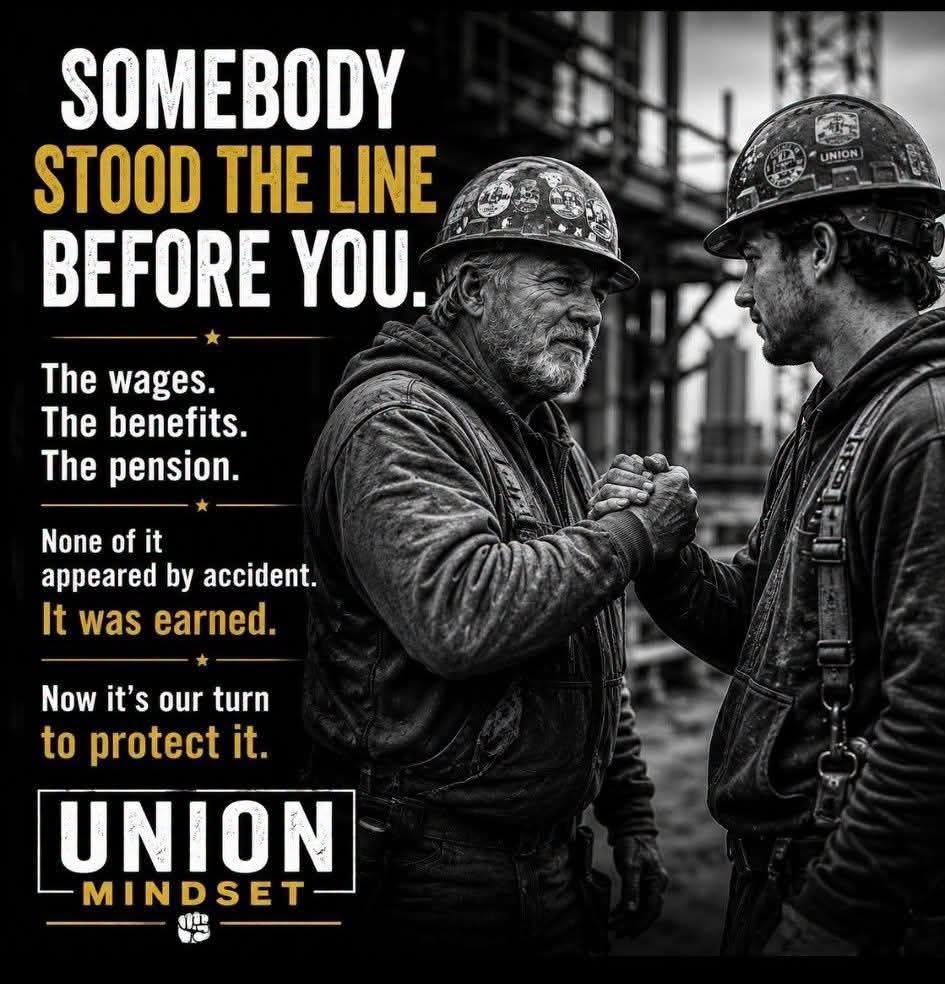
The path to the Executive Mansion in Albany does not run through the exclusive clubs of the Hamptons, nor is it paved solely with standard campaign talking points on crime rates and utility bills. For a moderate Democrat or a Republican candidate to win the governorship in New York State, the math dictates a single, unyielding reality: you must win the hearts, minds, and paychecks of organized labor.
Historically, campaigns have leaned heavily on messages of tax relief and public safety. While these issues matter, they miss the immediate, existential motivation of the working-class voter. The New Yorker struggling to make ends meet is not voting primarily on the marginal fluctuations of their Con Edison bill; they are voting on the security of the hand that signs their paycheck. Good-paying jobs are the indispensable lifeblood of New York State.
They form our tax base, fuel our consumer economy, and serve as the foundational engine that keeps this state solvent. When manufacturing and labor standards are abandoned, cities crumble—as Detroit did. When they are protected by strong collective bargaining, municipal economies endure. The data bears this out. According to the Bureau of Labor Statistics, union workers earn roughly 18% more in median weekly wages than non-union workers, and are more than 50% more likely to have employer-provided health insurance. This isn’t just good for the worker; it is a direct boost to state revenue and local small businesses.
Let’s be completely clear about what this data represents, because there is a persistent, misguided narrative that needs to be corrected: being a union member and having your chosen representatives negotiate a collective bargaining agreement is not socialism. In a socialist or communist country, the government dictates your collective bargaining agreement from the top down. The state sets the wages, the state controls the terms, and the worker is left with a brutal reality: take it or leave it. True American unionism is the exact opposite. It is rooted in the capitalist freedom to negotiate our own wages, benefits, and conditions directly with employers through democratic representation. It is free-market collective bargaining, not government mandate.
The urgent necessity for a pro-labor platform is underscored by recent legislative betrayals in New York City. The enactment of Intro 0910—the Construction Justice Act—celebrated by progressive lawmakers and signed by the mayor, represents a dangerous trap door for the building trades. By establishing a rigid, flat baseline of $40.00 an hour for wage and benefit packages on city-assisted housing projects, the law operates as a strict cap rather than a true prevailing wage. It is a blueprint designed to undercut highly skilled union labor and depress standards across the state. While the opposition has spent weeks distracted by minor cultural grievances, the working standards of New York’s tradespeople are actively being eroded.
The political consequences of ignoring the union hall are already playing out. The sweeping primary victories on June 23, 2026, by candidates aligned with the progressive and democratic socialist factions demonstrate a simple truth: they won because they showed up at the union halls. They engaged directly with the membership while the traditional establishment focused on high-dollar fundraisers.
With exactly four and a half months—eighteen weeks—until the general election, time is the most valuable commodity. Winning requires an immediate, exhaustive tour of every building trades local in this state. It requires walking into UBC Local 2790, IBEW Local 3, Operating Engineers Local 14, Ironworkers Local 361, and Laborers Local 79 without political consultants, focus groups, or scripted talking points. It means sitting down with rank-and-file leaders like Mike Prohaska of Local 79 or Christopher Erikson of IBEW Local 3, shaking hands on the jobsite, and delivering a concrete promise: every single local and state dollar allocated for development must go to New York State contractors who honor the prevailing wage.
This is not a radical departure from American political tradition; it is a return to proven economic patriotism. The Davis-Bacon Act was not a suggestion—it was signed by a Republican, Herbert Hoover, and utilized by Franklin D. Roosevelt to rebuild the nation’s infrastructure. Dwight D. Eisenhower did not construct the Interstate Highway System with non-union labor. Theodore Roosevelt busted trusts and gave labor a seat at the cabinet table. Ronald Reagan, before becoming a conservative icon as governor and president, served multiple terms as the president of the Screen Actors Guild, leading strikes that secured residual payments for actors.
John F. Kennedy fundamentally transformed the American workplace when he signed Executive Order 10988, granting federal employees the landmark right to collectively bargain—a massive victory that legitimized public-sector unions nationwide. Bill Clinton navigated the evolving modern economy by understanding both sides of the bargaining table, fighting for the landmark Family and Medical Leave Act while maintaining that a pro-business environment is empty without pro-worker protections.
We can even look to labor giants like Peter J. McGuire, the co-founder of the United Brotherhood of Carpenters and Joiners of America (UBC) and the “Father of Labor Day,” who fought relentlessly for the 8-hour workday. Or George Meany, the plumber from the Bronx who rose to become the first president of the AFL-CIO, proving that New York labor shapes national prosperity. These leaders understood that the most effective way to defeat radical economic theories is not with rhetoric, but with strong, family-supporting paychecks.
The archive of our state’s economic history shows that a pro-labor approach is the only sustainable strategy for real growth. At 64 years old, my days on the ballot are behind me, but my understanding of where the votes reside remains unchanged. They are found on the jobsites, the factory floors, and the local halls. If you embrace the legacy of T.R., Hoover, FDR, Truman, Eisenhower, JFK, and Clinton, and stand shoulder-to-shoulder with New York’s building trades, the governorship is within reach. If you choose instead to rely on the standard, predictable playbook, the campaign will end where it started. The choice is yours. Act like it.

![7 Fencing Companies in Cambridge, Ontario – 2026 Rankings [Controversial]](https://yonkerstimes.com/wp-content/uploads/2026/06/image-29.jpeg "7 Fencing Companies in Cambridge, Ontario – 2026 Rankings [Controversial]")