
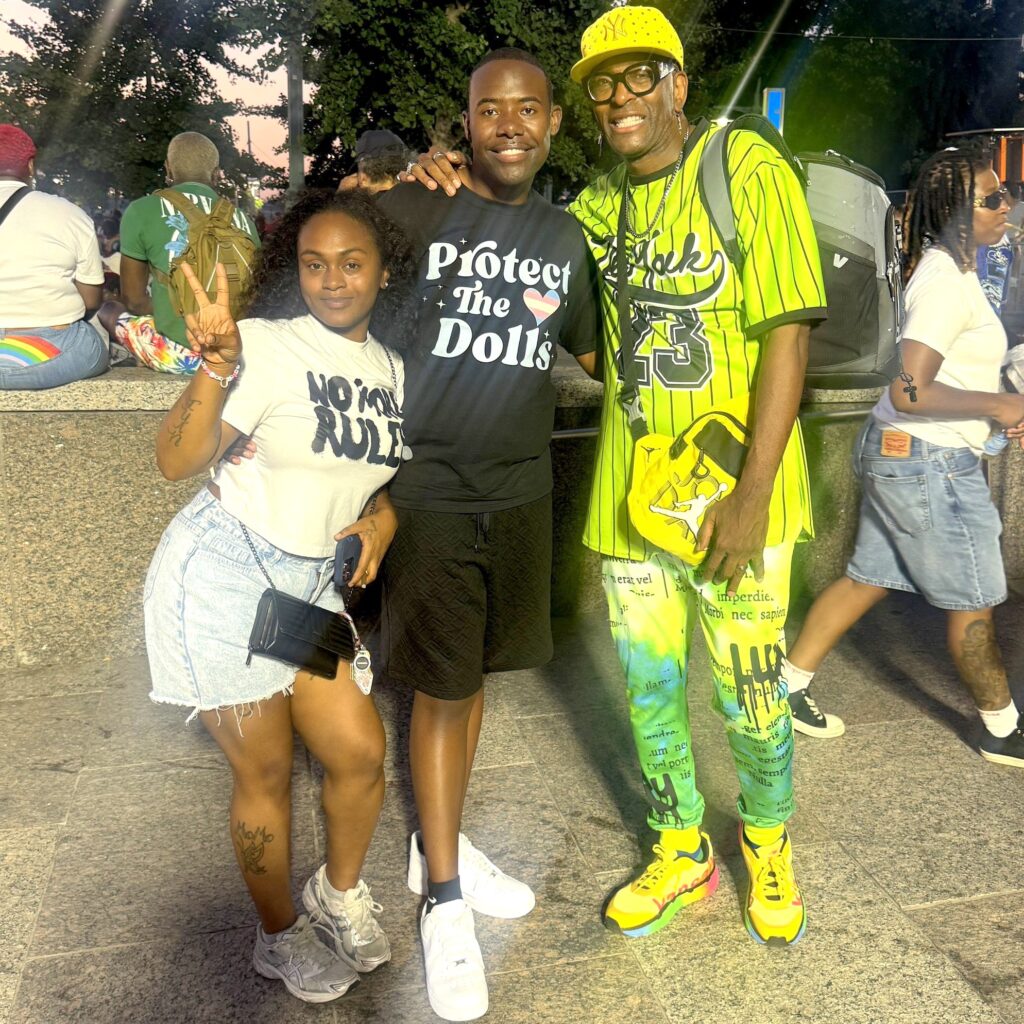
Dennis Richmond Jr, center, with Fatha Freddie Elixir, from Pride in Manhattan in 2025
By Dennis Richmond, Jr.
Yonkers celebrates Pride Month every June. In fact, most of America celebrates Pride Month. When the Month is celebrated, you’ll see parades, concerts, and community events recognizing LGBTQ+ folx, identity, and history. Supporters view the month as an important celebration of visibility, equality, and freedom. Many critics, however, argue that some Pride events have become too explicit or inappropriate for public spaces — especially when kids are there.
For many LGBTQ+ Americans, Pride Month remains deeply meaningful. Supporters say the celebrations honor decades of activism and struggle, particularly following the 1969 Stonewall Riots in New York City. The Riot was started by Marsha P. Johnson, a Black trans woman. At a time when many LGBTQ+ individuals faced discrimination, police harassment, family rejection, or job loss, Pride events became public demonstrations demanding equal rights and dignity.
Today, supporters argue that Pride celebrations still matter because many LGBTQ+ folx continue to experience bullying, harassment, homelessness, mental health struggles, and violence. They believe Pride creates a sense of belonging and allows young people to see others openly living as themselves without fear.
Many also say Pride Month helps educate the public about LGBTQ+ history and encourages acceptance in workplaces, schools, and communities. Businesses, schools, and local governments often participate in Pride events to show support for diversity and inclusion.
At the same time, many critics argue that some modern Pride parades have shifted far away from their original civil rights focus. People look at public behavior at certain events that they believe is too sexualized if kids are present. Videos shared online from some parades have shown revealing outfits, public twerking, and of course, wild dancing. And it wouldn’t be Pride without strangers kissing. This shouldn’t be happening in front of kids.
Some critics say they would have fewer concerns if Pride events focused more heavily on history, equality, and community service rather than adult-themed entertainment. Others argue that public nudity or sexually suggestive performances should not take place at events advertised as, “family-friendly.”
Religious objections also remain a major factor in the debate. Huge actually. Certain faith groups believe Pride celebrations conflict with their religious teachings and values. Even though many folx battle with religious views and sexuality. Some Americans who support LGBTQ+ rights still express discomfort with over the top explicit behavior being displayed in public settings. Even if they are very religious.
Supporters of Pride often respond to criticism by saying controversial videos online do not represent every parade or event. Many Pride celebrations include cultural performances, health resources, nonprofit organizations, and educational programs. They argue that critics sometimes focus only on the most extreme clips circulating online.
As Pride Month continues to evolve, so do the folx curating it. For some Americans, Pride symbolizes freedom, visibility, and progress. For others, concerns about public decency, politics, and children being exposed to things that they shouldn’t continue fueling criticism. The conversation reflects one thing. America.
Dennis Richmond, Jr. (@NewYorkStakz) is a journalist, historian, and educator from Yonkers, NY. He writes to uplift unheard voices, honor history, and inspire change.