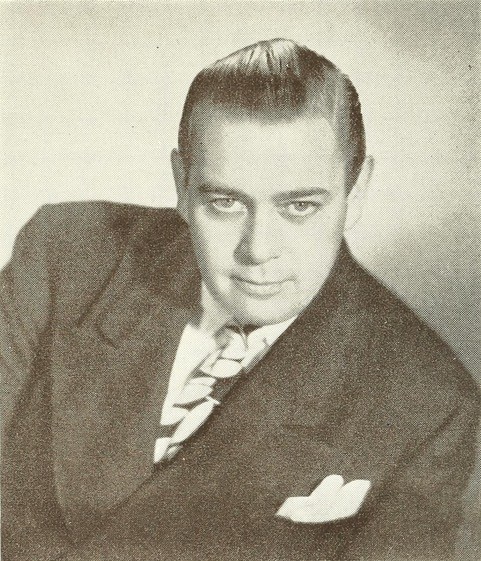
Morton Downey
By Mary Hoar, City of Yonkers Municipal Historian, recipient of the Key to the City of Yonkers, President Emeritus Yonkers Historical Society, recipient of the 2004 Key to History, Yonkers Landmarks Preservation Board Member, Founder of Revolutionary Yonkers 250 and President Untermyer Performing Arts Council
Monday, May 11th
May 11, 1940: School Superintendent Ankenbrand announced Yonkers spent $160,727.46 to convert the former School Twenty building on Mulberry Street into Longfellow Junior High School.
May 11, 1943: Seven Yonkers employee groups appeared before the Common Council; led by CSEA President James White, police, firefighters, teachers, civil servants, school maintenance workers, and two DPW divisions testified not only had their living costs increased, their salaries also had been lowered.
Tuesday, May 12th
May 12, 1918: Dr. Armand-Delille, a French Army Major, visited the Yonkers Unit of the Speedwell Society to investigate methods of preventing spread of infection and disease among children.
Yonkers’ Speedwell Society placed malnourished babies in local homes until they regained health.
May 12, 1929: Former Yonkers resident Morton Downey starred in RKO’s first sound musical, the singing and dancing picture “Syncopation” with his wife, former Park Hill resident Barbara Bennett, and Fred Waring’s Pennsylvanians. The movie opened at the Proctor Theater.
May 12, 1937: Dr. William Crocker, Director of the Boyce Thompson Institute for Plant Research, was elected President of the Board of Education unanimously. The public believed a “deal” had been made with previous Board President Maurice Blinken’s supporters. The thought a deal was brokered was disproved when Sylvester Del Bello was elected Board VP, defeating Blinken’s candidate. To elect Del Bello, the trustees had to suspend its bylaws rule requiring elections by a two-thirds vote.
Wednesday, May 13th:
May 13, 1937: Terrence Brady, President of local newspaper The Yonkers Record, requested a venue change for his trial. Indicted on 26 misdemeanor counts, he did not believe he could get a fair trial in Westchester. His attorney Myron Shon submitted affidavits to change the trial location because of the “public passion and prejudice and clamor because of the inflamed condition of the minds of the public in this county.”
The publisher had written articles on “certain people” and believed their family members and friends might serve on the jury with preconceived thoughts. He reported receiving phone threats as he published his paper “to clear up vice and immorality in Westchester County.”
His attorney was asked to submit additional affidavits supporting the impossibility of Brady getting a fair trial in the Ninth Judicial District of Westchester, Dutchess, Putnam, Rockland and Orange Counties.
Thursday, May 14th
May 14, 1927: The people of Yonkers lined Broadway to see the motorcade with convicted murderers Ruth Snyder and Henry Judd Gray traveling on their way to the Sing Sing death house. Snyder and Gray had begun an affair two years earlier, leading to her husband’s murder. The couple allegedly fulfilled the plan March1927, claiming a burglar did the deed, but Queens police did not believe their story. The couple’s trial in Long Island City attracted top notables of the day.
Director D. W. Griffith and author Will Durant were regular visitors; daily attendee journalist Damon Runyon dubbed the trial the “dumb-bell murder case” because, he said, “it was so dumb!”
After telling police her husband was killed by a burglar who stole her jewelry, police found the jewelry hidden under her mattress.
This case is believed to have inspired the classic film noir “Double Indemnity.”
Friday, May 15th
May 15, 1919: Yonkers High graduate Colonel Joseph Warren Stilwell was made a Chevalier of the Legion of Honor for his service during War World I. He served as a liaison officer with the French 17th Corps due to his fluency in French!
May 15, 1951: Planning officials from all over Westchester attended a Westchester County Planning Study Program at the Rock House on Warburton Avenue, went on a field trip to visit several locations in Westchester, including the Getty Square Parking area; the high points were shown by Planning Director Waram. Other highlights of their field trip were parks, public housing, the new City Incinerator, and the proposed site on Central Avenue of a multi-million-dollar shopping center. Waram was thanked for the “great work in planning” done in Yonkers. Several city officials spoke to those gathered including Mayor Kristen Kristensen, City Manager Wagner and Planning Board Chair Arthur Doran.
Saturday, May 16th
May 16, 1901: Yonkers children were asked to bring plants to the Maple Street Armory; the potted plants were used by the Memorial Day Committee to decorates graves of deceased veterans. This became an annual custom.
May 16, 1923: Palisade Avenue’s Captain Felix Reisenberg was appointed Commander of Schoolship Newport! While with the American Bureau of Shipping and Editor of “The Nautical Gazette,” he authored technical books on seamanship. Open to residents of New York State, applications had to be sent to the State Nautical School. He previously served on the Newport 1917-1919.
He is best remembered for the Riesenberg Saying still taught to maritime cadets: “The sea is selective; slow at recognition of effort and aptitude, but fast in sinking the unfit.”
Sunday, May 17th
May 17, 1941: Striking simultaneously in several areas of Yonkers, Police and Immigration inspectors questioned more than 1,000 Yonkers residents as part of a nationwide drive to round up undocumented aliens. Of the more than 1,000 people questioned, only four were arrested.
May 17, 1942: School Trustee Edna Capewell was one of several Yonkers women who began the aircraft manufacturing courses at the Yonkers School of Aeronautical Manufacturing at former School 10, Prospect and Clinton Streets.
The women took the same the same rigorous ten week, four-hundred-hour course as men in the program; teachers reported the women quickly picked up the male-dominated trades such as riveting and engine repair.
Any questions on this column, email yonkershistory1646@gmail.com.
For information on the Yonkers Historical Society, the Sherwood House Museum on Tuckahoe Road or their upcoming events, please visit their website www.yonkershistoricalsociety.org, call 914-961-8940 or email info@yonkershistoricalsociety.org.