
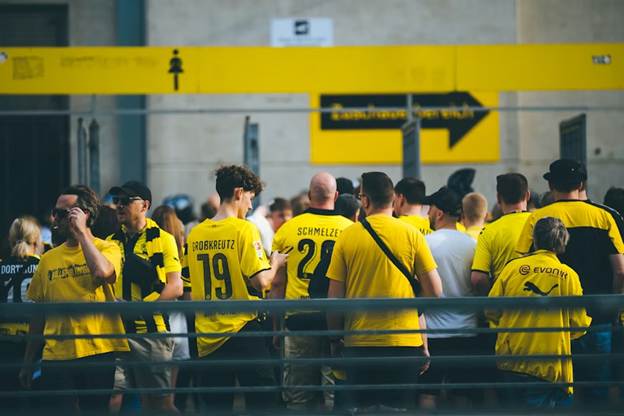
German football has always sold more than ninety minutes of sport: belonging. Having existed as both full terraces and low-cost traditions, and member-driven club models, the Bundesliga has its world image based on a culture centered on the fans, as represented by the 50 +1 rule that continues to place club members at the core of decisions.
That culture is rapidly going into the digital space. The Yellow Wall and the Allianz Arena are not being replaced by Club apps, AI-edited video, personalised content, NFTs, esports, and immersive matchday tools; they are being expanded. This further online penetration drives the desire of a fan to consume more matchday context, statistics and form reading, which is why the use of platforms like SportyTrader.de: football prediction experts to offer a fan both analysis and emotion is increasingly relevant.
The bedrock of engagement: Understanding Germany’s ’50+1′ fan-first culture
The 50 +1 rule stipulates that members of a club must have a majority of 50 and one vote and therefore they have a majority vote and no outside investor has the final say. In reality, it implies that the German clubs cannot turn the fans into their customers that they can monetise.
This does not imply that the model is a timeless model. In June 2025,In June 2025, the Bundeskartellamt confirmed no fundamental objection to 50+1, but ruled that existing exemptions, applicable to clubs like Bayer Leverkusen, VfL Wolfsburg and RB Leipzig, must be abolished, requiring the DFL to ensure uniform application of the rule across all clubs. The broader argument is that, owing to the structural responsibility of clubs to members, digital strategy in German football must be experienced as useful, transparent and community-building and not merely extractive.
The digital clubhouse: How all-in-one apps are changing the game
The current football club app is turning into an online clubhouse. The redesigned match centre of Bayern Munich, which launched in 2025, provides the fans with quicker access to match data, team and player statistics, line-ups, web radio, live tickers, news and exclusive videos. At the back-end, another aspect Bayern has been undertaking is the integration of data across over 50 legacy systems to develop a more coherent picture of fan behaviour and matchday operations.
The official app of Borussia Dortmund is no exception to the rule and has a very BVB-centric flair: news, squad updates, fixtures, live tickers, Netradio and matchday games including projected line-ups and polls. Mainaqila, a platform that integrates digital ticketing, content, interactions, e-commerce, payment and single sign-on is an even greater initiative by Eintracht Frankfurt. Eintracht became the digital champion of Bundesliga clubs in 2025, and its mainaqila app was lauded as a near-full club ecosystem.
Beyond the broadcast: Mastering social media and personalised content
The broadcast window is no longer the limit of German football fan involvement. All week, clubs compete to gain attention, particularly on Instagram, Tik Tok, YouTube, Twitch and platforms owned by the club. The collaboration of Borussia Dortmund with WSC Sports demonstrates how advanced it has been: live and historical games are analysed with the help of AI-based solutions, which automatically generate platform-specific content and transform old material into verticals to attract younger audiences.
The second layer is personalisation. The work of the data integration by Bayern will help the club in understanding what fans purchase, watch, and care about so that they can communicate more relevantly on the matchday, retail and content experience. There is also an increasing role of Esports. Bayern began the 2025/26 season of the Virtual Bundesliga with EA SPORTS FC, and the tournament remains as the official eFootball ecosystem in Germany.
Entering the next frontier: Web3, NFTs, and immersive experiences
German clubs have not been passive in regards to Web3. Not the speculative projects of digital art: the most successful are the products that bridge the gap between digital ownership and real football interest.
More than a picture: NFTs and digital collectibles
The DFL’s exclusive partnership with Sorare, which ran through the 2024-25 season, was one of the most concrete examples of pragmatic NFTs in football. The items in the digital players can be amassed, exchanged and utilized in fantasy football, implying that the worth of the digital card is contingent on sporting performance in the real world. In a later move, the DFL opened up Sorare to Bundesliga 2, becoming the first major European league ecosystem to take the same model into both its first and second divisions.
The 2025 multi-year collaboration between Dortmund and FIFA Rivals takes that reasoning to mobile gaming. Virtual play can be connected to real-world club loyalty as fans have the ability to obtain BVB player items and kits, participate in challenges, and maybe even win matchday tickets or physical merchandise.
Immersive fandom: Virtual and Augmented Reality
The immersive technology is also shifting from novelty to experiment. The ARISE project by DFL and Vodafone demonstrated the ability of augmented reality to integrate emotion of the stadium with real-time digital information on a smartphone. The new partnership between Dortmund and Vodafone, starting in 2025/26 will also be aimed at more than just shirt sponsorship, creating new digital experiences to fans and Vodafone clients.
What it means to be a fan in the digital age
The revolution of the German football does not involve the substitution of the community by the code. It is all about fandom being more active, informed and participatory. Clubs become a part of our everyday life with apps. The global fans are brought closer to the dressing room through AI content. Esports and digital collectibles provide fans with new means to be interested in the performance of the players. AR and virtual worlds give a clue to the future where any international fan can experience the pulse of the matchday anywhere.
The unique strength that Germany has is that technology is yet to face the fan community. Digital strategy is most effective in the Bundesliga when it enhances identity, trust and participation. This is why the next big innovation in German football might not be an app or platform, but a concept of sports technology in which belonging is the key element, and revenue is the second.