
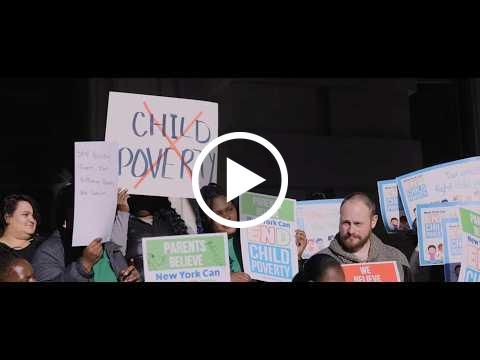
New York State United Teachers has released a new original film, “1 in 5,” as part of its statewide campaign to combat childhood poverty—starting with proven, school-centered solutions like community schools.
The film spans the state, from Rochester to Amityville, elevating the voices of educators in rural, suburban and urban communities. It shows how poverty holds students back in school, often due to a lack of basic necessities like clean clothes, stable housing, or access to healthcare.
New York’s child poverty rate — nearly one in five — exceeds the national average of 14 percent. Some areas in the state rank among the highest child poverty rates in the country, including Syracuse at 41 percent and Rochester at 40 percent.
“‘1 in 5’ is a call to action,” said NYSUT President Melinda Person. “New York is one of the wealthiest places in the world, yet too many students are held back by poverty. That is unacceptable. Childhood poverty is not inevitable; it is the result of policy choices, and community schools are a proven, effective solution.”
Supporting students’ real-time needs
Community schools serve as neighborhood hubs, coordinating supports such as healthcare access, mental health services, transportation and food pantries. These services are tailored to local needs and led by a community school director who connects families to resources.
The results are clear: Schools that adopt this model see meaningful gains in longstanding challenges. In the Bronx, for example, Bronx Writing Academy struggled with low attendance for years. After adopting a community school approach—including afterschool sports and arts, a food pantry, and parent English classes—this public middle school, serving one of the nation’s poorest communities, saw a dramatic turnaround. Bronx Writing Academy now has the lowest chronic absenteeism rate in its district.
Other states are seeing similar success. In California, community schools achieved a 30 percent greater reduction in chronic absenteeism than comparable schools. When schools become hubs of support, students show up and stay engaged.
“I think we tend to assume that how you look is your story, and that’s not always the case,” said Karen Alford, United Federation of Teachers Vice President for Elementary Schools and Executive Director for United Community Schools. “A child could be absent, and you might think the child is sick, but the parent may have kept their child home because they didn’t have clean clothing. Sometimes folks are struggling, and if we can support them, we should.”
Meeting the momentum
The film’s release comes at a pivotal moment. Policymakers are increasingly recognizing that community schools are a smart, evidence-based investment in students’ health, stability, and ability to learn, especially for those living in poverty.
This month, both houses of the state Legislature included dedicated funding for community schools in their one-house budget proposals. The Senate proposal includes $105 million, and the Assembly proposal includes $100 million. Now, the final enacted budget must deliver sustained, statewide investment so every community can build the supports students need to attend, learn, and succeed.