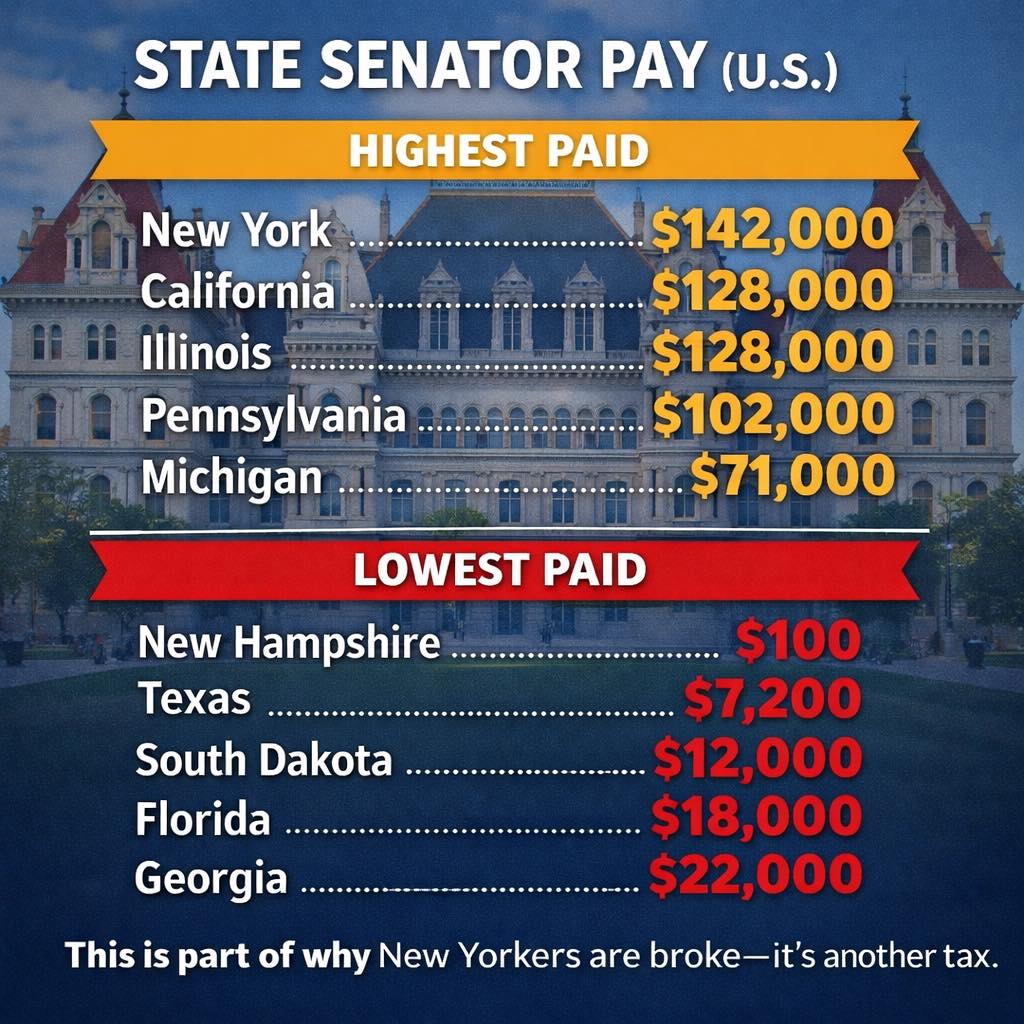
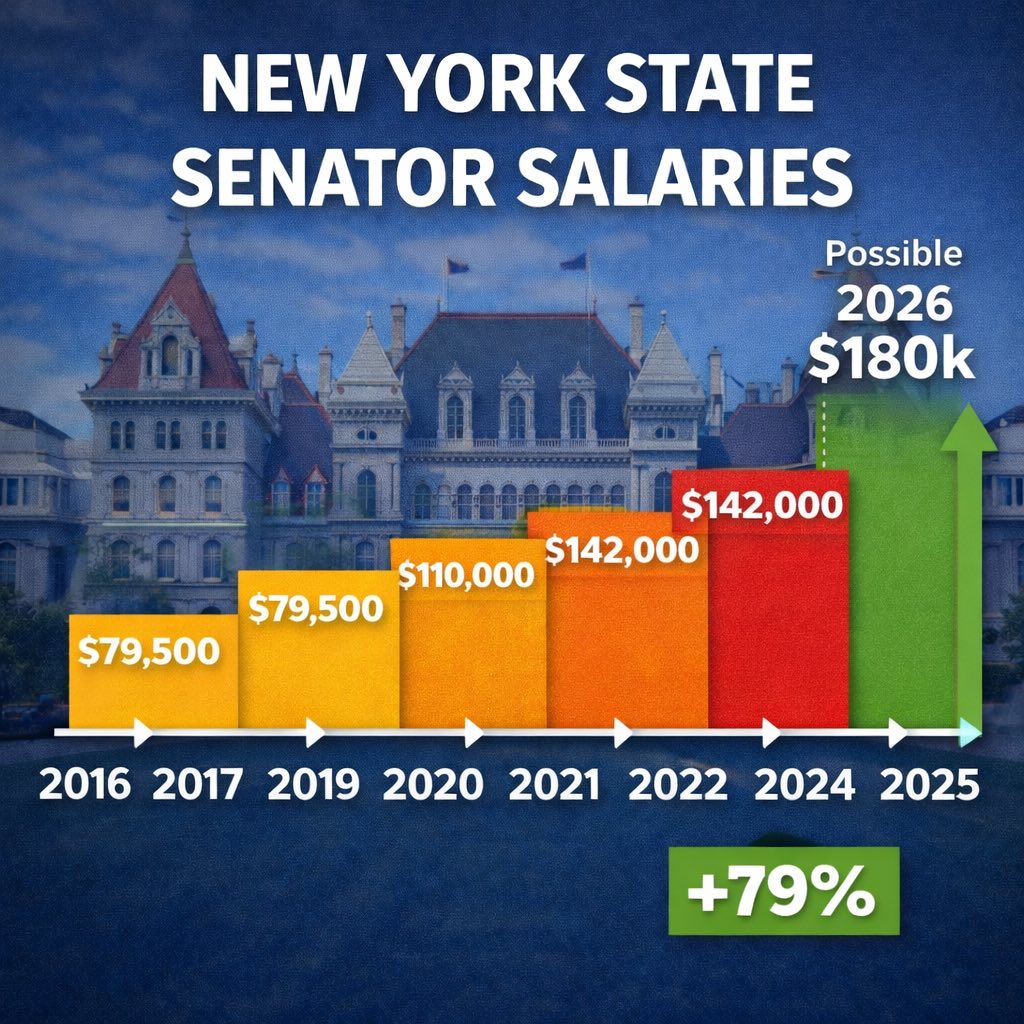
This month, Democratic State Senator James Sanders Jr. introduced a bill (S.9329) that seeks to increase the annual salary for state legislators from the current $142,000 to $180,000—a nearly 27% hike.
Senator Sanders has argued that the increase is necessary due to the “expanded duties” and increasing “complexity” of being a modern legislator. He contends that the role has evolved into a full-time service position and that higher compensation is essential to:
Attract a diverse and qualified pool of candidates.
Ensure that those in office can commit to their public roles without financial strain.
Maintain the highest standards of ethical government.
Several of Sanders’ colleagues in both parties have labeled the timing “tone-deaf” given the ongoing affordability crisis, soaring energy bills, and the fact that the last major raise was enacted relatively recently in late 2022.
Westchester State Senators and Assemblymembers have neither supported nor opposed the pay hikes.
Senator Shelley Mayer has been vocal about the “affordability crisis” and is currently sponsoring legislation to limit Con Edison’s retroactive utility billing, arguing that constituents cannot afford sudden spikes in their bills while their incomes remain stagnant.
Senator Pete Harckham (Westchester): He has also prioritized utility relief, introducing a dozen bills in 2026—including the ASAP Act—to lower energy costs by expanding solar. Like Mayer, he has focused his public platform on “kitchen-table issues” rather than salary increases.
Senate Majority Leader Andrea Stewart-Cousins (Yonkers): As the leader of the Senate, she has not yet moved the bill to a floor vote. Her recent focus has been on the 2026 One-House Budget Resolution, which emphasizes “taxing the wealthiest” to fund municipal services and lowering energy costs for residents.
One common-sense proposal that Rising Media supports is a Republican plan to provide New Yorkers with some relief from rising energy bills by issuing a $400 rebate check.
The proposal, offered as an amendment on the Senate floor by Senator Rob Rolison, would have provided a one-year utility bill tax-and-surcharge holiday and a two-year green energy tax holiday. Government taxes, fees, and mandates account for approximately one-third of a customer’s utility bill. The amendment was voted down, but more importantly, there is no proposed legislation from Governor Kathy Hochul or the Democratic majority in Albany to provide some form of rebate to 8 million New Yorkers who have received rebate checks in the past.
“New Yorkers are being bled dry by some of the highest taxes in America, congestion pricing, skyrocketing utility bills, endless tolls and transit fees, parking fines, and every other scheme Albany can dream up to squeeze more money out of working people. It is hard to imagine a more arrogant display of self-interest. It’s Tammany Hall on steroids,” said NYS Conservative Party Chair Gerard Kassar.
Social Media posts that we agree with include:
“The average household income is $86k a year; they want to increase their salaries to $180k. Let’s earn a raise by solving the affordability crisis in NY: property taxes, car insurance premiums, utility prices, and many other major expenses that are forcing working people to flee the state.”
“The average salary in New York, as of February 2026, is $26.01 an hour or $54,094 per year. 76% have no savings, real estate, or any holdings. Own nothing and be happy living in an affordable city is the way to go.”
Note: Last week, we suggested a Tariff Rebate or Dividend check for all Americans.
President Trump has repeatedly proposed sending $2,000 rebate checks to moderate- and middle-income Americans, funded by tariff revenue. Recently, the administration has suggested these checks could arrive by the end of 2026.
An alternative proposal has been introduced by democratic Congressman Henry Cuellar, who recently introduced the American Consumer Tariff Rebate Act of 2026, which proposes smaller payments (roughly $1,020 for singles and $2,040 for joint filers) specifically to offset the rising cost of household goods. This plan also sounds good.
In February, the U.S. Supreme Court ruled that certain tariffs imposed under the International Emergency Economic Powers Act (IEEPA) were unlawful.
On March 4, 2026, the U.S. Court of International Trade ordered the government to begin refunding over $130 billion in duties collected from importers. These refunds go directly to the companies (importers of record) that paid the taxes. While some Democratic lawmakers have introduced bills to force companies to pass these savings on to consumers, there is currently no federal mechanism to ensure this happens.
Westchester Congressman George Latimer has introduced a bill requiring the Trump administration to refund the tariff revenue to small businesses.
We have not seen any comment from Westchester’s other Congressman, Mike Lawler. Perhaps he should consider supporting a rebate for all Americans.