
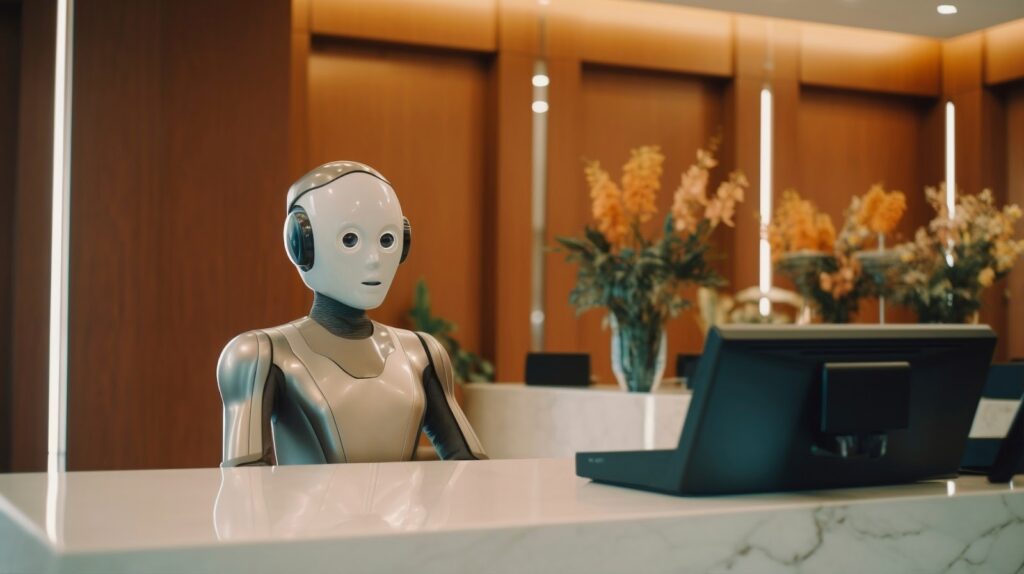
Photo from Freepik
Healthcare is no longer subject to office hours. Patients are also demanding care, information, and reassurance 24/7, even during non-traditional hours. Misplaced phone calls, delayed responses, and manual scheduling loopholes may silently undermine trust, continuity, and operational efficiency. Due to this changing landscape, AI healthcare solutions are transforming the manner in which access and responsiveness are provided. The AI receptionist operates 24/7 in the background, engaging in conversations, booking, and information exchange even when the clinics are not open anymore. This 24/7 presence makes sure that the care paths are operational, the calendars are optimized, and the interaction with patients is not discontinued when the human teams take a break.
Five Ways an AI Receptionist Delivers 24/7 Care and Operational Continuity

Photo from Freepik
1. Seamless Integration With the Electronic Health Record
The most important element of effective automation is smart connectivity. An AI-based receptionist, which will connect to the electronic health record, will provide access to the time of booking in real-time, the profile of patients, their previous visits, and the treatment process. With such integration, correct appointment bookings, proper inquiries made by patients, and contextual responses can be made depending on already existing records. In contrast to a detached chatbot, the system works as an intelligent digital front desk, matching the dialogue with clinical processes. Precise data alignment can help eliminate errors and booking duplications, and all interactions with patients are recorded with current information.
2. Continuous Appointment Management Without Downtime
Continuous scheduling is also one of the most direct benefits of an AI receptionist. Patients tend to schedule their appointments in the evenings, early mornings, or weekends. In the absence of automation, such requests are lost or delayed. An AI receptionist handles appointment bookings, rescheduling, and cancellations in real time, at any time of day. Using the ability to fill open slots dynamically and manage waitlists, calendars will be efficient, and utilization will be better. This ongoing administration converts the non-busy time to productive availability and decreases the administrative backlog when staffing is done.
3. Consistent Patient Communication and First-Point Resolution
Healthcare communication must be consistent. An AI receptionist will give standardized and correct answers to general questions related to office hours, instructions on how to prepare, insurance fundamentals, and so on. This trustworthiness guarantees that the patients have the same degree of understanding irrespective of the contact timing. In addition to the simplest queries, the system will be able to prioritize the requests, pushing urgent issues to the forefront, and addressing the standard cases on its own. This is a systematic process that enhances the confidence of patients and minimizes the number of calls made by the clinical and administrative staff unnecessarily.
4. Reduced Administrative Load and Cognitive Overhead
Front-desk duties are usually much more than the act of answering. Paperwork and manual data entry, monotony in scheduling, and continuous disruption are all causes of administrative burnout. These repetitive workflows are absorbed by an AI receptionist, and human employees are able to work on complex coordination, supporting patients, and face-to-face interactions. The system lightens mental workload and operational stress due to managing mundane tasks independently. Such reallocation of effort aids more viable working conditions and enhances the overall quality of work without the need to have more staffing requirements.
5. Enhanced Patient Experience Through Always-On Availability
Patient satisfaction is determined by accessibility. A receptionist AI will not leave any questions unanswered or any opportunity to interact with a client. Patients have instant recognition, straightforward follow-up, and prompt confirmations—no matter the time of day or the time zone. This is the ongoing access that fosters a sense of dependability and responsiveness. In the long term, the reliability of responsiveness fosters trust and relationships and makes the practice more reliable and patient-centered in a highly competitive healthcare environment.
End Point
A receptionist is an AI that will remain silent but alert at all times, maintaining access, organization, and communication twenty-four hours a day. This technology makes care pathways dynamic even after hours, as it integrates intelligently with clinical systems, manages schedules without disruption, and provides consistent patient interactions. The outcome is enhanced efficiency, increased trust in the patients, and optimized calendars, to the point that healthcare operations never really sleep.