


Curiosity grows fastest when kids get to make, move, and play with ideas. At camp, open-ended projects, theater games, and time outdoors invite questions like What happens if I try this and Why did that work.
With gentle structure and lots of choice, campers test wild hunches, learn from small mistakes, and see their imaginations take shape – a cardboard maze, a skit born from a prompt, a soundscape made from found objects. The result is confidence to explore the unknown.
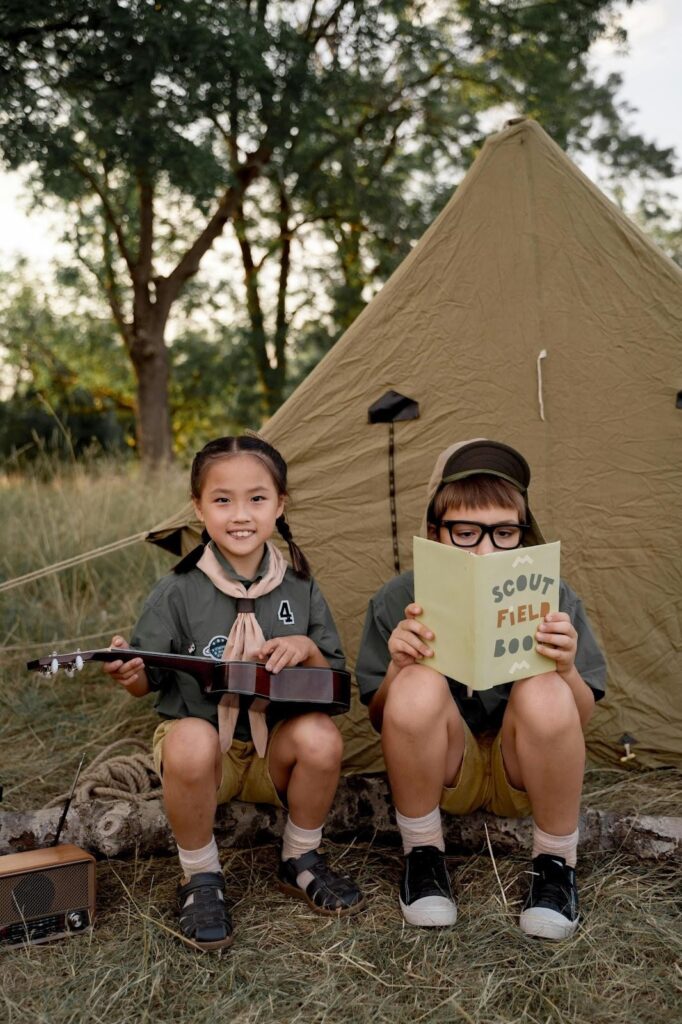
Photo from Pexels.com
Hands-On Making Sparks Curiosity
Camps that prioritize making give kids a reason to ask why and how. When a camper builds a cardboard maze or edits a short video, each small choice nudges them to test ideas and notice what works.
Start with a quick prompt, then move into structured play, and end with a short share. This arc helps kids wonder aloud, try something, and reflect on what they might change next time.
Playful Drama Builds Risk-Taking
Theater games are perfect for exploring brave choices in a low-stakes way. If your child lights up on stage, Bay Area performing arts camps can give them daily reps with improv and movement, building quick thinking through fun. These moments show kids that a wild idea can lead somewhere surprising.
A 2024 article in Current Research in Behavioral Sciences reported that people who practice improv score higher on creative thinking and on comfort with uncertainty. That matters at camp, where a prompt like Pretend you are a raindrop only lands if kids feel safe trying the unexpected. Over time, they learn to treat the unknown as a playground, not a problem.
Open-Ended Projects Invite Better Questions
Creative activities work best when there is more than one right answer. Instead of paint this picture, a counselor might say use these 3 colors to show a sound, which pushes kids to experiment with texture, shape, and motion.
Choice is key. When campers select materials or roles, they take ownership, and that ownership fuels curiosity. The question shifts from what I should do to what I could try next.
Collaboration Fuels Imagination
Working in pairs or trios helps ideas multiply. One camper suggests a rhythm, another adds a movement, and a third sketches a backdrop. Suddenly, the project has a life of its own.
Counselors can model yes-and so the group treats each idea as a seed worth watering. Kids leave with a sense that creativity grows faster together than alone.
Outdoors As A Creative Classroom
Nature is a giant idea generator. A scavenger hunt for textures can turn into a soundscape, a dance, or a poem. Light, shadow, and wind become materials, not just background.
The outdoors also lowers noise from screens and schedules. With fewer distractions, campers notice details and make connections that spark new stories, characters, and designs.
Why Creativity Skills Matter Beyond Camp
Curiosity and imagination are not just nice-to-haves. They show up later as problem-solving, flexible thinking, and resilience. A 2024 analysis from the National Assembly of State Arts Agencies noted that creative industries contribute 4.4% of U.S. GDP, underscoring how skills built in arts spaces connect to real economic impact. Kids who learn to invent at camp are practicing habits the world values.
What To Look For In A Creative Camp
A few signals can tell you whether a program truly nurtures curiosity.
- Daily time for open-ended making, not just one-off crafts
- Choice boards or prompts with multiple paths
- Visible student voice in projects and showcases
- Small groups that rotate roles and materials
- Short reflection moments after activities
- Comfortable spaces for trying and revising ideas
Gentle Structure Beats Over-Scripting
The best creative blocks mix scaffolding with freedom. Clear constraints like use only circles or tell a story in 6 shots give direction without closing doors. Kids feel safe enough to wander and bold enough to test an odd idea.
Counselors can keep the energy playful while nudging depth. A simple question like what surprised you guides campers toward noticing their own process.
Sharing Work Builds Confidence
A quick gallery walk or mini performance helps campers see the value of their thinking. They get to celebrate risk-taking, not just polished results. Feedback stays specific and kind, pointing to choices rather than talent.
These small showcases teach kids to speak about their ideas and to listen for what others tried. That loop strengthens both curiosity and imagination.
Practical Ways To Spark At Home After Camp
Keep materials visible and easy to grab. Offer prompts with limits rather than finished examples. Ask how you make that and what you try next, then step back. A 10-minute creative burst can fit between dinner and bed.
You do not need fancy gear. Cardboard, tape, markers, and a phone camera can power a week of inventions. What matters most is the habit of playing with ideas, noticing what changes, and trying again.
Photo from Unsplash.com
Kids flourish when spaces invite questions, welcome odd choices, and honor the messy middle. Whether through theater games, open studios, or nature-inspired prompts, creative camps make room for curiosity to lead the way. Give children places where ideas can tumble, collide, and grow, and they will carry that spark with them long after summer ends.

