

Maria Fernandez, Esq.

Larry Wilson

Frank Jereis
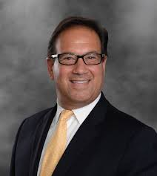
Joe Apicella
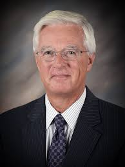
Chair Jim Cavanaugh
By Dan Murphy
The race for one of New York’s three downstate commercial casino licenses has put Yonkers at the center of a high-stakes battle that will likely shape the city’s financial future. At the heart of this process is the Community Advisory Council (CAC), a five-member panel tasked with one question: does Empire City Casino by MGM Resorts have true community support to transform into a full-scale casino?
The answer to that question could mean the difference between an economic lifeline and fiscal uncertainty for Yonkers.
In 2022, New York State authorized a process to award the three remaining full-scale commercial casino licenses. The Gaming Facility Location Board, under the New York State Gaming Commission, is overseeing the competitive process and has indicated that it can award up to three, can award fewer, and isn’t mandated to award any of them. Applicants must demonstrate not only financial strength and development plans, but also something harder to quantify: whether their host communities want them there.
That’s where the Community Advisory Councils come in. Each proposed casino site is assigned a CAC composed of appointees of local elected officials. In Yonkers, that includes appointees by the Governor, the Senate and Assembly representatives, the County Executive, and the Mayor. Their charge is to review MGM’s application, host at least two public hearings, and issue a formal finding of support or opposition no later than September 30, 2025. Without CAC approval, the application cannot move forward to be considered by the four-person Gaming Facility Location Board.
There’s a lot at stake for Yonkers. Empire City Casino, long operating as a video lottery terminal racino, is the city’s largest private employer and taxpayer. MGM Resorts has pledged to invest an additional $2.3 billion to convert the property into a resort casino with live-dealer table games, a 5,000-capacity entertainment venue, meeting and event space, a BetMGM sports book, VIP gaming lounge, new restaurants, and more. The company argues the project would create thousands of union jobs and generate hundreds of millions in tax revenue for New York, Yonkers, and Westchester, Rockland and Putnam counties.
For Yonkers, securing one of the three licenses has been described as “the golden goose” needed to keep its budget balanced. If the CAC votes “no,” the city may lose its chance at this transformative opportunity, while competing bids in Queens, Manhattan, and Brooklyn move forward.
The CAC has already held one public hearing, and the second is set for September 16. The council is also accepting written comments via email. If community opposition outweighs support, the path to approval could close.
“Brace yourselves, Yonkers residents,” said one local advocate. “If this doesn’t go through, the future may not be so bright at all.”
Maria Fernandez, Esq.
Appointed by Governor Kathy Hochul
Title: Deputy Secretary for Education, NYS Executive Chamber
Maria Fernandez brings two decades of legal and compliance expertise, including senior roles at IBM and Direct Energy. Now serving as Deputy Secretary for Education, she oversees policy for New York’s K–12 and higher education systems, with a focus on workforce development. Recognized on City & State’s Latino Power 100 list, Fernandez is widely respected for her leadership on equity and ethics.
Larry Wilson
Appointed by Senate Majority Leader Andrea Stewart-Cousins
Title: President, Hyatt Civic Association
Larry Wilson is a familiar name in southeast Yonkers. As president of the Hyatt Association, he has spent years advocating for homeowners and small businesses near Empire City. Wilson has been outspoken on issues like traffic congestion, stormwater management, and transparency in development reviews. He has previously criticized the planning process around the casino for insufficient public input. Supporters of MGM’s bid will likely need to convince him and his neighbors that their concerns about environmental, safety, and quality-of-life impacts are being addressed with concrete mitigation measures.
Frank Jereis
Appointed by Assemblymember Nader Sayegh
Title: Executive Director, Yonkers Democratic Party; Chief of Staff to Assemblymember Sayegh
At just 23 years old, Frank Jereis is already entrenched in Yonkers politics. As both Executive Director of the city’s Democratic Party and chief of staff to Assemblymember Sayegh, he has his finger on the pulse of local politics and community coalitions. Though new to the public spotlight, Jereis’ role positions him as a bridge between neighborhood stakeholders, elected officials, and business interests. He has not made public statements about casino licensing, but observers expect him to weigh how the project aligns with labor standards, socioeconomic impacts, and local Democratic priorities.
Joe Apicella
Appointed by Westchester County Executive Ken Jenkins
Title: Executive Vice President, MacQuesten Development
Joe Apicella is one of Westchester’s most seasoned real estate executives. With decades of experience at MacQuesten Development and The Cappelli Organization, he has overseen billions in projects from White Plains to New Rochelle. His background includes major mixed-use towers, affordable housing, and transit-oriented developments. Apicella is known for navigating complex approvals and financing structures. He has not commented on MGM’s bid, but his career suggests he will evaluate the project through a lens of economic development, infrastructure, and community benefits. His ties to both political and development circles give him outsized influence.
Jim Cavanaugh
Appointed by Mayor Mike Spano
Title: Former Deputy Mayor of Yonkers; Former CEO of Yonkers IDA
Jim Cavanaugh is a veteran political operative and public administrator. He has served as Eastchester Town Supervisor, Deputy Mayor of Yonkers, CEO of the Yonkers Industrial Development Agency, and Acting Planning Commissioner. Earlier in his career, he also lobbied on behalf of Empire City Casino before MGM acquired it. Cavanaugh is widely seen as a savvy insider with deep ties to the Spano political network. While he has avoided public comment on the casino process, his long track record of supporting revenue-generating development indicates he may lean toward approval, though not without weighing political and community dynamics.
As September 16 approaches, Yonkers residents have a critical role to play. The CAC will weigh not only MGM’s promises, but also the public’s voices. Written comments submitted by email to the designated address of MGMEmpireCityPublicComment@nystec.com, along with testimony at the hearing, could tip the balance.
If the CAC votes “yes,” Empire City advances to the next stage of licensing review and will be hard-pressed to compete against much larger projects in areas of New York City that have access to the pocketbooks of a significantly larger population, as well as nearly 70 million annual tourists. If the Yonkers council votes “no,” MGM’s $2 billion vision for Yonkers dies on the spot.
For a city dependent on property taxes and state aid, the stakes could not be higher. The five council members, Fernandez, Wilson, Jereis, Apicella, and Cavanaugh, hold the power to decide whether Yonkers secures its golden goose or watches it fly away.
For now, the future of Yonkers hangs in the balance.