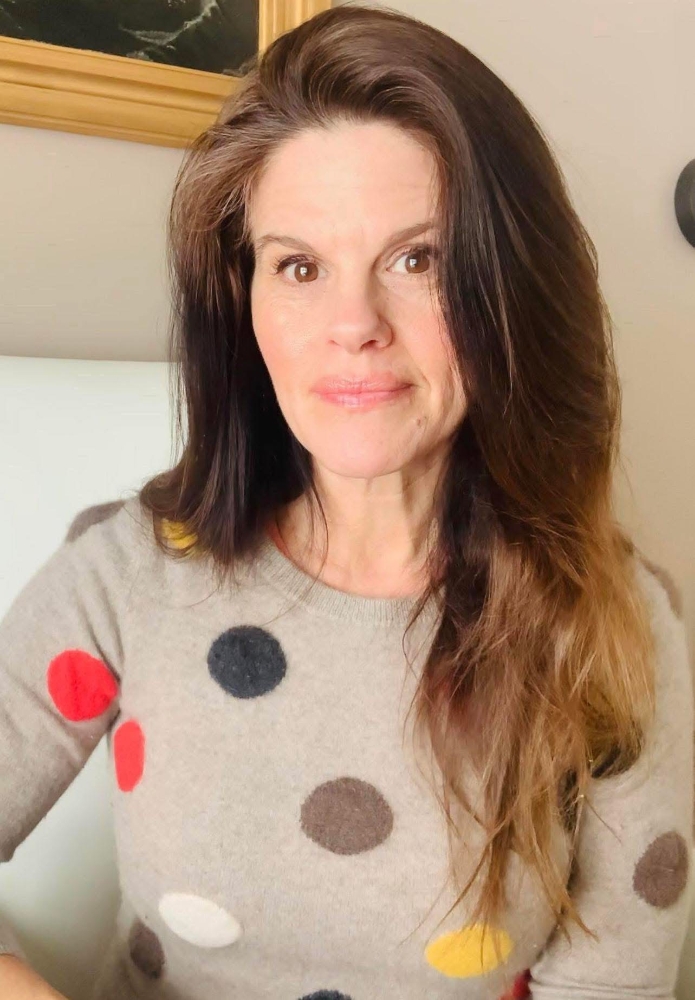
Elizabeth Harding Weinstein (1972-2025)
By Dan Murphy
The death of Elizabeth Harding Weinstein, a mother of three who raised her family in Briarcliff Manor, on July 6, has rekindled her case and travels through the courts of Westchester County.
Lizzie, as she was known by many, was found dead in her hotel room in Danbury, CT. Police arrived and found no foul play. An autopsy will take several weeks to determine the cause of her death.
The case of Lizzie Weinstein is a sad tale of how a broken marriage can end up ugly and, in the courts, with little or no thought of how it affects the children involved.
One of the best accounts of Lizzie Weinstein’s journey that we read is from Frank Parlato, who granted us permission to reprint his story, link here- https://frankreport.com/2025/07/16/elizabeth-harding-weinstein-at-center-of-contentious-divorce-and-mental-health-dispute-dies-at-53/
Elizabeth Harding Weinstein, at Center of Contentious Divorce and Mental Health Dispute, Dies at 53
July 16, 2025
By Frank Parlato
Someone sent this: “Lizzie Harding Weinstein was just found dead in a hotel room. Now there’s an investigation. It’s suspicious. The courts took her kids, her freedom, her driving license. All her money. She was wealthy and they put her under guardianship….”
Elizabeth “Lizzie” Harding Weinstein, a former nurse, mother of three, and ex-wife of a prominent New York attorney, died at 53 in Danbury, CT, in a hotel room.
Her death ends a five-year battle with her husband.
They were raising three teenage children, ages 17, nearly 16, and 13, in Westchester County. She was a former nurse, and at the time the fight began, a stay-at-home mother.
Her husband, Brian Stryker Weinstein, was a senior litigation partner at Davis Polk & Wardwell. His clients included Morgan Stanley, JPMorgan Chase, BT Group, and E*Trade. He sat on the board of the Kenan Institute for Ethics at Duke University.
On May 20, 2020, Lizzie said she made a “discovery.”
She told him to leave the house. He did.
She texted him after he drove away.
“We have all acknowledged that you have been indoctrinated into the practice of pedophilia.”
He was a lawyer. He replied, “I want the indoctrination of pedophilia to stop.”
Was this an admission? Or a clumsy, placating reply to a woman coming undone?
In context, it’s clear: he was not agreeing with her. He was trying to de-escalate.
At the time of the split, the couple’s three children were teenagers—old enough to have memories, perceptions, and opinions. There is no record that any of the children ever affirmed their mother’s story.
Brian was out of the house. The children were with her.
He did what he knew: he used the courts.
He filed an emergency custody petition, 150 pages long, claiming Lizzie was suffering from untreated mental disorder and submitted evidence of disturbing instability.
On June 5, 2020—Judge Arlene Katz issued an ex parte Temporary Restraining Order (TRO) against Harding. The order barred her from contacting her husband, her three children, or living at the family residence.
Police removed her from the home. Weinstein moved back in with full physical custody of his children and exclusive control of the home.
The TRO was issued without Harding’s presence or input.
The following day, June 6, Harding filed for divorce. She alleged the children had been subjected to sexual abuse and the reason why they did not remember being abused by her husband was repressed memory.
On December 4, 2020, Judge Nancy Quinn-Koba signed a second ex parte temporary restraining order against Elizabeth Harding, prohibiting contact with her children and access to the family home.
While shut out at court, Lizzie told her story online. She posted frequently on Facebook, accusing Weinstein of abuse, and coordinated legal and psychiatric sabotage. She claimed the reason the teenage children did not support her pedophilia accusations is that her husband had brainwashed them.
Her public accusations had the potential to destroy her husband’s career, which would also financially impact her children. Lizzie did not work. Her posts named her husband, his parents, and a broad group of alleged enablers of molestation, gaslighting, and mind control.
The FOIL Incident and Arrest
On January 4, 2021, Elizabeth Harding entered the Clerk’s Office in Briarcliff Manor to submit a Freedom of Information Law (FOIL) request and deliver a written complaint concerning Village Justice Howard T. Code, alleging denial of due process in prior proceedings.
Staff refused to accept her documents because Harding was not wearing a face mask, in violation of the Village’s COVID-19 protocols. Harding declined to wear a mask, citing a medical exemption. Village Manager Philip Zegarelli and Clerk Donna Zirman summoned the Briarcliff Manor Police Department.
Elizabeth Harding Weinstein arrested in Westchester NY
Responding officers directed Harding to leave the premises. Harding recorded the encounter and stated her intention to post the footage online. Chief Bueti permitted her to submit the paperwork. However, he then allegedly shut the door on her, knocked her phone from her hand, physically restrained her against the wall, and placed her under arrest.
She was initially charged with disorderly conduct. The charges were later amended to obstruction of governmental administration and resisting arrest. Following the arrest, Harding was held in custody for several hours, during which she alleges she was shackled, subjected to a strip search, denied access to legal counsel, placed in solitary confinement, and held under suicide watch.
On January 5, 2021, during a virtual arraignment, Village Justice Howard T. Code ordered a psychiatric evaluation. Harding refused to participate.
On January 8, a court-appointed psychologist, Dr. Jerome Norton, attempted to conduct the evaluation. Harding again declined to consent to the assessment.
Civil Lawsuit, Involuntary Hospitalization, and TROs
February 17, 2021
Elizabeth Harding filed a civil lawsuit in New York State Supreme Court naming multiple defendants, including her husband Brian Weinstein, municipal officials from the Village of Briarcliff Manor, local police officers, prosecutors, and members of the judiciary. The complaint alleged that Weinstein exploited his professional and judicial connections in Westchester County to discredit her, suppress her legal actions, and conceal alleged domestic violence and abuses of process.
March 9, 2021
Harding was involuntarily admitted to St. Vincent’s Hospital in Westchester County for psychiatric evaluation and treatment. She declined medication and requested a judicial hearing pursuant to New York Mental Hygiene Law §9.31. The hearing was postponed for approximately two weeks. Subsequently, Judge Anne E. Minihan ordered that Harding comply with a prescribed psychiatric medication regimen as a condition of release.
March 17, 2021
While Harding remained hospitalized, her state court civil action was dismissed on the grounds that it was “frivolous.” The court further initiated a mental health inquiry and raised the possibility of appointing a guardian ad litem to represent her legal interests in future proceedings.
April 2, 2021
Harding was released from involuntary hospitalization at St. Vincent’s.
April 16, 2021
Judge Nancy Quinn-Koba issued an ex parte Temporary Restraining Order (TRO) against Harding. Within minutes, Harding was stopped by Briarcliff Manor police and taken into custody. Officers claimed she had violated a prior TRO between April 5 and April 7, despite Harding’s contention that no such order had been entered or served during that period.
She was charged with misdemeanor violations, allegedly for posting a photograph of her minor children online. Later that day, Village Justice Halper issued a new ex parte TRO prohibiting Harding from coming within 1,500 feet of her home or her children.
Lizzie Is Relentless
June 1, 2021
Harding doubled down. She continued to publish allegations against her husband on Facebook , alleging he had committed acts of sexual abuse, domestic violence, and coercive control. She accused him of alienating their children through psychological manipulation and drugging.
She claimed to have suffered false arrests, poisoning, and the deletion of her social media accounts. Harding alleged that courts at the state, appellate, and federal levels refused to hear her claims. She concluded by stating, “I WILL NOT STOP SPEAKING THE TRUTH.”
June 11, 2021
Harding posted again on Facebook, stating she had been barred from attending her son Max’s graduation. She reiterated her accusations against Weinstein and stated, “SHAME FALLS SQUARELY ON PEDOPHILE BRIAN STRYKER WEINSTEIN.”
June 12, 2021
Harding posted a photograph of Weinstein alongside his parents, Richard and Alice Weinstein, and accused the family of condoning and enabling child sexual abuse. She alleged that family members dismissed reports of abuse as “unfortunate” and stated her children were afraid of their grandfather. She referred to Weinstein as “100x worse than the slimiest parasite” and claimed he engaged in a campaign of psychological indoctrination targeting their son Max.
Guardian Hearings
June 24 and June 30, 2021
Following Harding’s public social media posts, Weinstein petitioned the Westchester County Supreme Court for the appointment of a guardian. According to reports, Weinstein submitted affidavits alleging that Harding suffered from schizophrenia and narcissistic and bipolar personality disorders. These allegations referenced her public accusations of pedophilia, all without evidence and cited online behavior he characterized as erratic, defamatory and harmful to the children. All three children rejected their mother’s claims about their father.
Judge Janet C. Malone conducted two ex parte hearings to evaluate Harding’s competency, pursuant to Article 81 of the New York Mental Hygiene Law.
August 2, 2021
Judge Malone issued an order adjudicating Elizabeth Harding mentally incapacitated under MHL §81.02. She appointed attorney Kenneth L. Bunting as Guardian of the Property, with legal authority over Harding’s civil litigation, financial affairs, and access to the courts.
Immediately following his appointment, Bunting moved to terminate Harding’s pending lawsuits. He informed relevant courts that no future filings were authorized unless issued directly from his office.
Harding later alleged that Bunting exceeded his mandate by liquidating or freezing personal assets, closing financial accounts, withholding spousal support, and discontinuing critical services, such as automobile insurance. She contends these actions deprived her of resources necessary for food, shelter, and legal representation.
August 11, 2021
Harding posted on Twitter: “I will never stop fighting for my children… These pedophiles desecrate our societies—NOT ON MY WATCH.” At the time of the post, she had not seen her children for approximately 19 months.
With the guardianship order in effect, the court dismissed Harding’s pending divorce case for failure to prosecute. Weinstein refiled for divorce in his own name and was granted dissolution of the marriage by default, and consequently kept the entirety of the marital assets, as well as full legal and physical custody of the children.
The guardian prevented Harding from contesting or participating in her own divorce.
The Battle Is Over
Nothing changed during the last four years of her life.
In her videos, she’s the last honest woman in a world of liars. To the court, she was a mother declared unfit.
The kids, now all over the age of 18, remain close to their father. The funeral was Monday. Her ex-husband and three children attended.
This is a cautionary tale for the age of accusation.
She had lost her children. Her legal standing. Her money, her freedom. And in the end, her life.
She also nearly cost her family everything. Their reputation. Their father. Their peace.
The obituary reads:
Elizabeth “Lizzie” Harding Weinstein, a registered nurse, mother of three, and former Westchester resident, studied early childhood education at Boston University before earning her nursing degree from Columbia University. She is survived by her three children, Max, Ella, and Jack; her parents; and extended family.
She was 53.
What it did not say was that she was homeless for five years, starting about two weeks after she began accusing her lawyer husband of pedophilia.
Harding lost custody of her children, access to her home, control over her finances, and ultimately her legal standing—without ever having a full evidentiary hearing on the truth of her claims.
However, Harding’s allegations were unsupported by their three teenagers, third-party witnesses, forensic evidence, or law enforcement corroboration.
The legal system never said Harding was lying. It ruled that she was not credible enough to be heard.
Her husband used TROs, psychiatric evaluations, and guardianship law to sideline an inconvenient, volatile and possibly delusional voice.
She never provided forensic evidence, eyewitness corroboration, or proof of a criminal inquiry in all her videos and posts.
Had Harding’s allegations been believed and acted upon, Weinstein would have faced professional ruin, disbarment, and criminal charges.
The damage would not stop with him. The children would become known as the offspring of a molester. Their schooling, relationships, and mental health could suffer. If the allegations were untrue, or driven by illness, the harm would be irreversible.
Mental Illness Cannot Be Ignored
Harding’s conduct was not helpful to her credibility. She live-streamed videos, made accusations on social media, and described coordinated conspiracies. She refused psychiatric evaluation, refused medication when committed, and rejected the authority of multiple courts. Over time, while some of the public may have believed her, judges reached a shared conclusion: she was mentally unstable.
Elizabeth Harding Weinstein
Whether or not that diagnosis was correct, her behavior gave the court justification to take precautionary steps. From their perspective, this was not silencing. It was containment.
“What if she was right?” is a question weighed against “What if she was severely ill?”
And when one party appears unstable—especially if they are publicly attacking judges, guardians, and therapists—the courts will protect the calmer, more institutionally compliant party.
If Elizabeth Harding was wrong, her accusations were reckless, damaging, and cruel. If she was mentally ill, she was treated as a legal liability rather than a health emergency. And if she was right—if there was any truth to what she alleged—then the law turned its back on a woman who tried to speak out.
Still, Harding accused Weinstein of serious crimes but offered no evidence. Where were the children’s statements? The school reports? The disclosures? She posted online, named therapists as “handlers,” and accused his entire family of “grooming.” She tried to crash graduation ceremonies, filmed her own arrest, defied court orders, and posted daily videos on Facebook.
So her husband, a lawyer, retaliated with filings. He asked judges to protect his children, to secure their futures, to limit what Elizabeth kept igniting.
The law was used not just to silence her—but to survive her.
She gambled the family’s future on a theory she couldn’t prove. He gambled too. Because if she wasn’t stopped, her narrative could destroy his children, his career, and everything he had built.
If she wasn’t mentally ill, she was reckless. And while her case shows the built-in injustices in family court, it also illustrates the harm that can be done by false allegations and how the court for all its imperfections may have delivered justice.
Where this case is distinguished from many other cases where the court is used as a weapon by the wealthier parent is that the pivotal, deciding factor was the children. If they said it had happened, it would not have ended this way.
But they said it did not happen and, in the end, in this case – and in perhaps most cases – we ought to believe the children – then and now as young adults. They knew their mother was delusional and wished, as they had said, she could have been treated. She wasn’t. It can’t be helped now.
May Lizzie Harding rest in peace,” end of story, by Frank Parlato. After watching several YouTube videos and speaking with some of the people who interviewed Lizzie, we found Parlato’s story to be inclusive and sympathetic to Lizzie.
This story was published on Parlato’s website, https://frankreport.com/?s=Elizabeth+Harding+Weinstein, two weeks ago.
In 2022, Parlato wrote three other stories about Lizzie’s case. One of those stories tells a different story about Parlato’s interaction with Lizzie.
We will publish that story next week.